







- The warning strike by dockworkers called by the German trade union Ver.di ended on Tuesday 18 August 2026 at the ports of Hamburg, Bremerhaven, Wilhelmshaven, Bremen, Brake and Emden. According to the union, about 5,000 workers out of a bargaining group of 11,000 stopped work, causing partial slowdowns in cargo handling.
- Florian Keisinger, managing director of the employers’ association Zds, described the action as disproportionate to the state of the negotiations, arguing that it undermines the reliability of German ports and adds pressure to already strained supply chains, with possible repercussions for German imports and exports.
- The positions remain far apart: Ver.di is seeking an 8.2% increase over 12 months, or at least an extra EUR 2.50 an hour, while Zds is offering 5.1% over 19 months, backdated to 1 August 2026 and running until the end of February 2028. The third negotiating session will be held in Hamburg on Monday 24 and Tuesday 25 August.
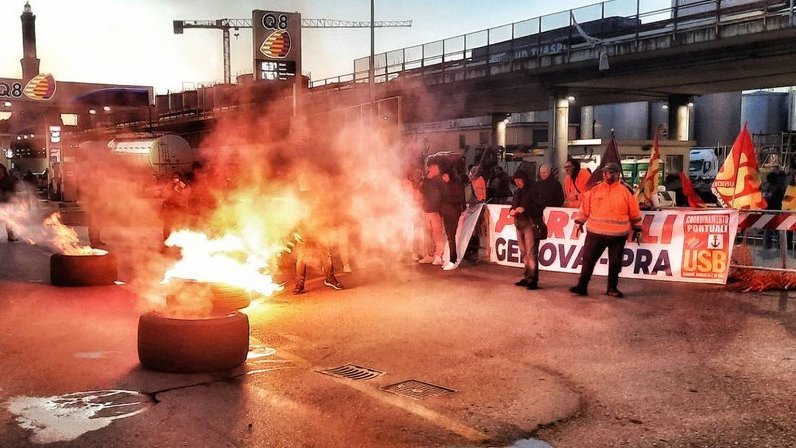
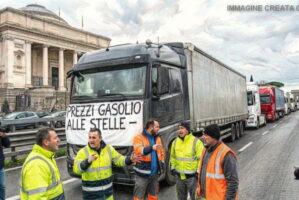
Twenty-four hours of strike action by dockworkers at Germany’s six main ports ended on Tuesday 18 August 2026 without the parties reaching an agreement on the issue that derailed the negotiations: the duration of the contract. The stoppage called by the trade union Ver.di affected the ports of Hamburg, Bremerhaven, Wilhelmshaven, Bremen, Brake and Emden, from 22:00 on 17 August until the same time the following day. According to union sources, it involved about 5,000 workers out of a total of 11,000 covered by the talks and caused severe slowdowns in handling operations.
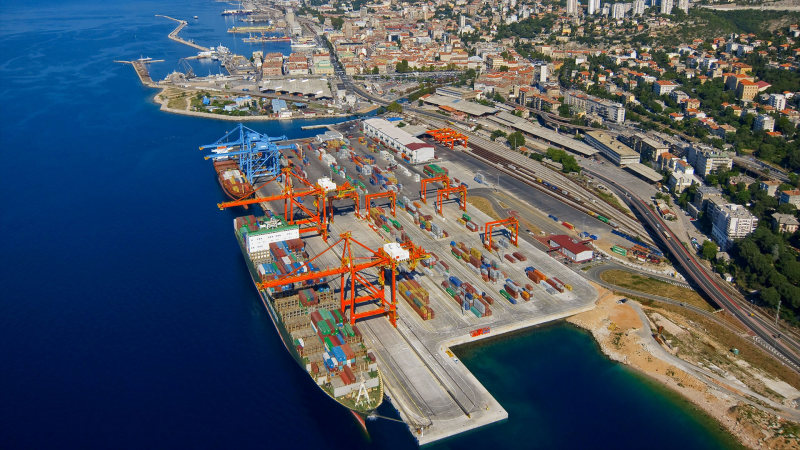
The strike mainly hit the three ports most important for container traffic. Eurogate, which operates terminals in Bremerhaven, Hamburg and Wilhelmshaven, reported the suspension of most activity, with emergency teams carrying out only sporadic yard moves while ship operations remained at a standstill. In its customer advisory, the Bremen-based operator had already warned that there would be no handling at the Hamburg terminal during the strike, urging forwarders to inform drivers and contractors. In Wilhelmshaven, the acceptance of commercial vehicles at the gates was also suspended. The impact was more selective at the terminals operated by Hamburger Hafen und Logistik, which controls three of the four terminals in the port of Hamburg. A company spokesperson reported reduced activity at the Burchardkai terminal, with resulting delays, while specifying that Altenwerder and Tollerort were not disrupted. In the three smaller ports affected by the stoppage, Bremen, Emden and Brake, where general cargo and bulk goods predominate, J. Müller Weser reached an agreement with Ver.di on minimum services for Brake and Bremen.
After the strike, the employers’ side announced the resumption of talks. Florian Keisinger, managing director of Zentralverband der deutschen Seehafenbetriebe (Zds), the Hamburg-based association representing German port companies, said the third round of negotiations would take place on Monday 24 and Tuesday 25 August in the Hanseatic city. Keisinger accompanied the announcement with sharp criticism of the union action, which he described as "disproportionate" to the state of the negotiations. He made two arguments. The first concerned the reputation of the ports: in his view, industrial action damages the reliability of German ports, a competitive factor in international maritime traffic. The second looked at the downstream logistics chain, with supplies to industry and trade coming under further pressure at a time when global flows are already strained and with possible repercussions for Germany’s imports and exports. On the substance of the rejected employers’ offer, Keisinger expressed regret and defended it as "good, at the upper end" compared with other sectors, citing the collective agreement signed in the chemical industry as a benchmark.
The figures clearly highlight the gap between the two sides. Ver.di is seeking an 8.2% increase in hourly wages over 12 months, and in any case no less than an extra EUR 2.50 an hour, a demand designed to support lower pay levels. Zds’s offer is limited to 5.1%, backdated to 1 August 2026, with an additional EUR 300 in holiday allowance for everyone from January 2027 and a EUR 460 increase in the allowance reserved for workers at higher-volume container terminals, the so-called category A companies. The agreement would run until the end of February 2028. The duration of the contract is one of the issues that has thrown the negotiations into difficulty, together with the fact that, according to the union, the higher holiday allowance would be paid only once a year, with a limited effect on lower incomes compared with a permanent hourly increase.
Antonio Illariuzzi