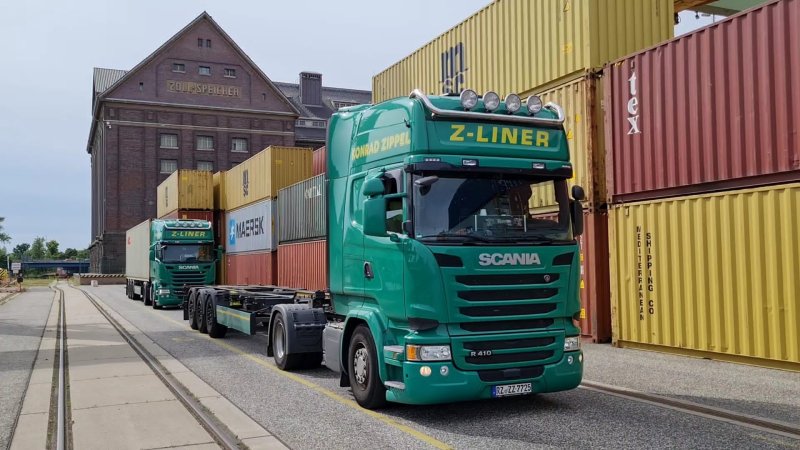






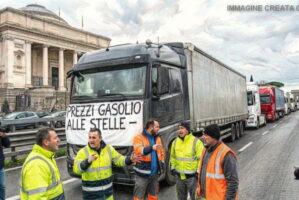

One summer evening in 2026, in the Swedish town of Tärnsjö, a Västerås police patrol stopped an articulated vehicle made up of a tractor unit with Latvian plates and a Swedish semi-trailer. The truck was driven by a Ukrainian citizen who speaks only his own language, and the consignment note listed a load of hydraulic cylinders that had left France bound for a company in Umeå, also in Sweden. But the tractor unit’s registration plate did not match the one shown in the documents. From that discrepancy, the inspection widened, reconstructing a four-step chain running from the Swedish consignee to a Latvian road haulier. The case, reported on 11 August 2026 by the Swedish newspaper Tidningen Proffs, led to a penalty of SEK60,000, about €5,400, and the driver being dismissed by telephone.
The amount of the penalty is not discretionary. It is the sum that Transportstyrelsen, the Swedish Transport Agency, applies for breaches of the cabotage rules laid down in Article 8 of Regulation EC 1072/2009, which sets common rules for access to the international road haulage market. For companies not established in Sweden, the enforcement authority collects an advance payment at the roadside and the truck remains immobilised with wheel clamps until the full amount has been paid. Once imposed, the penalty can be revoked only by Transportstyrelsen.
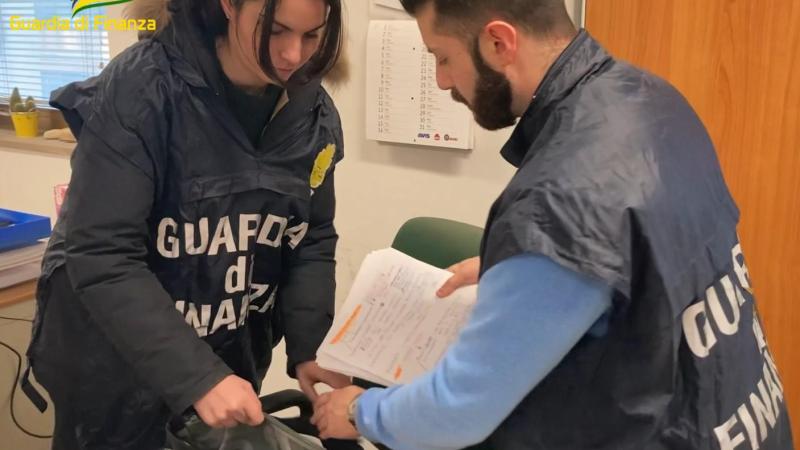
The driver told officers he had collected the already loaded semi-trailer at the port of Gothenburg and was able to produce documentation for a regular inbound international transport operation. But that was not enough, because for inspectors the shortcomings in the documents meant the road cabotage operation was treated as unauthorised, explained Roger Ogemar, an inspector in Västerås, according to whom the classification stemmed “from the shortcomings in the documentation”, regardless of whether the inbound journey was regular.
Tracing the transport chain backwards, the enforcement body established that the Umeå consignee had commissioned the transport from Kuehne+Nagel, which in turn had entrusted it to Nordic Group Logistics of Malmö, where the assignment then passed to the Latvian company. None of the parties involved accepted responsibility for what had happened, passing it on to the next link in the chain, while the goods remained blocked in Västerås. The consignee, interviewed by inspectors, knew only that it had ordered the service from Kuehne+Nagel and wondered where the cargo had gone, since it had not been delivered. Neither Kuehne+Nagel nor Nordic Group Logistics issued statements.
The driver immediately suffered the consequences of the inspection, and not only because of the penalties. He telephoned the company he worked for and, when the call ended, returned to the officers saying he had been dismissed on the spot. According to the Swedish publication, the man is about 65, has mobility difficulties and said he had been wounded in the leg at the front three months earlier, causing problems when climbing in and out of the cab. The day after the inspection, he had still received no instructions from the company and did not know how to get home, having provisions for only three days. In addition, in the preceding days his family in Ukraine had been hit by Russian bombardments. The road haulier later sent an email asking for the penalty to be withdrawn because of the driver’s psychological stress, and a Swedish intermediary telephoned the inspector to say the company did not intend to pay. Three days after the vehicle was stopped, however, the penalty was paid and the clamps were removed.
Beyond the specific case, the Tärnsjö inspection highlights the question of who is responsible for what when a transport order changes hands several times. It is an issue that has also concerned European institutions for months. On 12 February 2026, the European Parliament approved in Strasbourg, by 332 votes in favour, 209 against and 33 abstentions out of 574 members present, the report on subcontracting chains and the role of intermediaries in protecting workers’ rights, drafted by Swedish MEP Johan Danielsson of the Socialists and Democrats group. The Commissione per l'occupazione e gli Affari Sociali, Employment and Social Affairs Committee, had previously adopted it by 35 votes to 20.
The text, however, has no binding legal effect. It is a non-legislative report calling on the Commissione Europea, European Commission, to present a Directive on subcontracting and labour intermediaries as part of the Quality Jobs Act. Parliament is calling for subcontracting chains to be limited to two levels, for an EU-wide authorisation system for labour intermediaries with a ban on charging fees to workers, for joint and several liability for wages, social security contributions and safety obligations throughout the entire chain, and for direct employment relationships to be strengthened in high-risk sectors, among which it explicitly includes transport. For enforcement, the report calls for a stronger role for the European Labour Authority, ELA, and closer cooperation with Europol and national labour inspectorates.
The issue has now entered its second phase. On 20 July, the European Commission, launched the consultation of social partners under Article 154 of the Treaty on the Functioning of the European Union, covering five areas: algorithmic management and artificial intelligence at work, health and safety, workers’ rights in subcontracting chains, the digital and green transitions, enforcement of rules and the role of social partners. The first phase took place between 4 December 2025 and 29 January 2026, with written responses from 34 social partners recognised at European level, comprising 12 trade unions and 22 employers’ organisations.
In the consultation document, the Commission notes that complex cross-border arrangements make it difficult to identify which employer is responsible for breaches, and identifies a lack of transparency and fragmentation of responsibilities as the main obstacles. It also notes that the risk of fraud and abuse increases with the length of the subcontracting chain. As regards translation into rules, the Commission indicates that the initiative could take the form of a Directive and that one possible route is to strengthen liability and make enforcement more effective along the entire chain, taking into account the cumulative impact on companies, particularly small and medium-sized enterprises.
Positions within the transport sector, however, are far apart. Uetr, the European road hauliers’ association, and Etf, the European Transport Workers’ Federation, argue that multi-level subcontracting contributes to falling freight rates, weakens the bargaining power of smaller companies and fuels social dumping. They therefore urged MEPs to support the report. Dslv, the German freight forwarding and logistics association, is more cautious. For its director general Frank Huster, subcontracted carriers are a structural component of logistics organisation, and limiting their use would interfere with the freedom to provide services and compete, with the risk of higher prices and additional administrative burdens. The consultation will close on 28 September 2026 and, after that date, trade unions and employers’ organisations will be able to negotiate an agreement directly under Article 154 of the Treaty before the Commission presents its legislative proposal, expected by the end of the year.
Pietro Rossoni