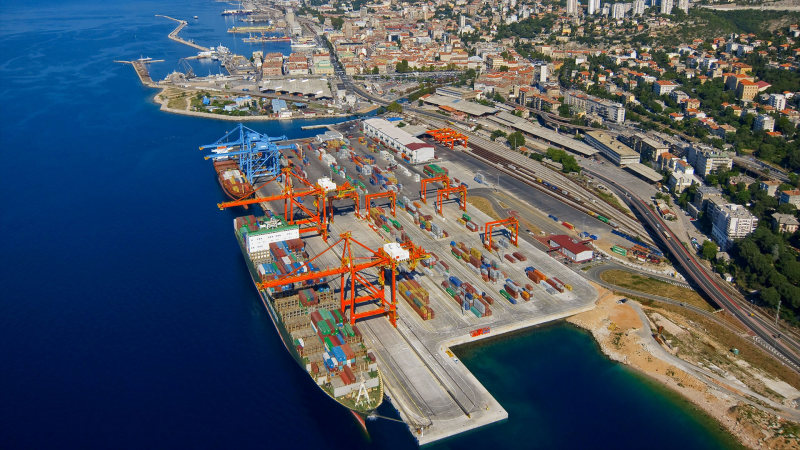







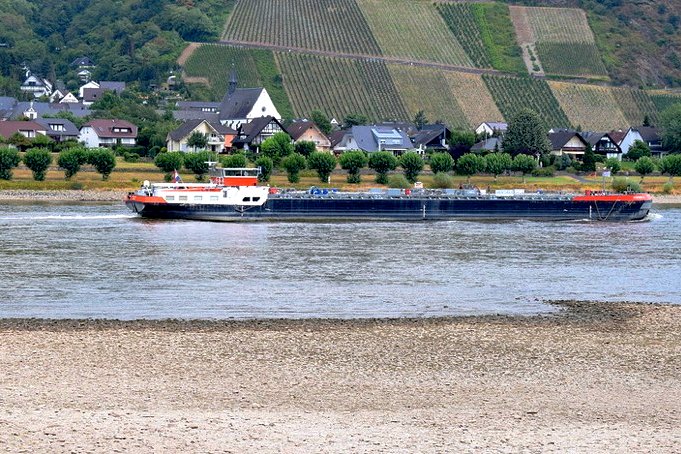
The drought of summer 2026 is hitting inland waterway transport hard across Europe, and Germany has drawn up a plan to deal with the most serious emergency, on the Rhine, which is experiencing its lowest water levels since records began in 1856 at the Kaub gauge. The gauge is the hydrometric reference point on the Middle Rhine, between Mainz and Koblenz, that determines navigability along the entire river corridor. The Bundesministerium für Verkehr (Federal Ministry of Transport, BMV), led by Steffen Bilger, announced an intermodal package on 12 August together with the individual Länder (federal states) to keep supply chains operating. The alternatives to inland waterways are rail and road.
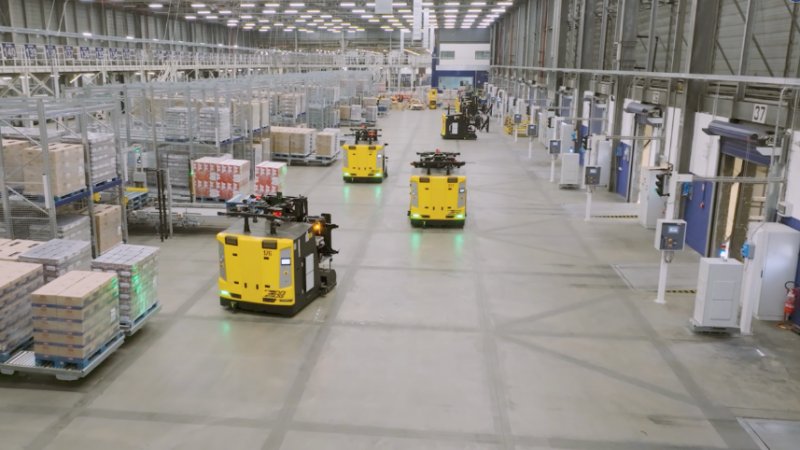
On rail, DB InfraGO, the network operator, has announced additional freight paths on the main corridor running parallel to the river, within the limits of existing network capacity, and has set up a dedicated contact point for extra trains linked to the water crisis. DB Cargo has made around 400 additional freight wagons available in the short term, which should replace up to 100 inland barges. At the important intermodal hub of Duisburg, RheinCargo has already strengthened coal supplies to the Hüttenwerke Krupp Mannesmann steelworks with additional trains.
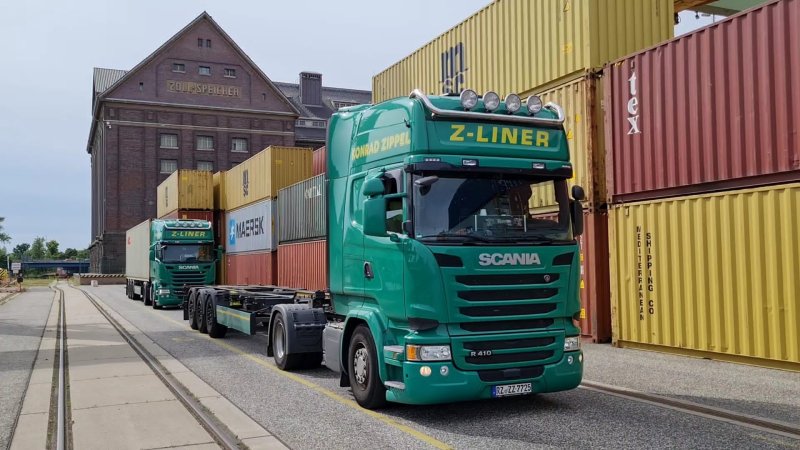
For road transport, several Länder, including Bavaria, have extended exemptions from the ban on heavy goods vehicles driving on public holidays and from the restrictions under the holiday traffic ordinance, including empty truck journeys connected to the crisis. The Bund (federal government) and the Länder are also assessing the temporary suspension of the indivisibility requirement for loads with a gross weight of up to 44 tonnes, while Autobahn, the motorway company, is managing roadworks to reduce disruption.
At federal level, action is also being taken at funded intermodal terminals, where the handling of goods not related to combined transport, including bulk cargo, is being permitted at least until 30 September. For connections between the ARA ports and the Ruhr, the Dortmund-Ems-Kanal, which remains navigable, is available as an alternative route. To support this, the Generaldirektion Wasserstraßen und Schifffahrt (General Directorate for Waterways and Shipping) has activated a dedicated team and postponed works at the Wanne-Eickel lock to avoid reducing its availability. For the transport of dangerous goods, several Länder supervisory authorities are taking a pragmatic approach to overseeing transfers from inland waterways to other modes. An intermodal steering group for the Lower Rhine, chaired by state secretary Claudia Elif Stutz, is continuing to monitor works and flows by road, rail and water together with the riparian Länder.
Meanwhile, over the past two weeks the hydrological situation has worsened. The Kaub gauge, which during the 2018 event reached a minimum daily average of 25 centimetres, equalled that record on 4 August with 24 centimetres, fell to 17 centimetres on 11 August, to 8 centimetres on 14 August and recorded a low of 6 centimetres on 15 August: the first single-digit reading since measurements began. The Bundesverband der Deutschen Binnenschifffahrt (Federal Association of German Inland Navigation) now describes the Rhine as functionally divided into two navigation basins with no operational continuity between them.
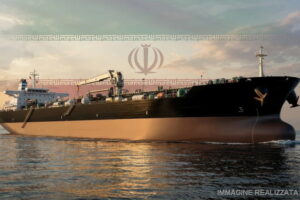
The reduction in ships’ usable carrying capacity, cut according to sources to between 10 and 20% of normal capacity, has pushed up freight rates. On the Rotterdam-Karlsruhe tanker route, the price per tonne has risen from around €45 at the end of June to €150-160, according to data collected by the Bundeskartellamt (Federal Cartel Office). The Deutscher Industrie- und Handelskammertag (Association of German Chambers of Commerce and Industry, DIHK) estimates that around 3 million tonnes of capacity a month have been removed from the Rhine, equivalent to about 120,000 additional heavy goods vehicle loads. However, the Bundesverband Güterkraftverkehr Logistik und Entsorgung (Federal Association of Road Haulage, Logistics and Disposal, BGL) has pointed out that exemptions from HGV driving bans do not in themselves create new driving capacity, as driving and rest times remain binding in a sector already facing a shortage of 120,000 drivers.
The low water on the Rhine is also affecting German gross domestic product. The Kiel Institute for the World Economy (IfW Kiel) estimates a possible loss of value added of between €1 billion and €2 billion in the third quarter, with an impact on GDP of between 0.1 and 0.2 percentage points. The Bundeskartellamt has recorded a fuel price gap between the north and south of the country of up to 11 cents per litre. In the chemical industry, the sector association Verband der Chemischen Industrie (Chemical Industry Association, VCI) has warned of the risk of production cuts. Basf, for example, is transporting around 40% of volumes from its Ludwigshafen site via the Rhine, while Thyssenkrupp has already slowed blast furnace operations.
Minister Bilger described the current phase as “challenging”, stressing the need for a pragmatic approach in discussions between the federal government and the Länder. Christian Bernreiter, Bavaria’s transport minister and chair of the Conference of Transport Ministers of the Länder, said the situation was making Bavarian inland navigation almost unworkable, while noting that there were currently no actual interruptions to supplies.
Alongside the emergency measures, the Federal Ministry of Transport is relaunching the long-term strategy launched after 2018 with the Aktionsplan Niedrigwasser Rhein (Rhine Low Water Action Plan). Since July 2026, Niwis, the unified national information system for low water levels, has been operational. The Infrastruktur-Zukunftsgesetz (Infrastructure Future Act), which also came into force in July, makes it possible to speed up planning and authorisations to improve draught on the Middle Rhine between Mainz and St. Goar. On the Lower Rhine between Stürzelberg and Duisburg, the first lot, the Bockum-Krefeld section, was completed in July. For the adaptation of the Danube, the federal government has allocated €750 million for expansion works and flood protection, with a first lot opened to traffic at the start of 2024 and a second launched in October 2025. Bilger also intends to include refinancing for the incentive programme to convert inland vessels to shallow-draught units in the negotiations on the 2027 federal budget.
Antonio Illariuzzi