



- Il ministro delle Imprese, Adolfo Urso, ha riferito alla Camera che il ministero dell’Interno sta identificando i partecipanti ai presidi degli autotrasportatori, anche per rimuoverli, e ha ricordato che fermare anche i soli camion configura un blocco stradale. Il suo collega dell’Agricoltura ha invitato a verificare i casellari giudiziari degli esponenti della protesta, mentre il viceministro ai Trasporti Rixi teme infiltrazioni.
- Nel primo pomeriggio la protesta è attiva soprattutto in Campania e Calabria, mentre a Catania un'assemblea dell'Aias ha votato di proseguire il fermo nonostante la revoca del Cts. Per Confcommercio Caserta oltre l'80% di negozi e locali rischia la chiusura.
- Il ministro dei Trasporti si è dichiarato disponibile a ragionare su un tetto al prezzo del gasolio e ha annunciato pagamenti per duemila imprese al giorno. Le associazioni dell'Albo hanno chiesto al ministro dell’Interno di rimuovere i presidi, ma Ruote Libere definisce vergognoso l'appello e chiede alla presidente del Consiglio di ascoltare anche chi manifesta.
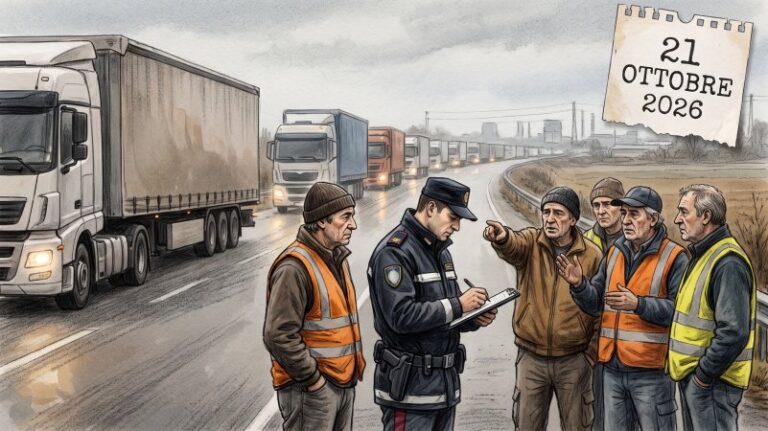
Identificazioni dei manifestanti, richiamo alle sanzioni penali, sospetti sui promotori e sulle infiltrazioni: nel pomeriggio del 21 ottobre 2026 alcuni rappresentanti del Governo hanno accompagnato l'apertura sul caro gasolio con una serie di avvertimenti agli autotrasportatori che presidiano ancora le strade del Mezzogiorno. Al question time della Camera il ministro delle Imprese, Adolfo Urso, ha riferito che il ministero dell’Interno sta procedendo alle identificazioni, "anche ai fini di rimuovere i presidi". Le misure decise il 20 ottobre, ha spiegato, sono state giudicate favorevolmente dalle associazioni, mentre sul campo rimangono "dei presidi o anche dei blocchi sporadici". Urso ha poi indicato il profilo penale della protesta: "Impedire il passaggio dei soli camion, lasciando transitare le automobili, configura comunque un blocco stradale, con conseguenze penali anche detentive". Il ministro ha definito "significativo e emblematico" che siano le stesse associazioni dell'autotrasporto a chiedere al ministero dell'Interno di far rimuovere i blocchi.
Le pene cambiano con il tipo di condotta. L'articolo 1 del Decreto Legislativo 66/1948, nel testo modificato dal Decreto Legge 113/2018, punisce con la reclusione da uno a sei anni chi, per impedire od ostacolare la libera circolazione, depone o abbandona congegni o altri oggetti su una strada ordinaria o ferrata "o comunque ostruisce o ingombra" la strada. La pena raddoppia se il fatto è commesso da più persone, anche non riunite, oppure con violenza o minaccia alle persone o violenza sulle cose. Il blocco attuato con il proprio corpo ricade nell'articolo 1-bis dello stesso Decreto, riscritto dall'articolo 14 del Decreto Legge 48/2025: reclusione fino a un mese o multa fino a 300 euro, che diventano da sei mesi a due anni di reclusione se a bloccare sono più persone riunite.
A margine dello stesso question time, il ministro dell'Agricoltura, Francesco Lollobrigida, ha spostato l'attenzione su chi guida la protesta. Dopo aver ricordato le "tonnellate di fresco e freschissimo" che dal Sud non arrivano al Nord, ha osservato che le associazioni si sono dette soddisfatte degli impegni del Governo e hanno chiesto esse stesse la rimozione dei blocchi, che "a questo punto sembrano davvero ingiustificabili". Poi l'invito a guardare il curriculum degli esponenti: "Se vi andate a studiare anche qualche casellario giudiziario, verificherete che purtroppo ci sono delle criticità anche di questa natura". Questo, ha precisato, "non incide sulla qualità delle istanze dei cittadini", ma chi protesta "in maniera strumentale" non risponde alle caratteristiche di chi avanza legittime richieste.
Il timore d'infiltrazioni era stato espresso anche dal viceministro dei Trasporti, Edoardo Rixi, a margine dell'11° Forum internazionale di Conftrasporto-Confcommercio a Roma: "Temiamo infiltrazioni di bande organizzate che nulla hanno a che vedere con l'autotrasporto". Rixi ha chiesto di smobilitare i presidi per le ricadute sugli approvvigionamenti di ospedali e supermercati e ha richiamato i casi in cui "sono state tagliate gomme ai camion, picchiate delle persone", episodi che a suo giudizio diventano questioni di ordine pubblico e non più proteste per il caro gasolio. "Se uno è fuori dalla Legge, a un certo punto la legge va rispettata. Siamo in un Paese civile", ha aggiunto. Sulle misure, il viceministro ha confermato che i fondi vengono erogati da oggi e che seguirà un Decreto Legge con tutti gli impegni assunti con la categoria, che potrebbe andare al prossimo Consiglio dei ministri.
Da Milano, a margine del Comitato provinciale per l'ordine e la sicurezza pubblica riunito in prefettura, il ministro dei Trasporti ha tenuto insieme apertura e avvertimento: "Siamo disponibili a ragionare anche di un tetto al prezzo del gasolio, cosa che c'è in altre realtà", ha dichiarato, rivendicando lo sblocco di un miliardo di euro di risorse e l'avvio dei pagamenti per duemila imprese al giorno, su 32mila in totale, per quasi mezzo miliardo. Chi sta "picchiando i loro colleghi, tagliando le gomme dei tir, bloccando le autostrade, minacciando chi sale in camion per fare le consegne" riguarda per Salvini l'ordine pubblico, e sono gli stessi autotrasportatori "i primi a chiedermi però di isolare i delinquenti". Molte associazioni, ha sostenuto il ministro, hanno già liberato diverse situazioni in Puglia, Calabria e Sicilia; tra i presidi rimasti vanno distinti autotrasportatori e lavoratori da "infiltrazioni di altro tipo".
Sulle strade, nel primo pomeriggio la Campania resta l'area più critica. Intorno alle 7.00 la protesta aveva portato alla chiusura temporanea del collegamento tra l'A1 Milano-Napoli e l'A30 Caserta-Salerno per chi proveniva da Roma, con tre chilometri di coda verso Napoli e due verso Roma, e a mezzogiorno appariva ancora un presidio alla barriera di Napoli Nord. A Napoli si registrano carenze di generi alimentari, distributori senza scorte e file agli impianti riforniti. Tra Caserta e Napoli sono stati segnalati pneumatici tagliati per costringere i conducenti ad aderire alla protesta.
A Caserta il dato più pesante arriva dal commercio. Oltre l'80% di negozi e locali della provincia rischia di dover sospendere l'attività per mancanza di rifornimenti, con danni già oltre il milione di euro, secondo Confcommercio Caserta. Le unioni industriali delle cinque province campane e Confindustria Bari e Barletta-Andria-Trani hanno scritto in una nota che "l'attività produttiva è alla paralisi, per mancanza di approvvigionamenti", chiedendo di contrastare le infiltrazioni della criminalità organizzata che a loro avviso stanno speculando sulla protesta e auspicando, per le situazioni di assoluta emergenza, l'intervento delle forze dell'ordine. Nel pomeriggio il presidente di Confindustria Campania, Emilio De Vizia, ha ribadito che, se la protesta dovesse degenerare, servirebbe l'intervento delle forze dell'ordine per garantire la continuità delle attività produttive. I sindaci di Napoli e Bari, Gaetano Manfredi e Vito Leccese, hanno descritto in una nota congiunta una situazione "estremamente critica", destinata ad aggravarsi con il passare delle ore, e hanno chiesto a Salvini di anticipare l'incontro con la categoria fissato per il 27 ottobre. I sindacati del trasporto pubblico campano hanno avvertito che la carenza di carburante rischia di paralizzare il servizio, e l'Eav ha già ridotto le corse degli autobus.
In Calabria sta proseguendo la mobilitazione. A Cassano allo Ionio i presidi hanno messo in difficoltà i panificatori, mentre nel Cosentino la Gias di Mongrassano, che produce surgelati, potrebbe fermare le linee dal 22 ottobre per mancanza di materie prime. Il blocco, secondo la presidente e amministratrice delegata Gloria Tenuta, lascerebbe a casa tra 200 e 300 dei 400 dipendenti. Confagricoltura Reggio Calabria ha segnalato i ritardi nelle consegne delle produzioni deperibili della Piana di Gioia Tauro. A Crotone l'impianto di trattamento dei rifiuti che serve i 27 Comuni della provincia non accetta conferimenti, perché i mezzi diretti alle discariche e ai centri di riciclo non viaggiano.
La carenza di carburante ha raggiunto anche gli aeroporti. Enav ha avvisato le compagnie che a Crotone e Reggio Calabria non è disponibile il rifornimento di carburante per aviazione, invitandole a imbarcarlo nello scalo di partenza, mentre a a Lamezia Terme non risultano criticità. Il presidente della Sacal, Luciano Vigna, ha assicurato che i voli sono partiti regolarmente e che la situazione dovrebbe rientrare da domani grazie alle autocisterne scortate dalle prefetture. Nel tardo pomeriggio Wizz Air ha comunicato che le carenze registrate in alcuni scali stanno determinando limitazioni operative che potrebbero ripercuotersi sui voli da e per l'Italia. Alle 18 è previsto in prefettura a Reggio Calabria l'incontro tra la prefetta Clara Vaccaro e i rappresentanti degli autotrasportatori che presidiano la provincia.
In Sicilia la revoca del fermo decisa il 20 ottobre dal Comitato Trasportatori Siciliani non ha chiuso la protesta. Secondo le cronache locali, a Palermo è stato rimosso il presidio di via Oreto, all'innesto con l'autostrada, ma una ventina di veicoli industriali è rimasta davanti all'ingresso del porto, al molo Santa Lucia. I blocchi sono proseguiti anche a Tremestieri, nella zona sud di Messina, e al casello di San Gregorio, sulla A18 Catania-Messina. In mattinata un'assemblea di autotrasportatori riunita all'interporto di Catania ha votato all'unanimità di proseguire il fermo. Il coordinatore del Cts, Salvatore Bella, ha denunciato minacce e gomme tagliate ai danni di chi vuole tornare al lavoro e ha chiesto l'intervento di prefetto e questore di Catania. A Vittoria, nel Ragusano, il mercato ortofrutticolo non ha ripreso l'attività, perché i commercianti non riescono a organizzare i trasporti per i blocchi sulla Catania-Messina e in Calabria.
Per la Puglia le fonti descrivono un allentamento parziale. Il 20 ottobre la delegazione pugliese al tavolo di Milano aveva annunciato una revoca parziale dei blocchi in attesa di risposte concrete e il 21 Federdistribuzione includeva ancora la regione tra quelle con difficoltà di consegna e merci ferme nei centri logistici. In Molise un corteo di camion e trattori partito dall'area industriale di Campochiaro è entrato in mattinata a Campobasso, dove nel corso della giornata il carburante è venuto quasi del tutto a mancare.
Sul versante associativo Anita, Cna Fita, Confartigianato Trasporti, Fai, Fedit, Fiap, Sna Casartigiani, Confcooperative Lavoro e Servizi, Legacoop Produzione e Servizi, Unatras e Assotir hanno chiesto al ministro dell'Interno un intervento "deciso e immediato" per rimuovere i presidi, ritenendo non più giustificabile bloccare il Paese dopo la riapertura del dialogo con il Governo. Il presidente di Conftrasporto, Pasquale Russo, ha giudicato la protesta non più gestibile e ha definito non realistiche alcune richieste avanzate dai manifestanti autonomi all'incontro con Salvini, come un prezzo del gasolio non superiore a 1,40 euro al litro.
La richiesta rivolta al Viminale ha provocato la reazione di Ruote Libere. "Trovo vergognoso che le associazioni nazionali dell'autotrasporto, anziché interrogarsi sulle ragioni che hanno spinto tanti colleghi a scendere in strada, chiedano al ministro dell'Interno Matteo Piantedosi di intervenire per porre fine alle proteste", ha dichiarato la presidente Cinzia Franchini, ricordando che le stesse sigle si erano dette soddisfatte degli impegni del Governo dopo l'incontro con Salvini, mentre gli autotrasportatori hanno continuato a manifestare. Per Franchini l'urgenza di chiudere le mobilitazioni potrebbe dipendere anche dal fatto che, più si prolungano, più diventa evidente la distanza tra le associazioni e gli autotrasportatori che dicono di rappresentare. La presidente ha comunque escluso che si possa impedire a un collega di lavorare, costringerlo ad aderire o ricorrere a violenze e intimidazioni: "La protesta deve essere pacifica e rispettare i diritti di tutti".
Sulle dichiarazioni del Governo, Ruote Libere separa le responsabilità individuali dal giudizio sulla categoria. "Se qualcuno ha commesso reati, ne risponderà personalmente. Ma attenzione a non trasformare singoli episodi o sospetti in una delegittimazione generalizzata di migliaia di autotrasportatori che stanno manifestando un disagio reale", ha affermato Franchini, che trova "singolare" il richiamo alla legalità proprio in questa occasione, quando nel settore esistono da anni problemi gravissimi "sui quali troppo spesso si preferisce sorvolare". Quanto ai pagamenti annunciati da Salvini, per l'associazione si tratta in larga parte di fondi già stanziati e attesi da mesi, mentre servono misure strutturali che impediscano agli aumenti del gasolio di scaricarsi interamente sulle imprese di autotrasporto. Franchini spiega la concentrazione della protesta nel Mezzogiorno con la struttura dei rapporti commerciali. Molte imprese del Nord lavorano direttamente con la committenza e sono riuscite almeno in parte a trasferire sulle tariffe i maggiori costi del carburante, mentre al Sud sono più frequenti i rapporti intermediati da agenzie e da altre imprese di autotrasporto, che rendono più difficile ottenere gli adeguamenti. Ruote Libere dichiara di non nutrire "grandi aspettative" sugli annunci di Salvini e chiede alla presidente del Consiglio d'intervenire personalmente, ascoltando anche chi oggi manifesta e non soltanto le associazioni tradizionali.
Pietro Rossoni