







- Air cargo accounts for only 1.3% of Italy’s extra-EU export volumes but 26.8% of their value, reflecting its role in high-end goods. Italy generates 11.8% of extra-EU exports, but national airports handle just 6.8% of European air cargo: the rest moves by road to foreign airports through road feeder services.
- The new National Airports Plan confirms the territorial imbalance: the north handles 72.6% of cargo volumes, with Malpensa alone accounting for 58.7% of all-cargo traffic. Fiumicino dominates belly cargo traffic thanks to intercontinental flights, while express couriers rely on smaller airports such as Bergamo, Pisa, Ciampino, Ancona and Naples.
- The Ministry of Transport estimates cargo volume growth of 31.8% by 2035, from 1,212,979 to 1,647,067 tonnes. The Plan focuses on the Airport Community System, which will be digital and interoperable with Iata and Dogane, as well as dedicated rail connections and drones for the last mile.
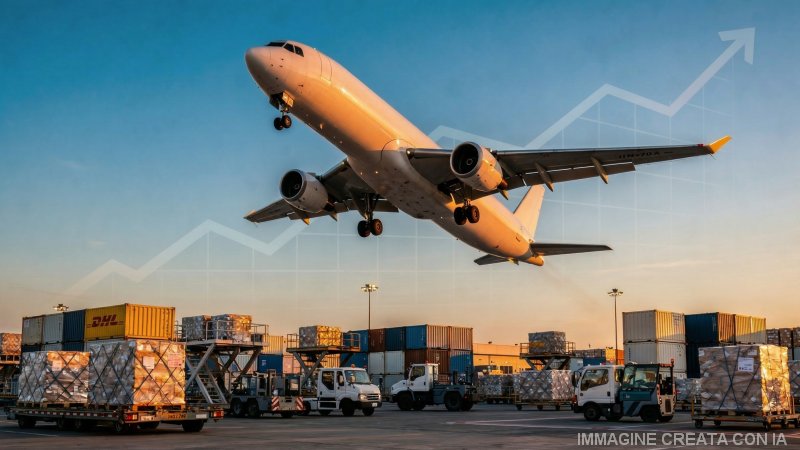
The new Italian National Airports Plan, released in July 2026 with a 2026-2035 horizon, gives air cargo an important growth role in Italian traffic: volumes handled by Italian airports are expected to rise from 1,212,979 tonnes recorded in 2024 to 1,647,067 tonnes forecast for 2035, an increase of 31.8% according to the econometric model developed by the Ministry of Transport, which drafted the document. The projection, with an average annual growth rate of 2.7% in the 2030-2035 period, accompanies a chapter of the Plan devoted to the sector’s structural problems and the levers needed to regain competitiveness against the major hubs of northern Europe.
Air cargo accounts for a small share of Italy’s overall extra-European Union export volumes, just 1.3%, but represents 26.8% of the economic value exported. This share reflects air transport’s role in high-end goods, products subject to rapid obsolescence and those with tight deadlines. The Plan compares this figure with another imbalance: Italy generates 11.8% of extra-EU exports, but national airports handle only 6.8% of European air cargo. The gap is partly explained by the phenomenon of road feeder services: palletised goods that, although covered by an air waybill, physically travel by road to hubs in Benelux and Germany, where they are then loaded onto aircraft. To counter this leakage of traffic abroad, the ministry intends to consolidate a Tavolo di coordinamento nazionale (national coordination round table) dedicated to the sector.
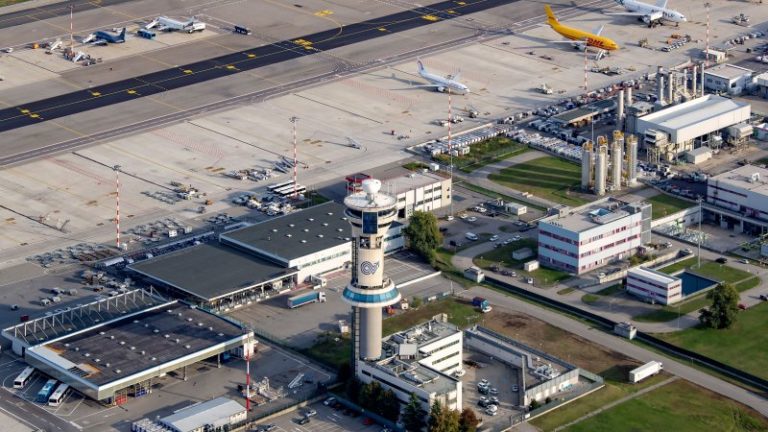
The territorial distribution of volumes remains heavily imbalanced. In 2024, the north handled 881,091 tonnes, equal to 72.6% of the national market, while the centre accounted for 25.1% and the south and islands together did not exceed 2.3%, at 1.3% and 1% respectively. Milan Malpensa alone absorbs 58.7% of national all-cargo traffic, while belly cargo carried in passenger aircraft holds is concentrated at Rome Fiumicino, which benefits from intercontinental connections, with smaller shares for Venice and Bologna. Express couriers, by contrast, show a more widespread distribution, relying on airports such as Bergamo, Pisa, Ciampino, Ancona and Naples. The Tyrrhenian area is a case apart: it handles only 14.2% of national cargo volumes but accounts for 25.4% of overall economic value, as 38% of Italy’s pharmaceutical exports by value pass through the Rome Fiumicino hub.
In terms of business models, the Plan notes that e-commerce is forcing a rethink of air logistics: around 80% of goods traded across borders by the sector already move by air, a share that is driving more extensive networks and tighter delivery times, with the resulting need to shorten supply chains and decentralise sorting centres. About half of general cargo still travels in passenger aircraft holds, using Fiumicino’s intercontinental networks, while the rest is carried by dedicated cargo aircraft, concentrated mainly at Malpensa and Brescia.
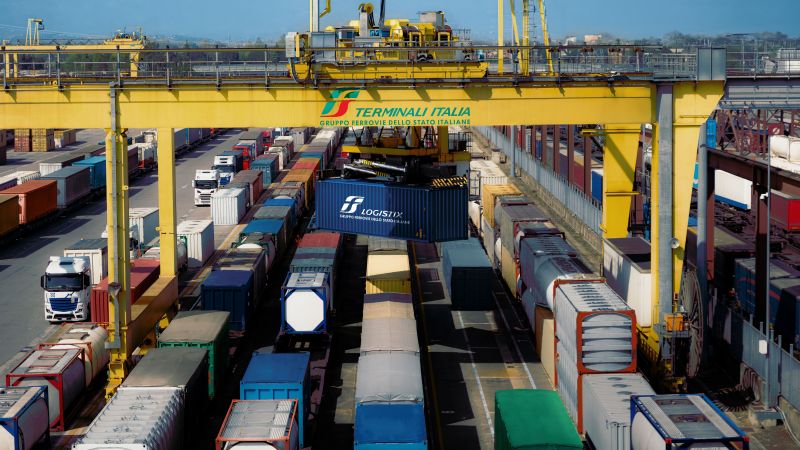
Among the responses set out in the Plan, the main one concerns digitalisation: the development of an Airport Community System (Acs) interoperable with the International Air Transport Association, Iata, and the Agenzia delle Dogane (Customs Agency) should enable instant data sharing between handlers, freight forwarders and customs authorities, reducing clearance times that currently undermine the competitiveness of Italian airports. The document also provides for airport cargocity facilities to move beyond a logic based solely on direct profitability for the airport, becoming strategic assets for the country’s exports, equipped with services operating 24 hours a day and secure parking areas for road haulage operators. Finally, the Plan identifies the development of dedicated rail connections for cargo and the use of drones for last-mile management.
Anna Maria Boidi