








The European Parliament Committee on Transport and Tourism, Tran, approved in May 2026, by 35 votes to six, a proposal to revise EU road toll rules for commercial vehicles. The text, drafted under the guidance of rapporteur Matteo Ricci, introduces a principle so far absent from European legislation: the energy efficiency of trailers or semi-trailers should be taken into account when calculating tolls, in the same way as emissions from the tractor unit. The vote gives the parliamentary committee a mandate to begin trilogue talks with the governments of the 27 member states. Before the file can enter the negotiations proper, however, the decision must be confirmed by the plenary of the European Parliament, scheduled for the second half of May.
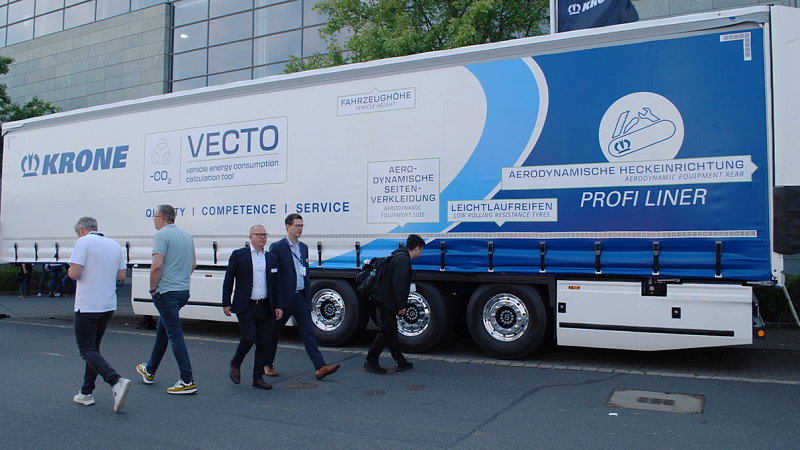
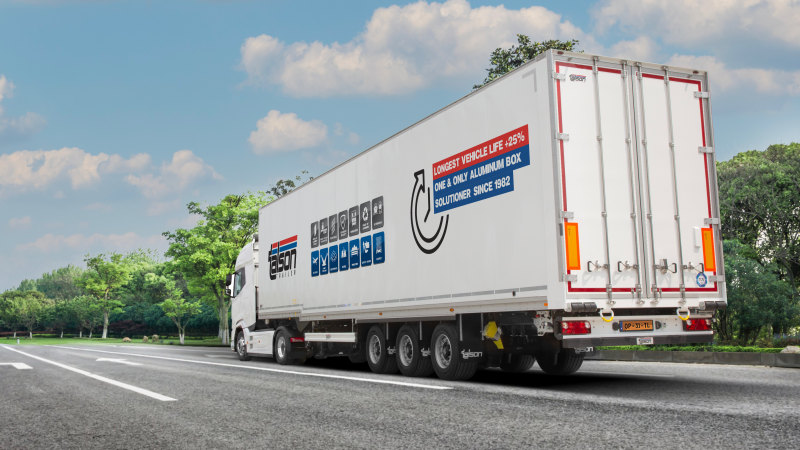
The idea behind the proposal is straightforward: with the same tractor unit, a lighter, more aerodynamic trailer, or one equipped with electric refrigeration systems, reduces fuel consumption and emissions across the whole vehicle combination. Yet current tolling systems do not recognise this contribution. The amendment proposed by Tran aims to correct this imbalance by allowing member states to apply reduced tolls to trailers that meet specific efficiency requirements. MEPs are therefore proposing that countries which already exempt zero-emission vehicles from tolls should be allowed to extend a 75% reduction to low-emission vehicles as well, until 30 June 2031. This would be a transitional measure, designed to bridge the gap between the goal of full decarbonisation and today’s market reality, where the uptake of zero-emission commercial vehicles is progressing more slowly than expected.
The Tran committee justified the move by pointing to the need to support intermediate solutions. Internal combustion engines with efficiency improvements, hybrid systems and vehicles with "range extenders" are seen as necessary tools during the transition phase and should be eligible for toll incentives to accelerate fleet adoption. The proposal falls within the framework of Eurovignette Directive 2022/362, which has already launched the shift from time-based tolls to kilometre-based charging, while also introducing differentiated rates according to CO2 emissions from heavy goods vehicles. Several member states, starting with Germany and its Maut system, are already applying or extending this principle: more efficient vehicles pay less, while more polluting ones pay more.
Should the reform be approved, it would open up a significant market opportunity for trailer manufacturers and bodybuilders, linked to their ability to certify the efficiency of their products for tolling purposes. But this is precisely where the path towards final approval is meeting the strongest resistance. In the Consiglio, where national government representatives sit, several countries have raised reservations not over the principle but over the method: how should the efficiency of a trailer be measured and certified? Which technical standards should be adopted at European level? How can the mechanism avoid creating excessive administrative burdens for businesses and enforcement authorities? And how much flexibility should individual states have in calibrating the scale of the discounts? These questions, still without a shared answer, mean the "trailer discount" is far from secured, and the inter-institutional negotiations are likely to be complex.
Antonio Illariuzzi