



Array ( [0] => 8 [1] => 41 )

Podcast K44

Cronaca

  • Cocaina nascosta in autocisterna, arrestato l’autista

    Cocaina nascosta in autocisterna, arrestato l’autista

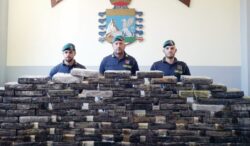
    La Guardia di finanza di Napoli ha sequestrato 113 chilogrammi di cocaina nascosti in un doppiofondo ricavato in un'autocisterna lungo la Statale 162, nei pressi del Centro Direzionale del capoluogo campano. Arrestato in flagranza il conducente. Il carico avrebbe fruttato al dettaglio circa sette milioni di euro.

Transpotalk

Normativa

Mare

  • Attacchi ucraini bloccano l’export di grano russo

    Attacchi ucraini bloccano l’export di grano russo

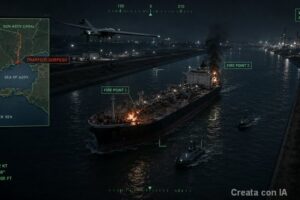
    Il canale Azov-Don, snodo verso il Mar Nero per il grano di Rostov e Krasnodar, resta chiuso dopo l'attacco di droni ucraini a tredici navi russe. Gli analisti stimano che fino a un quarto dell'export cerealicolo del Paese transiti dal Mar d'Azov.

Autotrasporto

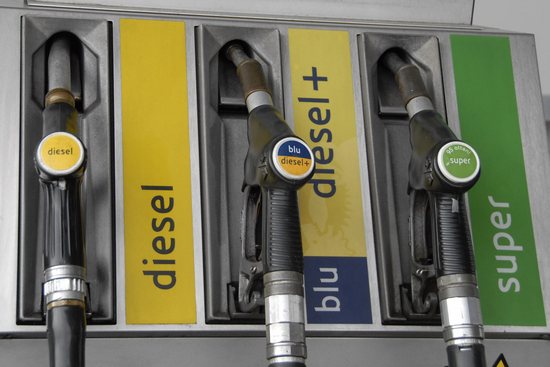
  • La Cna avvia il risarcimento collettivo per il cartello carburanti

    La Cna avvia il risarcimento collettivo per il cartello carburanti

    Cna Fita, Ali Antitrust Litigation Investment e lo Studio Legale Scoccini preparano un'azione risarcitoria per gli autotrasportatori danneggiati dal cartello sulla componente Bio del carburante, accertato dall'Agcm a carico di sei compagnie petrolifere con sanzioni per oltre 936 milioni di euro.

    Arctic Metagaz, the wreck drops off the news radar

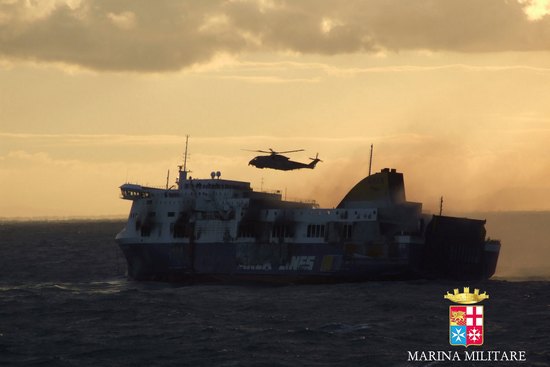
    More than three and a half months after the attack that turned the Arctic Metagaz into an unmanned wreck, publicly available information on its fate stops at 8 April 2026. Since then, there have been no official statements, mainstream press articles or television reports, nor any institutional declarations documenting concrete developments: no new towing attempt, no arrival at a port of refuge, no lightering of the cargo and, conversely, no confirmed sinking. The information vacuum follows a month of intense coverage and is itself a significant development for those following the case from the perspective of maritime safety and the international management of environmental emergencies.

    The incident began on the night of 3 March 2026, when the Russian LNG carrier, about 277 metres long and bound for Port Said in Egypt with a cargo of liquefied natural gas from Russia, was hit by a series of explosions in an area of the central Mediterranean between Malta and Sicily, around 160-170 nautical miles south-east of Malta. The fire that followed caused structural damage severe enough to leave the vessel unusable and without propulsion. The crew, about 30 people, was evacuated without casualties. The causes of the attack remain officially unclear: some sources, including an investigation by Radio France International that reported the presence of more than 200 Ukrainian military specialists in Libya, have suggested a Ukrainian naval drone; Moscow has directly accused Kyiv, which has never claimed responsibility for the operation or commented on the allegation.

    The Arctic Metagaz, part of Russia’s so-called shadow fleet and sanctioned by the European Union, the United States, the United Kingdom, Canada, Switzerland and Australia, has since remained an unmanned wreck, adrift between the search and rescue areas of responsibility of Italy, Malta and Libya. According to estimates that emerged in the following weeks, up to 61,000 tonnes of liquefied natural gas remain on board, along with a quantity of heavy fuels that varies by source, between 450 and 900 tonnes in total of fuel oil, diesel and other polluting substances.

    Operational management of the case passed from the Maltese Authorities, which in mid-March deployed three tugboats to prevent the wreck from entering its territorial waters, to Libya’s National Oil Corporation, which on 20-21 March announced that it had hired an international maritime salvage company to secure the hull and tow it to a Libyan port. The operation also involved Italy’s Eni through the Mellitah Oil & Gas joint venture, while Tripoli, Misurata and Khoms were identified as Libyan ports potentially able to receive a vessel of this size, though no final destination was ever clarified.

    On 24 March, the wreck was temporarily stabilised off Zuwarah using a specialised tug, but the first real towing attempt, launched between late March and early April, ended without success: the towline snapped when the vessel was a few miles from the Libyan coast, and the wreck drifted back eastwards and north-eastwards. The Libyan Authorities attributed the failure to adverse weather and sea conditions; other sources instead underlined the inherent technical complexity of the operation, which required the handling of a large, damaged, unmanned vessel with cryogenic cargo on board, in a legal and geopolitical context already complicated by sanctions and the absence of an operational shipowner.

    On 6 and 8 April, the wreck was located around 70-90 nautical miles north-west of Benghazi, well inside the Libyan search and rescue zone, monitored at a distance by naval assets including the tug Maridive 701, but without stable towing or any public operational plan on timing, the destination port or cargo-lightening procedures. In those days the secretary-general of the International Maritime Organization, Arsenio Dominguez, expressed appreciation for the Libyan intervention, while also acknowledging the operational limits of the Regional Emergency Marine Pollution Centre, the Unep-Map body of the United Nations administered by the Imo and responsible for marine pollution emergencies in the Mediterranean. A group of Italian experts, including a retired admiral and rear admiral of the Coast Guard, called in those days for direct intervention by the European Commission and the states that are signatories to the Barcelona Convention, eight of which are members of the European Union, to define responsibilities and resources for the dual operation of wreck recovery and environmental clean-up.

    Since then, there have been no reports of a new towing attempt, of any arrival at a port of refuge compliant with the requirements set out in Community Directive 2002/59/EC on the vessel traffic monitoring system, of lightering or transhipment operations involving the cargo, of a specific decision by the European Union or the International Maritime Organization, or of the wreck’s possible sinking. Based on the publicly available information, the last verifiable update remains that of 8 April 2026: the wreck was still adrift and under Libyan surveillance, with no documented definitive solution to the dual risk of thermal explosion and hydrocarbon spill that the incident has posed since 3 March.


    © TrasportoEuropa - Riproduzione riservata - Foto di repertorio
    Segnalazioni, informazioni, comunicati, nonché rettifiche o precisazioni sugli articoli pubblicati vanno inviate a: redazione@trasportoeuropa.it


      Puoi commentare questo articolo nella pagina Facebook di TrasportoEuropa

      bottone newsletter piccolo Vuoi rimanere aggiornato sulle ultime novità sul trasporto e la logistica e non perderti neanche una notizia di TrasportoEuropa? Iscriviti alla nostra Newsletter con l'elenco ed i link di tutti gli articoli pubblicati nei giorni precedenti l'invio. Gratuita e NO SPAM!



    CONTENUTI SPONSORIZZATI


Videocast K44

Aereo

  • Lufthansa Cargo avvia il nuovo hub merci a Francoforte

    Lufthansa Cargo avvia il nuovo hub merci a Francoforte

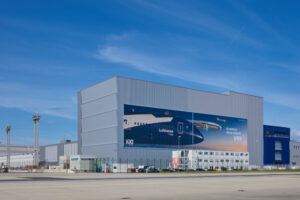
    Lufthansa Cargo avvia la prima fase del progetto LCCevo nell’aeroporto di Francoforte da 600 milioni di euro, che entro il 2030 trasformerà il Lufthansa Cargo Center nello scalo aereo merci più moderno d'Europa. In parallelo la compagnia lancia nuovi servizi digitali su WeChat per il mercato cinese.

Persone

  • Britta Weber assume la guida di Hupac

    Britta Weber assume la guida di Hupac

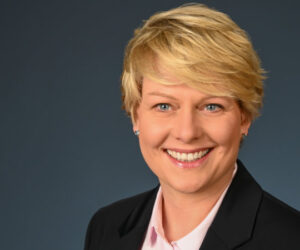
    Dal 1° luglio 2026 Britta Weber è la nuova amministratrice delegata del Gruppo Hupac, prima donna al vertice dell'azienda nei suoi quasi 60 anni di storia. Arriva da Ups e punta a rilanciare il trasferimento modale partendo dai terminal di Busto Arsizio e Milano Smistamento.
Yale rinnova la gamma carrelli elettrici Erc-VG2

TECNICA

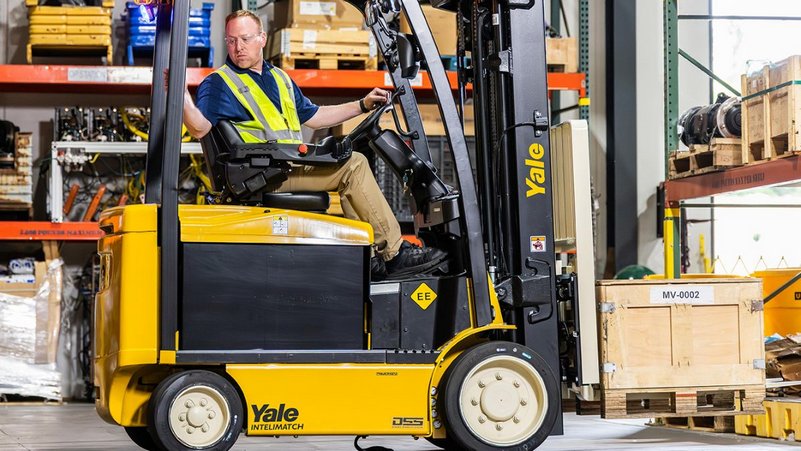
Yale rinnova la gamma carrelli elettrici Erc-VG2
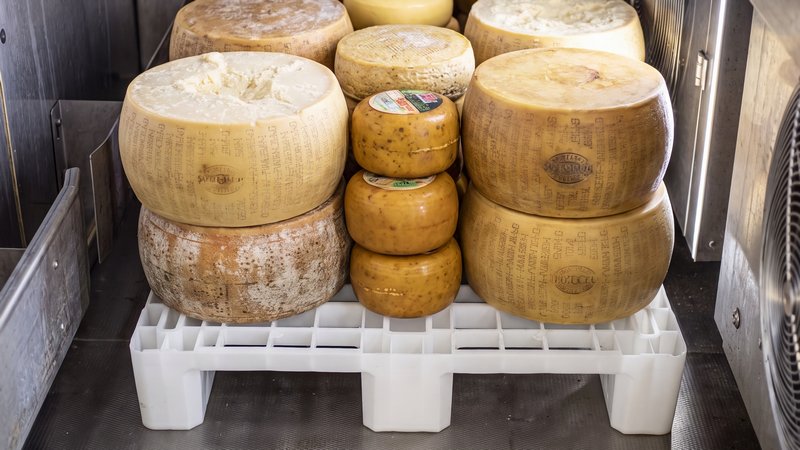
Un nuovo pallet in plastica per alimentari

TECNICA

Un nuovo pallet in plastica per alimentari
Unece adotta il primo regolamento globale sulla guida autonoma

TECNICA

Unece adotta il primo regolamento globale sulla guida autonoma
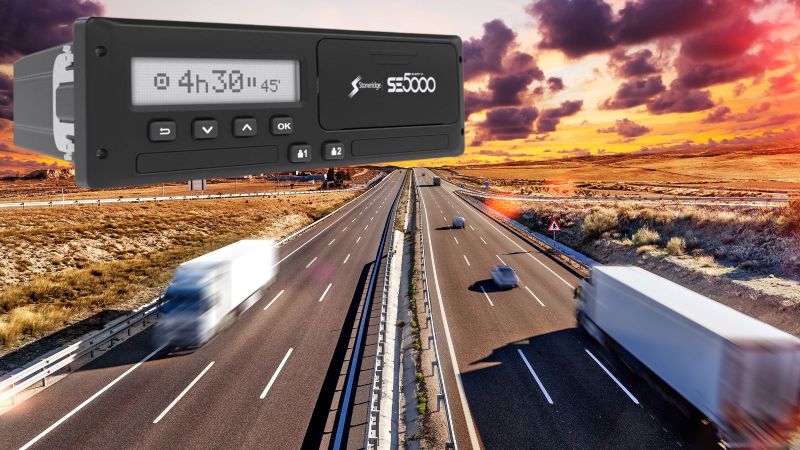
Stoneridge presenterà allo Iaa 2026 nuovo software per camion

TECNICA

Stoneridge presenterà allo Iaa 2026 nuovo software per camion
Video | le novità Volvo Trucks per il 2026

TECNICA

Video | le novità Volvo Trucks per il 2026
previous arrow
next arrow
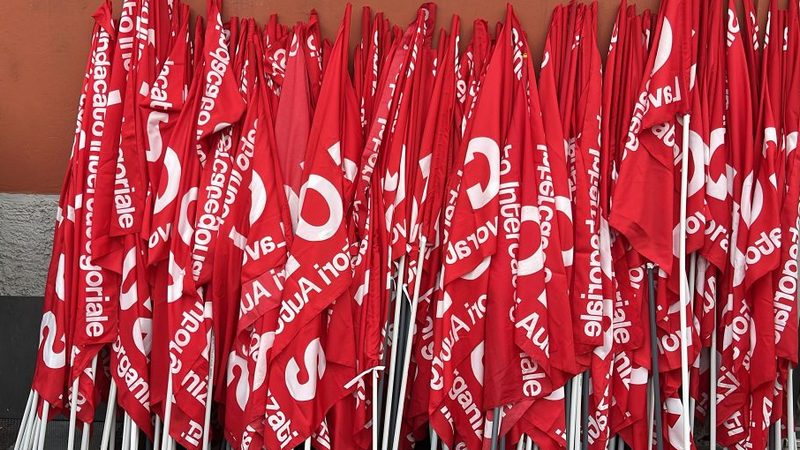
Doppia mobilitazione del SiCobas nella logistica a luglio 2026

LOGISTICA

Doppia mobilitazione del SiCobas nella logistica a luglio 2026
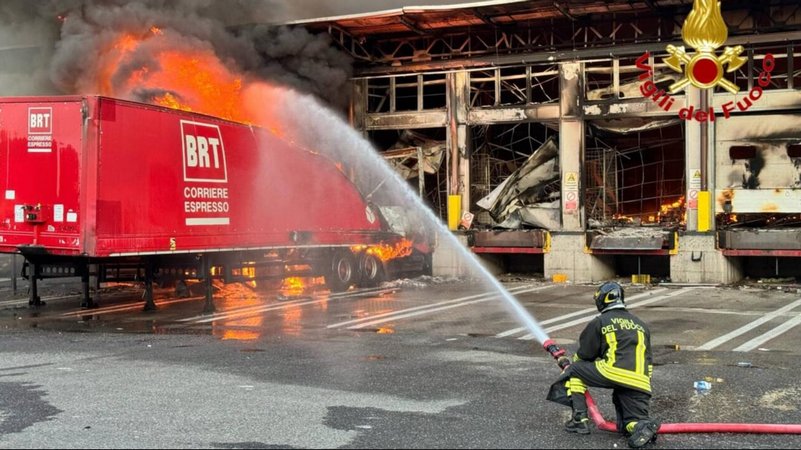
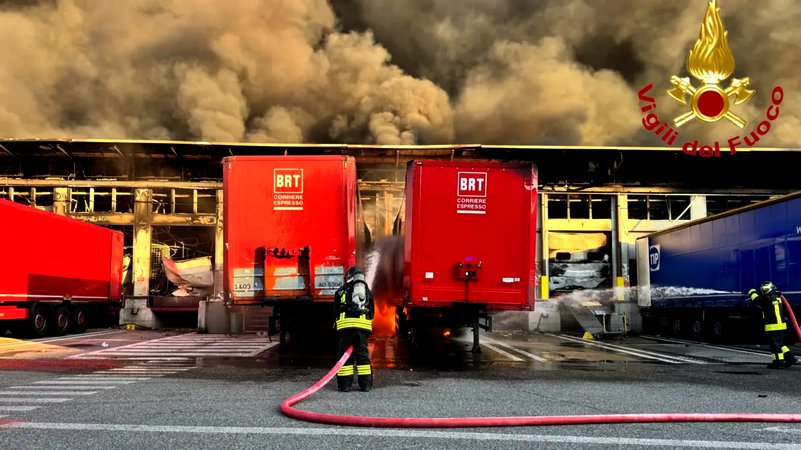
Indagine anche per dolo sull’incendio alla Brt di Milano

LOGISTICA

Indagine anche per dolo sull’incendio alla Brt di Milano
Colpito da un incendio un magazzino Brt di Milano

LOGISTICA

Colpito da un incendio un magazzino Brt di Milano
A Milano sequestro da 28 milioni nella logistica

LOGISTICA

A Milano sequestro da 28 milioni nella logistica
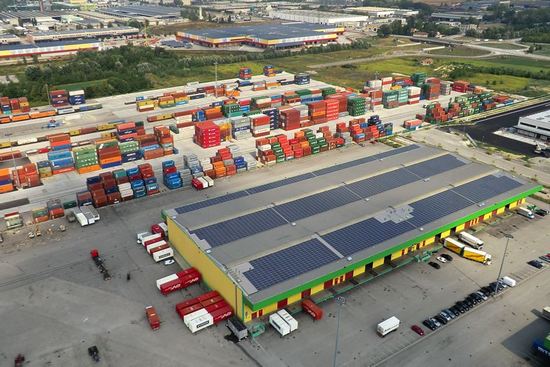
Interporto Padova incorpora la società fieristica Padova Hall

LOGISTICA

Interporto Padova incorpora la società fieristica Padova Hall
previous arrow
next arrow
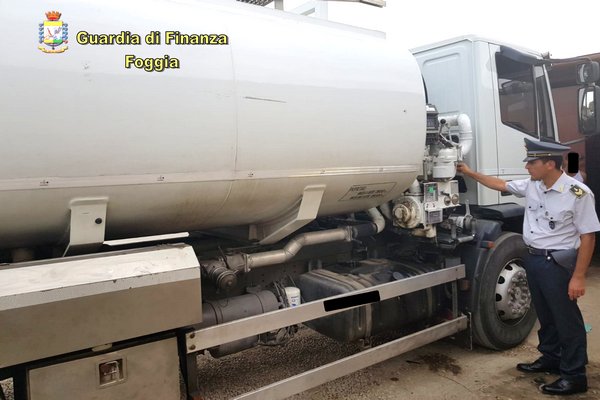
Sequestro da 60 milioni per frode sui carburanti

ENERGIE

Sequestro da 60 milioni per frode sui carburanti
Gasolio agricolo sui camion, cinque arresti in Puglia

ENERGIE

Gasolio agricolo sui camion, cinque arresti in Puglia
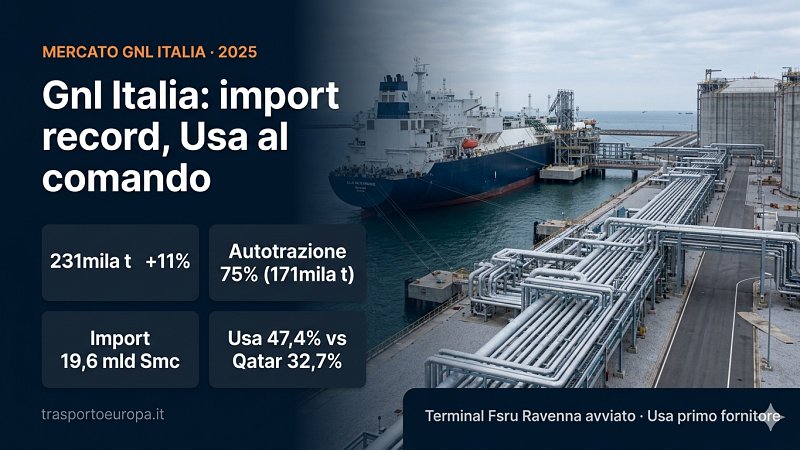
Il Gnl cresce in Italia ma rallenta nell’autotrasporto

ENERGIE

Il Gnl cresce in Italia ma rallenta nell’autotrasporto
Fiap avverte che una causa sul cartello carburante è prematura

ENERGIE

Fiap avverte che una causa sul cartello carburante è prematura
Bruxelles approva il regime italiano da 23 miliardi per le rinnovabili

ENERGIE

Bruxelles approva il regime italiano da 23 miliardi per le rinnovabili
previous arrow
next arrow
Con Webfleet Di Martino traccia sempre i semirimorchi

SERVIZI

Con Webfleet Di Martino traccia sempre i semirimorchi
Havant cresce nel digitale europeo con Intesa

SERVIZI

Havant cresce nel digitale europeo con Intesa
Connettere le flotte di camion l’IA, la soluzione di Geotab

SERVIZI

Connettere le flotte di camion l’IA, la soluzione di Geotab
La logistica è tra le attività più colpite dai ciberattacchi nel 2025

SERVIZI

La logistica è tra le attività più colpite dai ciberattacchi nel 2025
Il rischio Dogana non è più solo amministrativo

SERVIZI

Il rischio Dogana non è più solo amministrativo
Sicurezza certificata da Tapa nella borsa carichi Trans.eu

SERVIZI

Sicurezza certificata da Tapa nella borsa carichi Trans.eu
Due attentati a Sicily by Car con fuoco e kalashnikov

SERVIZI

Due attentati a Sicily by Car con fuoco e kalashnikov
L’innovazione di Geotab punta su sicurezza e Pmi

SERVIZI

L’innovazione di Geotab punta su sicurezza e Pmi
Gaston Schul cresce nelle spedizioni genovesi con Parodi Forwarding

SERVIZI

Gaston Schul cresce nelle spedizioni genovesi con Parodi Forwarding
L’Italia è molto esposta nel cibercrimine nel trasporto e logistica

SERVIZI

L’Italia è molto esposta nel cibercrimine nel trasporto e logistica
Carta DKV per ricaricare il camion elettrico

SERVIZI

Carta DKV per ricaricare il camion elettrico
Video | Dkv al Transpotec oltre la carta carburante

SERVIZI

Video | Dkv al Transpotec oltre la carta carburante
Zucchetti presenta una logistica digitale integrata software e robot

SERVIZI

Zucchetti presenta una logistica digitale integrata software e robot
Golia360 punta sulla digitalizzazione per gli autisti

SERVIZI

Golia360 punta sulla digitalizzazione per gli autisti
Come la logistica può guadagnare dalle multe Antitrust

SERVIZI

Come la logistica può guadagnare dalle multe Antitrust
previous arrow
next arrow