






The trade war between the United States and the European Union, sparked by US President Donald Trump, officially began on 12 March 2025 with the introduction of 25% US tariffs on steel and aluminium imports from European countries. Brussels immediately announced "strong but proportionate" retaliatory measures targeting American products worth approximately €26 billion. This escalation not only threatens the stability of transatlantic supply chains but also casts doubt over the resilience of the world's largest economic partnership, which recorded bilateral trade worth €1.6 trillion in 2023.
This is not the first tariff war between the US and the EU. During Trump's first administration (2017–2021), the US imposed tariffs of 25% on steel and 10% on aluminium under Section 232 of the 1962 Trade Expansion Act, citing alleged national security threats. At the time, the EU retaliated by imposing tariffs on €2.8 billion worth of American goods, including Harley-Davidson motorcycles, bourbon, and Levi's jeans. The standoff was partially resolved by the Tariff Agreement of 2020, but this merely suspended rather than eliminated tariffs, creating a fragile truce that collapsed today.
Trump considers the EU's €157 billion goods surplus with the US in 2023 a threat, even though it represents just 3% of total trade volume and is partially offset by the EU's €109 billion deficit in services. The EU's retaliatory tariffs will begin in two phases: the first, targeting €4.5 billion of American products, takes effect on 1 April and will affect Harley-Davidson motorcycles, bourbon, tobacco, and orange juice. The second phase, involving goods valued at €21.5 billion, will come into force by 13 April, hitting products such as beef, poultry, dairy, soybeans, timber, and industrial goods including appliances, tools, and plastics.
The selection of these products is deliberate. The European Commission chose goods symbolic to predominantly Republican states, such as Louisiana (soybeans), Nebraska (beef), and Wisconsin (dairy products), maximising internal political pressure within the US. Meanwhile, the EU is diversifying its supply sources—for example, substituting American soybeans with Brazilian ones. According to the Commission, these proportional countermeasures respect World Trade Organization rules. Nevertheless, EU Trade Commissioner Maroš Šefčovič acknowledged the European economy would also suffer, especially in sectors reliant on US steel and aluminium.
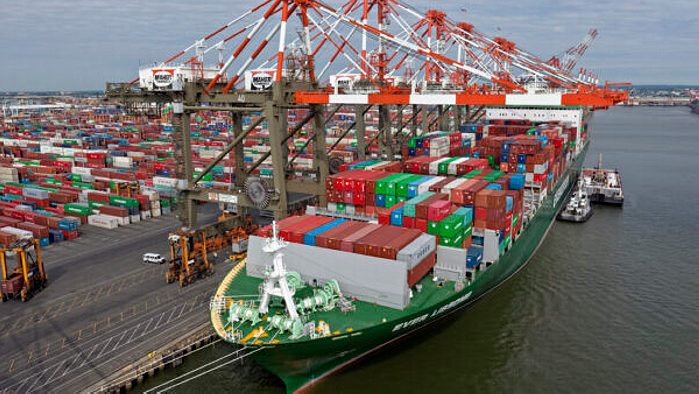
Disruption to transatlantic supply chains is expected imminently. European companies importing aluminium components from the US are already seeking alternative suppliers in the Middle East and Asia, leading to logistical cost increases of up to 20%. Similarly, American producers of engines and machinery are considering relocating operations to Mexico or Canada to bypass EU tariffs. The European Union has tasked Commissioner Šefčovič with initiating technical discussions by late March, aiming for a reciprocal suspension of tariffs.
If negotiations fail, forecasts predict a 3.7% reduction in EU-US trade by 2026, resulting in GDP losses of 0.8% for the EU and 1.2% for the US. Inflation could rise by 2.1% in the Eurozone and 3.4% in the US, driven by higher prices for steel, vehicles, and consumer goods. Additionally, industries may shift production to Southeast Asia and North Africa, resulting in the direct loss of 250,000 jobs in Europe.
In the longer term, a trade war between the US and the EU could also alter Europe's natural gas supply patterns, already disrupted by the war in Ukraine, which had made the United States Europe's primary LNG supplier (70% of total imports) following sanctions against Russia. According to Drewry, Europe might increasingly turn to Qatar, Africa, and potentially Russia again, should an agreement on the war in Ukraine be reached. Notably, Russian LNG supplies never fully ceased, amounting to 17.8 million tonnes in 2024.
Qatar, with its expanding North Field—the world’s largest natural gas field capable of producing up to 142 million tonnes of LNG annually by 2030—is poised to become Europe's leading supplier. Russia may regain status as a key provider for Eastern European countries. Africa, however, remains disadvantaged due to inadequate infrastructure and poor facility maintenance.