








Between the evening of 6 January and 8 January 2026, Hungary drastically slowed its rail network under the heaviest snowfall of the past 10–15 years. The most significant measure for freight transport came with the intervention of the Minister of Transport and Construction, János Lázár, who ordered the temporary suspension of freight trains across the entire national network to free up capacity and resources for passenger services, summarising the approach on Facebook with the phrase “Freight can wait, passengers cannot”. Operational implementation was entrusted to the infrastructure manager of the MÁV group, while operators received notifications of a generalised restriction with no definite end date, described only as “temporary” and linked to weather developments and the restoration of network reliability.
Meteorological conditions were decisive. According to HungaroMet, several snowfalls occurred between 4 and 8 January, with cumulative accumulations in Budapest reaching 15–25 centimetres and peaks of 30–35 centimetres in the Bakony Mountains area, while in the south-west some locations recorded up to 60 centimetres. Snowfall was compounded by minimum temperatures down to -15/-20 degrees and strong winds, leading to drifting and reduced visibility. This combination made failures at points more frequent and persistent, identified by MÁV as the main technical criticality: snow accumulates in the mechanisms, passing trains reintroduce snow onto freshly cleared equipment, and heating systems prove insufficient with such heavy deposits, particularly at the busiest nodes.
The decision to prioritise passengers was coupled with highly labour-intensive operational management. MÁV reported deploying around one thousand staff in the snow emergency, with a significant concentration in the capital area, where 300 people were active during the day and 150 at night, working on around 1,200 points by the morning of 7 January. Interventions often had to be repeated because precipitation and wind rapidly recreated obstructions. Even with these resources, the passenger network was not spared: on the main routes systematic delays of 10–30 minutes were recorded, with some services running 60–120 minutes late, alongside cancellations and partial routings with replacement buses and mutual acceptance of tickets between rail and road.
From a technical standpoint, the suspension of freight services was justified by the ministry as a way to reduce complexity: fewer trains on the network mean fewer point movements, a lower probability of failures and, above all, a reduced risk that a breakdown involving a heavy train would require lengthy rescue operations under already extreme conditions, potentially blocking passenger traffic as well. In the short term, this approach seeks to contain the domino effect typical of mixed networks when the controlling factor becomes the availability of functioning points and the intervention capacity of field teams.
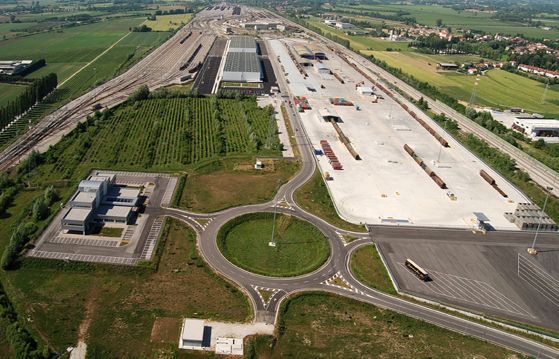
For logistics, the most sensitive aspect was the corridor effect. Hungary is a transit country for east–west and north–south flows, including links to Austria and Germany, as well as routes towards the Balkans and Romania. Under these conditions, a generalised halt across the national territory created queues of trains waiting at borders and terminals, with knock-on effects on cycle times and the planning of intermodal transport. Metrans, an operator with a terminal at Budapest Csepel active since 2017, reported the impossibility of planning transits through the country during the restriction and pointed to dependence on weather evolution and the restoration of operational reliability. The same company communication recalled some scale indicators that help to gauge the potential impact of the blockade on an intermodal operator: a network of 20 terminals in 13 European countries and around 650 container trains managed weekly. Even without estimating the volumes actually cancelled, a suspension at a transit node reduces the ability to absorb cascading delays, because the restart does not occur on an “empty” system, but on terminals and routes already saturated by backlogs.
The European context amplified the impact because the Hungarian episode coincided with disruptions in other countries. Critical issues were also reported on north-western European networks and in port hubs, with rail delays and congestion limiting the scope for effective rerouting of flows. In this framework, the selective suspension decided in Budapest appears as a protective measure for the national passenger service, but for international freight transport it becomes a network interruption, closer to a “total bottleneck” than a simple capacity reduction. Those crossing Hungary, in the absence of available rail paths, must replan, wait or divert part of their flows to road, with consequences for vehicle availability, crew rostering and compliance with delivery windows, particularly for low-inventory supply chains or those with sequencing constraints.
Infrastructure vulnerability also makes the episode an indicator of resilience. Hungrail, the association representing rail freight, had already described in 2025 a picture of structural difficulties, with a loss of volumes from 2020 to 2024 amounting to almost two million tonnes and a 14% increase in network access charges in September 2024, against a backdrop of high operating costs and maintenance considered inadequate. In a market already marked by decline and by a perception of lower reliability compared with road, an extreme weather event acts as a reputational multiplier, not so much because of the emergency decision itself, but because it highlights the fragility of the most sensitive elements of the network, from points to electric traction. MÁV communications during the crisis also reported failures on overhead lines on key routes and single-track operation on some sections, factors that, in the presence of mixed traffic, rapidly reduce residual capacity.
One open question remains for operators: the management of the “restart”. In available communications, the duration of the suspension was described as temporary and conditional on the restoration of full reliability, without a specific date. For intermodal planning this is a critical factor, as it affects the sizing of buffer space at terminals, wagon rotation and the availability of train paths in subsequent days, when the system must absorb both regular flows and the backlog. In a network already sensitive to bottlenecks in the Budapest area, the issue is also linked to enhancement projects discussed in the country, such as the proposal for a freight-dedicated bypass line around the capital, cited in industry debate as a necessary element to reduce conflict between passenger and freight traffic during critical phases.
M.L.