






On 8 January 2026 Zalando announced the closure of its German logistics centre in Erfurt, Thuringia, with operations scheduled to end by the end of September 2026. The decision directly affects around 2,700 employees and concerns one of the historic nodes of the group’s logistics network in eastern Germany, which has been operating for more than thirteen years. The announcement was made through an official company statement and forms part of the broader rationalisation process launched after the acquisition and subsequent integration of About You, completed in the second half of 2025.
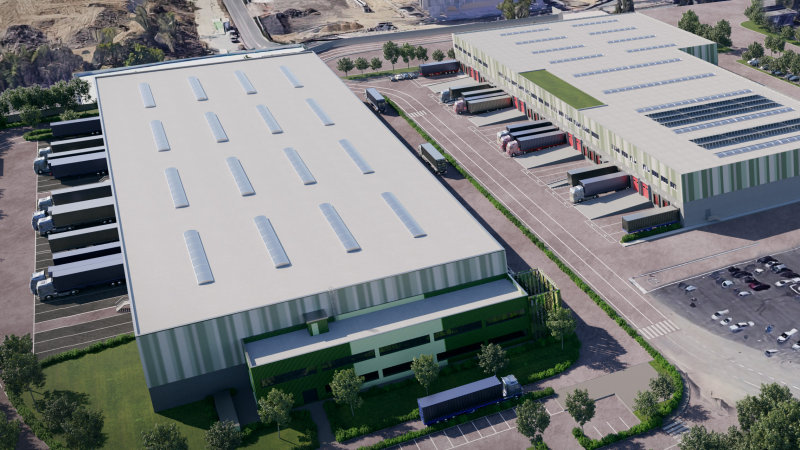
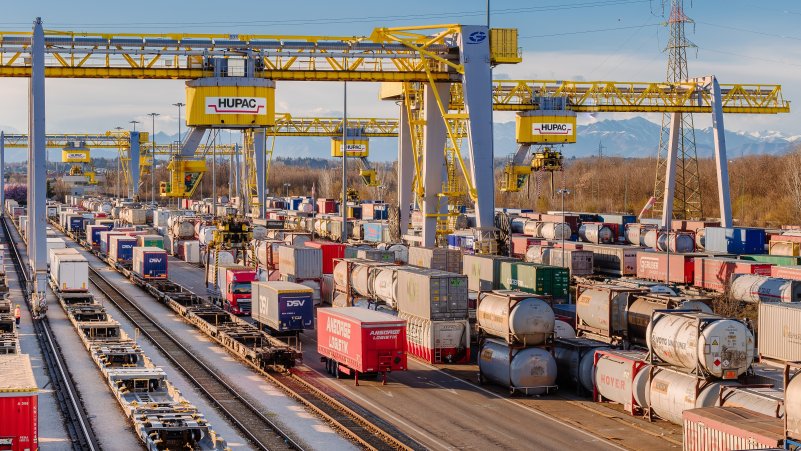
The Erfurt site was inaugurated in December 2012 as Zalando’s first large logistics centre developed in-house, with a total investment of around €170 million and the support of €22.4 million in regional public incentives, out of a national total of €35.5 million. The facility covers approximately 130,000 square metres and over the years has served as a key reference point for the distribution of fashion and lifestyle products to numerous European markets, leveraging Thuringia’s central location and direct access to the A4 and A71 motorways, as well as a rail terminal for combined road-rail transport.
From an operational perspective, Erfurt was a site strongly oriented towards handling large volumes, with automation solutions progressively integrated over time. The centre was equipped with pouch sorting systems capable of processing hundreds of thousands of units, proprietary warehouse management technologies and mobile robots for parcel handling, particularly in the footwear segment. Despite these investments, the site has been assessed by the group as less efficient than other, more recent hubs designed from the outset with profiles optimised for next-generation automation.
The closure of Erfurt is directly linked to the infrastructure overlap that emerged after the integration with About You. The €1.13 billion transaction brought with it a partially duplicated logistics network, making consolidation necessary in order to reduce redundant capacity and unit fulfilment costs. The group’s stated objective is to concentrate flows on a smaller number of platforms deemed strategic, while maintaining a European network consisting of 14 centres in seven countries.
In Germany, three main logistics hubs will remain operational: Mönchengladbach in North Rhine-Westphalia, with a strong focus on the Benelux markets; Lahr in Baden-Württemberg, which is already extensively automated; and Gießen in Hesse, a new hub of around 130,000 square metres still in the ramp-up phase in 2026 and intended to absorb a significant share of the volumes currently handled by Erfurt. The latter site has been designed as a next-generation facility, offering greater operational flexibility and deeper integration between IT systems, automation and the management of seasonal peaks.
Zalando’s decision represents a significant example of post-merger logistics reorganisation in a capital-intensive sector with margins under pressure. The group aims to generate operational synergies estimated at around €100 million per year through network rationalisation, volume concentration and a reduction in cost per unit shipped. In an increasingly competitive European online fashion market, marked by the expansion of platforms such as Shein and Temu, logistics has become one of the main levers to safeguard profitability and service levels.
The closure of Erfurt is also accompanied by the termination of activities at three overseas warehouses operated by third-party logistics providers on behalf of Zalando and About You, whose contracts will not be renewed. This choice highlights a selective strategy that favours direct control over the most efficient hubs and the use of external partners only in specific contexts, while at the same time reducing network fragmentation.
On the operational side, the company has stated that activities at the Erfurt centre will continue as normal until the closure date, ensuring continuity of service for end customers. Flows will be progressively reallocated to other facilities, with no declared impact on delivery times, thanks to the remaining spare capacity and the level of automation at the sites that will stay active. This aspect is noteworthy, as it shows how network resilience is now being built more on the flexibility of large hubs than on the multiplication of storage points.
Zalando has begun discussions with the works council to define a social plan and accompanying measures for the closure, including internal transfers to other sites, particularly Gießen, and support tools for redeployment. The geographical distance between Erfurt and the new operational hubs, however, raises concrete questions about the real possibility of retaining a significant share of the workforce within the group, especially for more operational roles.
For the region of Thuringia, the impact is substantial. The logistics centre was the main private employer in the area and one of the cornerstones of the Erfurt industrial zone, which hosts around 85 companies and employs approximately 6,000 people in total. The loss of a hub of this size alters the local logistics balance and reduces the site’s attractiveness as a large-volume platform, while also raising questions about the effectiveness of attraction policies based on public incentives in the third-party logistics and e-commerce sector.
From a broader perspective, Zalando’s decision reflects a trend affecting the entire sector: the progressive concentration of flows on highly automated hubs capable of serving multiple markets from a single platform, and the reduction in the number of intermediate sites. The Erfurt case confirms that competitiveness is no longer driven solely by geographical location, but by the ability to integrate automation, information systems and contractual flexibility in a context of strong demand volatility.
Michele Latorre