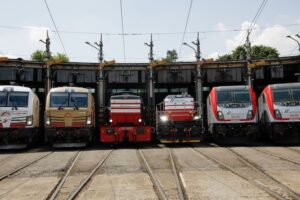






The European Commission has overhauled State aid rules for land transport for the first time since 2008. On 16 March 2026, the Directorate-General for Competition adopted two complementary instruments: the Guidelines on State aid for land and multimodal transport (LMT Guidelines) and the Transport Block Exemption Regulation (TBER). The package, which enters into force on 30 March 2026, is designed to simplify and speed up the use of public funds for rail, inland waterways and multimodality, with the stated objective of shifting freight volumes from road to more sustainable modes.
According to data cited by the Commission, around 75% of freight transport in the EU takes place by road, while road transport emits around six times more CO2 per tonne-kilometre than rail. The previous guidelines focused almost exclusively on railway undertakings, leaving key areas such as multimodality, digitalisation, cross-border interoperability and inland waterways insufficiently addressed. The new framework broadens the scope by integrating these elements into a single structure.
The TBER is the most significant operational innovation. It identifies categories of aid considered to pose a low risk of distorting competition, which national governments can grant without prior notification to Brussels. These include investments in rolling stock, inland vessels, terminal infrastructure and intermodal loading units, as well as measures to coordinate rail, inland waterway and multimodal transport. The Regulation will remain in force until 31 December 2034, providing a stable framework for roughly a decade.
The LMT Guidelines, by contrast, set out compatibility conditions for aid that still requires notification, extending the scope beyond the 2008 framework. Areas now explicitly covered include rail and inland waterway infrastructure, including intermodal platforms and sidings; the launch of new commercial rail or waterborne services; public service obligations in rail freight; and measures supporting the green and digital transition, such as rail interoperability and the reduction of external costs. Unlike the TBER, the LMT Guidelines do not have a fixed expiry date and may be updated over time.
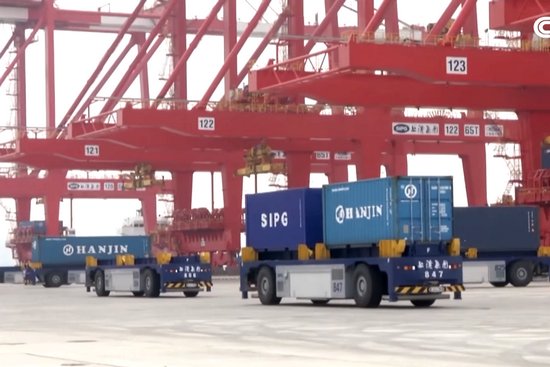
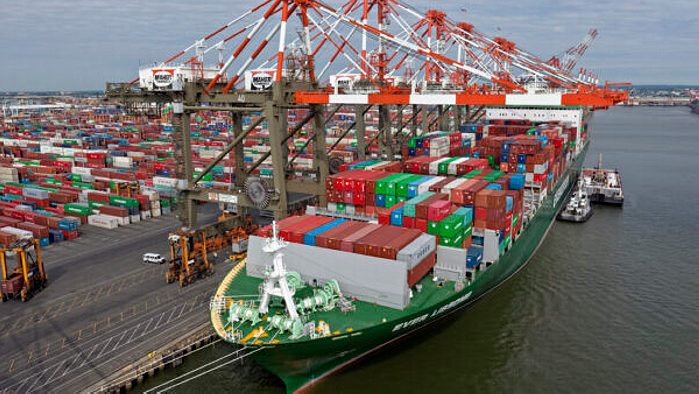
A wide range of stakeholders stand to benefit from the new framework. Railway undertakings, in both freight and passenger segments, will be eligible for aid for new services, rolling stock purchases and the development of service infrastructure. Operators of inland waterways and river ports will be able to access support for new connections and waterway or river-sea infrastructure. Multimodal and logistics operators will be eligible for funding for intermodal terminals, cranes, digital systems and loading units integrating rail, inland waterways, short sea shipping and road transport. Small and medium-sized transport enterprises are explicitly identified as priority beneficiaries to facilitate access to financing for rolling stock and vessels.
The framework applies across the entire EU economic area, with particular focus on European rail freight corridors and cross-border nodes, major inland waterways such as the Rhine and the Danube, and intermodal terminals and inland ports along the TEN-T corridors, where modal shift potential is considered high. The Commission stresses that the new framework maintains strict safeguards to prevent distortions of competition: aid must be proportionate, targeted at reducing external costs and accompanied by appropriate safeguards.
The real impact of the reform will become clear in the coming years, as the number of new rail and inland waterway services grows and market share shifts away from long-distance road haulage across Europe. The EU’s Sustainable and Smart Mobility Strategy aims to double rail freight traffic and strengthen inland waterways and short sea shipping by 2050. The new State aid framework is one of the tools designed to help achieve that objective.
P.R.