





The recent collision between the oil tankers Front Eagle and Adalynn in the Strait of Hormuz is much more than an isolated incident: it is a warning sign for a maritime navigation system increasingly exposed to invisible yet very real threats. The two vessels were operating in an area that, in the days leading up to the collision, had been subject to intense satellite interference and manipulation of automatic identification systems (AIS). In such a context, precise ship orientation can no longer be taken for granted, particularly as geopolitical tensions escalate.
According to Yarden Gross, CEO and co-founder of maritime technology firm Orca AI, it is time to fundamentally rethink the resilience of navigation systems. When GPS signals are jammed and AIS transmissions are falsified or completely absent—something that is occurring more and more frequently in geopolitical hotspots—ships are effectively sailing in a digital fog.
The case of the Adalynn, which some analysts believe to be part of the Russian shadow fleet (and thus likely to have been sailing with its AIS transponder switched off to evade sanctions and conceal its movements), illustrates the scale of the problem. To make matters worse, tracking data showed that the Front Eagle had inexplicably appeared “on land” in Iran two days before the incident, a clear sign of GPS spoofing.
In such conditions, crews are forced to operate with compromised or entirely missing information. Ships vanish from monitors, signals are faked, and precious seconds are lost in uncertainty—all of which severely tests even the most capable watch officers, leaving critical decisions at the mercy of unreliable instrumentation. “We cannot keep asking crews to bear this burden alone,” says Gross.
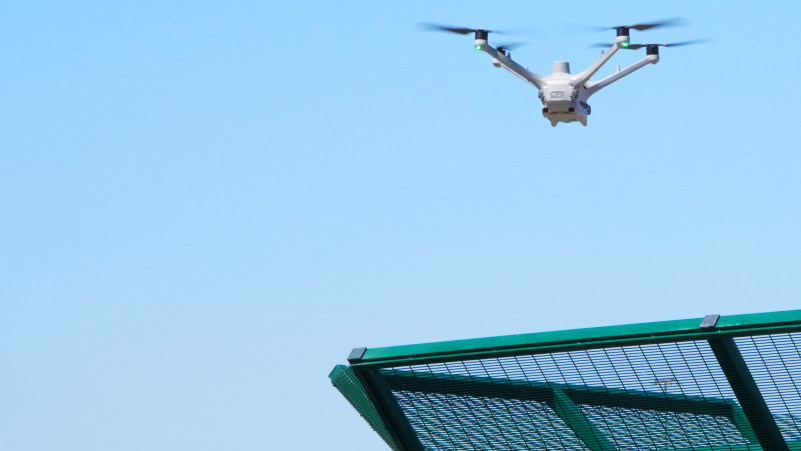
He argues that the solution lies in a technological transition: complementing human vigilance and traditional radar with situational awareness systems based on artificial intelligence and computer vision. These technologies can detect, classify and track vessels and obstacles in real time, even in the absence of AIS or when GPS data is untrustworthy. These systems are not intended to replace radar—which remains the primary tool for collision avoidance—but to enhance it. While radar may struggle in congested waters or miss small targets amid background noise, a well-trained computer vision system accurately identifies what is truly present in the surrounding environment, rather than what corrupted data might suggest.
Gross cites the incident in the Strait of Hormuz as an example, explaining that just moments before the collision, the Front Eagle made a sudden starboard turn. In a scenario where an unidentified vessel appears unexpectedly at close range, the presence of an independent perception system—one that confirms visually what digital instruments fail to show—can make the difference between an effective response and a disaster.
That is why, Gross stresses, adopting these tools is not a technological whim but an operational necessity, especially in areas where signal jamming, covert operations and invisible fleets are commonplace. Artificial intelligence can thus serve as an additional layer of safety: making the invisible visible, confirming what is uncertain and giving commanders full awareness of the maritime scenario.
Gross concludes by noting that maritime culture has always embraced the principle of redundancy in mechanical systems: dual engines, auxiliary pumps, emergency procedures. It is time to apply the same logic to external perception. Because when the electronic chart becomes unreliable and digital references blur, the ship still sails on. And it is at that moment that an “intelligent gaze” is needed—one capable of clearly interpreting the situation and guiding human action with greater confidence. In a sea where threats are increasingly digital, the future of safe navigation also depends on the artificial eye.