


- Rail freight transport in Italy ended 2025 with 49.4 million train-km, down 3.5% from 51.2 million in 2024. The decline forms part of an overall contraction of 7.8% since 2022, worsened by the European industrial crisis and geopolitical instability, which are weighing on global supply chains.
- Public incentives reached €168 million in 2025, but are struggling to generate a modal shift from road to rail. The additional operating costs caused by around 1,300 worksites active on the network every day are eroding much of the economic benefit provided by Ferrobonus, Norma Merci and discounts on Rfi track access charges.
- International traffic through the Alpine crossings recorded 21.9 billion tonne-km, down 5.2%. Austria remains Italy’s leading partner, with growth of 3.27%, while Switzerland plunged by 19% and Slovenia by 17.1%. France, by contrast, posted a clear recovery, with transported volumes up 14.1%.
Rail freight transport in Italy ended 2025 in negative territory, confirming a contraction phase that has now lasted three years. According to Fermerci’s annual report, presented in Rome on 20 May 2026, total train-km stood at 49.4 million, down 3.5% from the 51.2 million recorded in 2024. The figure forms part of an overall decline of 7.8% accumulated between 2022 and 2025 compared with the post-pandemic peak of 2021, reflecting structural pressure that shows no sign of easing.
The tonne-km picture, however, tells a partly different story and offers a small positive sign. In 2025, the estimated figure stood at around 22.6 billion tonne-km, with a more limited decline of 1.3% compared with the previous year. The gap between the marked fall in train-km and the relative resilience of tonne-km points to a gradual increase in the system’s operating efficiency: fewer trains are running, but on average they are carrying more freight per journey. This is a sign of rationalisation rather than growth, however, and is not enough to offset rail’s overall loss of modal share.
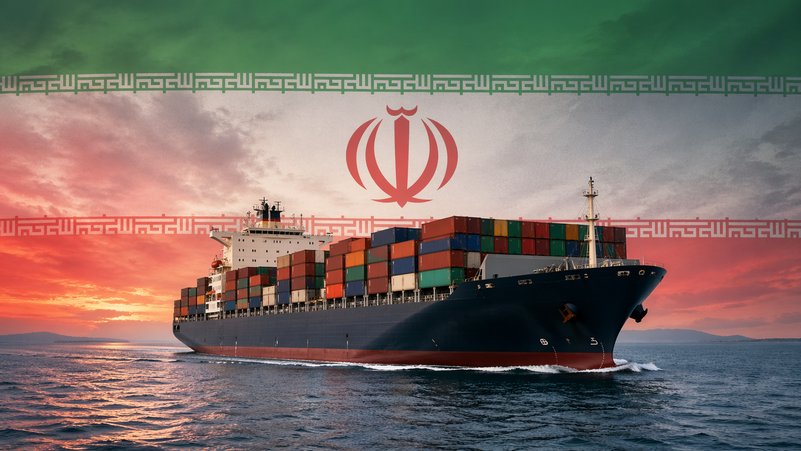
The sector is not operating under normal market conditions. The Fermerci report places the Italian situation within an unprecedented European industrial crisis. Italy’s industrial production index reached 94.1 in 2025, marking an uninterrupted decline since 2022. The situation is even more severe in Germany, traditionally the continent’s logistics engine, where industrial production has fallen by 12.6% compared with 2019 levels. Geopolitical tensions in the Middle East and the Red Sea must also be added to the picture, as they have lengthened maritime transport times and amplified volatility in energy costs, leaving global supply chains increasingly exposed to risk.
This environment is further complicated by the exceptional concentration of works on the national rail network. Italy is investing at an unprecedented pace in infrastructure modernisation, with spending capacity reaching almost €12 billion a year in 2025. The aim is to bring the network up to European standards in terms of P/C80 loading gauge and 750-metre train length. But the price being paid by the supply chain is high: around 1,300 worksites active every day are causing interruptions, diversions and capacity reductions that undermine the reliability of freight services. At present, 23% of rail sections are saturated in at least one time slot, and 2026 is identified as the peak year for worksite activity. Only beyond that threshold can operating conditions reasonably be expected to improve.
As for public incentives, resources reached around €168 million in 2025. Of this total, €51.8 million went to the national Ferrobonus scheme, €94.9 million to Norma Merci and €19 million to discounts on Rfi track access charges. These measures support the resilience of traffic, but they are struggling to deliver the long-awaited modal shift from road to rail. The reason is structural: much of the economic benefit provided by incentives is absorbed by the higher costs companies face because of network disruptions. Even so, the Fermerci report calculates that every €100 million in rail incentives generates between €100 million and €147 million in benefits for Italy as a system, through economic spillovers across local areas and lower external costs linked to road haulage.
The issue of modal share remains unresolved and far from European targets. In 2024, rail freight accounted for 11.6% of total freight transport in Italy, compared with a European average of 16.6%, while road haulage moves 59% of goods in the country. Rail’s environmental contribution is nevertheless tangible and measurable. In 2025, according to Fermerci estimates, rail freight avoided the emission of 1.6 million tonnes of CO2 and saved 670 million litres of diesel compared with road haulage. This saving is equivalent to around 7.3 million industrial vehicle journeys not made on Italian roads. Rail therefore remains central to achieving the targets set by the Pniec, the Piano nazionale integrato per l'energia e il clima (National integrated energy and climate plan).
On the international front, traffic through the Alpine crossings reached a total of 21.9 billion tonne-km, down 5.2% from the previous year. The slowdown reflects both weak foreign demand and major works affecting neighbouring networks. Austria is confirmed as Italy’s leading trading partner, absorbing 60% of cross-border traffic with 43,845 trains. It is the only corridor to record growth, with tonne-km up 3.27%, driven by the Tarvisio and Brenner crossings.
Switzerland, by contrast, suffered a sharp contraction: tonne-km fell by 19%, with 38,319 trains in transit, taking its share to 22% of total traffic. Slovenia recorded a 17.1% decline, with 10,271 trains, largely due to the temporary suspension of traffic at the Nova Gorica crossing for construction of the new “railway connecting curve”. This is therefore mainly a cyclical and worksite-related factor, which is expected to ease. The only clearly positive note among the international corridors concerns France: volumes transported through the Modane and Ventimiglia crossings rose by 14.1%, with 4,008 trains recorded, marking a recovery that interrupts a prolonged period of difficulty on that corridor.
M.L.