






Japan has launched its first freight service using high-speed trains. Strictly speaking, the concept is not entirely new: a pilot project was developed in 2019 and appeared ready to take off during the Covid-19 pandemic, when falling passenger numbers created scope for alternative uses of high-speed rolling stock. However, those efforts never progressed beyond occasional initiatives. A combination of factors has now revived the project, notably the availability of trainsets suitable for conversion to this transport model.
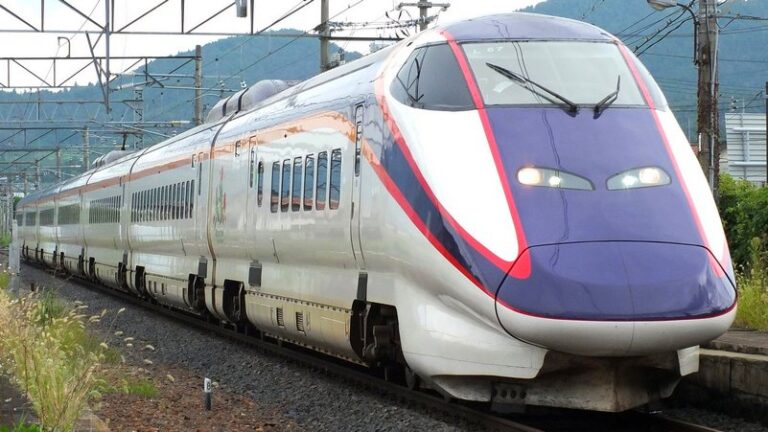
The service uses trains from the renowned Shinkansen family, specifically the E3-2000 series introduced by Japan Railway East in 2008–2009. These trains feature a reduced loading gauge, comprise seven cars, and have a top speed of 275 km/h. With the introduction of newer and faster E8 series trains, the E3-2000 units are being progressively withdrawn from passenger service, opening up opportunities for alternative use. The first E3-2000 set has now been converted for high-speed freight operations. Its 394 seats have been removed, and it has been fitted with non-slip flooring and fixtures to secure cargo, without significant structural modifications to the body.
The train is intended to carry high-value goods such as electronics and precision equipment, as well as fresh products that benefit from rapid delivery. Loading is carried out using autonomous guided carts, and the train can accommodate up to 1,000 packages with a total weight of just over 17 tonnes. The inaugural service connected Morioka in northern Japan with Tokyo, a distance of 540 kilometres, completed in three hours and 15 minutes compared with more than seven hours by road. According to Japan Railway East, the freight Shinkansen will operate on weekdays, either as a standalone service or coupled with passenger trains; however, the availability of depots located near stations remains essential.
As early as 2024, there were plans for collaboration between rail operators and airlines such as Jal Cargo to create an intermodal service combining rail transport with long-haul flights for the import and export of high-value or perishable goods across Asia. Only now, with dedicated rolling stock available, is it possible to establish a regular service rather than occasional operations.
High-speed freight transport is not entirely new. Several initiatives have been launched in the past with mixed results. One of the best known was the TGV La Poste, operated by French railways Sncf (Société nationale des chemins de fer français), with its distinctive yellow livery, dedicated to the rapid transport of mail for La Poste. Designed for speeds of up to 270 km/h, it entered service in 1984 and was permanently withdrawn in 2015, with no revival since.
Equally notable was the project developed by Mercitalia, the former cargo division of Trenitalia, under the Mercitalia Fast brand. For this service, a single ETR 500 trainset was prepared, also bearing the Fast designation. However, exactly four years after its launch, the service ended with its final run in November 2022. The high-speed freight train had operated exclusively between Marcianise, near Caserta, where a Mercitalia terminal is located, and Bologna Interporto.
The ETR 500 Fast consisted of two E.404 locomotives and twelve coaches originally intended for Trenitalia’s Frecciarossa services. These had been placed in reserve because, due to weight and limited acceleration, the railway had decided to remove one coach from each passenger train. The surplus coaches were fully refurbished for high-speed freight use, enabling the transport of 60 roll containers, a format suited to operations at speeds of up to 250 km/h where permitted.
According to official sources, the ETR 500 Fast achieved a strong initial response but was subsequently affected by the pandemic, which broke out shortly after a year and a half of service and impacted its economic performance. Another factor in the service’s closure was the reliance on a single trainset, which proved difficult to manage without at least one backup unit.
Piermario Curti Sacchi