




Volvo Trucks announced on 14 April 2026 an expansion of its electric heavy-duty vehicle portfolio, introducing new models designed for long-haul, regional and urban operations. The headline development is the Volvo FH Aero Electric with extended range, engineered to cover up to 700 km on a single charge, while the new-generation FH, FM and FMX models can reach up to 470 km. Market rollout will begin progressively from 2026, with the aim of accelerating the adoption of electric power in road freight transport. The new model achieves its increased range through a driveline that integrates two electric motors and the gearbox directly on the rear axle, freeing up space for greater battery capacity. The result is a configuration that maintains a high payload of up to 28 tonnes, with a gross combination weight of up to 48 tonnes.
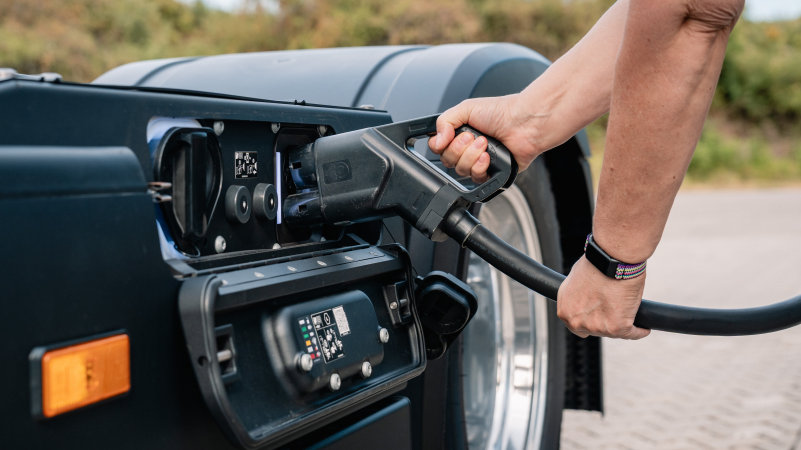
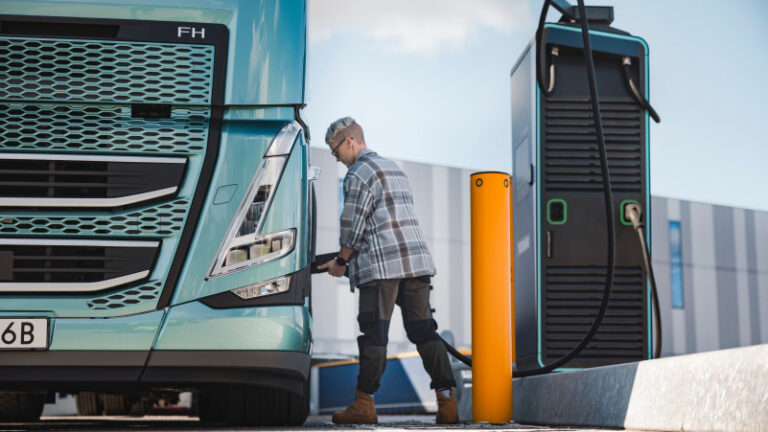
The vehicle is compatible with the MCS (Megawatt Charging System), delivering power of up to 700 kW. Under these conditions, charging from 20% to 80% takes around 50 minutes. This duration allows recharging during mandatory driving breaks of 45 minutes, maintaining productivity levels comparable to diesel vehicles in long-haul operations. Alternatively, CCS charging of up to 350 kW is also available, with a charging time of around 85 minutes for the same interval.
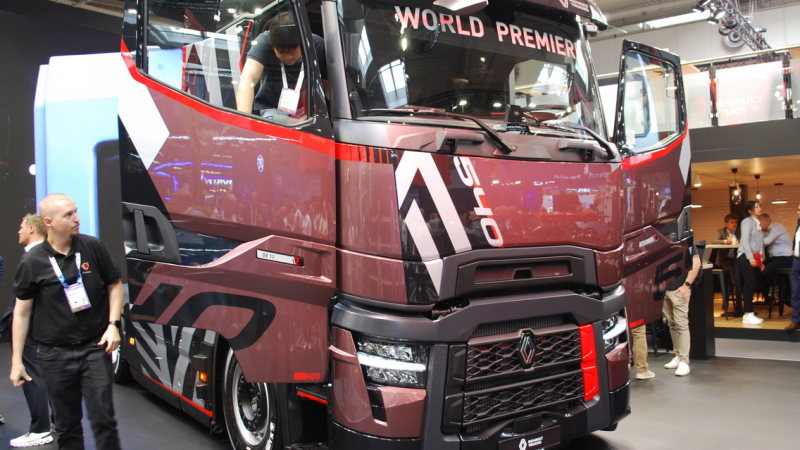
For regional and specialised transport, Volvo is introducing new generations of the FH, FM and FMX Electric models. These vehicles are equipped with a new dual-motor transmission featuring an eight-speed gearbox, designed to improve available torque and operational efficiency. Maximum power reaches 540 kW (731 hp), while range extends up to 470 km. In this case too, charging from 20% to 80% can be completed in around 65 minutes using a 350 kW CCS system.
These new electric models can reach a gross vehicle weight of up to 65 tonnes, with flexible axle configurations, including tandem solutions for heavy-duty applications. Payload can reach 23.8 tonnes in a 4x2 tractor configuration, while battery management is modular, allowing a balance between range and payload depending on the mission. A key feature of the new range is the integration of the power take-off into the vehicle’s electric system. This solution enables auxiliary equipment such as concrete mixers, hook-lift systems or refuse compactors to be powered without the need for additional engines. The power take-off can also be used while driving, expanding operational versatility and enabling deployment across a broader range of applications, from urban distribution to public utility services.
All new models also introduce transmissions optimised for electric traction, with six gears on the FH Aero Electric and eight gears on the other models. According to Volvo Trucks, this solution enables smoother gear changes, reducing noise and vibration while improving driver comfort. The adoption of multi-speed transmissions reflects a technical choice aimed at optimising efficiency under varying load conditions and terrain profiles. Roger Alm, President of Volvo Trucks, said the expanded range makes the transition from diesel to electric more accessible, covering an increasing number of transport applications.