







Slowdowns across Europe as farmers’ protests continue on 12 January
Farmers’ protests against the signing of the Mercosur free trade agreement between the European Union and several Latin American countries continued on 12 January 2026. Disruptions to the movement of heavy goods vehicles are being reported mainly in France and Spain.
In European freight transport, the protests on 12 January 2026 are causing blockades and selective checks on heavy goods vehicles along motorways, port access roads and border crossings, with immediate effects on delivery times, cold chains and intermodal flows between France, north-eastern Spain, Poland and Belgium. The mobilisations, coordinated by sector organisations, share opposition to the Mercosur agreement and, in some cases, to duty-favoured imports and sanitary rules perceived as penalising domestic production.
In France, the mobilisation is being led by Fnsea, Jeunes Agriculteurs, Coordination Rurale and Confédération Paysanne, with around one hundred tractors in the capital and hundreds more deployed along national corridors. According to French media reports, actions have been under way since 9 January and intensified on 12 January with new convoys heading towards Paris, while the associations have announced a further mobilisation on 20 January in Strasbourg, linked to the expected signing of the agreement on 17 January.
Road blockades are scattered across several critical nodes. In the Paris region, closures of the Périphérique have been reported, along with attempts to approach the Rungis wholesale market that were repelled by law enforcement, with reinforced security measures around the platform that supplies a significant share of the metropolitan area’s distribution. Along the Atlantic corridor, closures and blockades are affecting the A63 between northern and southern Bayonne, as well as disruptions on the A9, A61 and A64, with queues extending up to 150 kilometres. In the north, the A1 between Lille and Paris is reported to be heavily congested, while in the west physical blockades have been recorded at a fuel depot in La Rochelle and at grain silos in the Bayonne area. The operational approach combines slow-moving convoys at around 30 kilometres per hour, filtering of heavy goods vehicles with cargo inspections and, in some cases, the stopping or unloading of goods deemed “non-compliant” or imported, posing a direct risk to perishable products and to carriers unable to meet delivery windows.
In Spain, the situation is more concentrated on a strategic friction point in Catalonia, namely the cross-border link with France and port access routes. The organisations Revolta Pagesa and Unió de Pagesos, supported by Unaspi, have maintained an indefinite blockade on the AP-7 at Pontós since 9 January, in both directions and just a few kilometres from the border, alongside the closure of the N-II between Bàscara and Vilademuls, where queues of around four kilometres have been reported.
The most sensitive logistics node, in terms of immediate impact on maritime flows and road shuttles, is the port of Tarragona. Access routes are blocked on the T-11 and on one lane of the A-27, with a 69 per cent drop in truck traffic indicating a sharp reduction in the port’s ability to feed quaysides and evacuate outbound cargo. Allowing private cars through while systematically stopping trucks for inspections is creating a bottleneck that propagates back along the primary and secondary road network, increasing the risk of saturation at rest areas and diversions onto alternative routes less suitable for heavy traffic. The protest also includes disruptions on the A-2 in Castilla y León, reported as part of a broader national picture.
In Poland, the impact on freight transport is concentrated on border crossings with Ukraine and on domestic political pressure. According to Polish media, the national protest began on 29 December 2025 and continues on 12 January with a rally in Warsaw involving thousands of farmers in front of government institutions. Operationally, the most critical points are Medyka, Dorohusk and Hrebenne, where blockades are described as partial but persistent. Protesters are allowing only one or two trucks per hour to pass, in some cases prioritising outbound traffic from Ukraine over inbound flows. This has resulted in queues of hundreds of vehicles and waiting times estimated at between 12 and 48 hours, a range that can undermine shift planning, compliance with delivery windows and trailer rotation.
Within the protest context, the participation of some Polish hauliers has also been reported, signalling a potential widening of the dispute from agricultural producers alone to parts of the national logistics chain, particularly in grain and semi-processed goods flows. Deputy prime minister Władysław Posiniak-Kamysz has announced his intention to turn to the EU Court of Justice, suggesting that the issue may shift onto a legal as well as a public order footing.
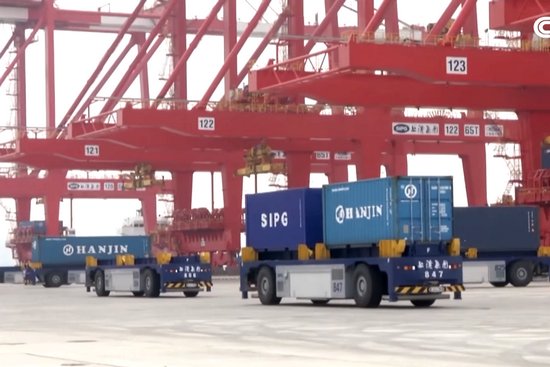
In Belgium, the most visible effect concerns the port of Zeebrugge, a crucial hub for ro-ro connections and distribution to the UK and northern Europe. According to Belgian media, access to the port was blocked from 8 January by around 150 tractors and, as of 12 January, the situation remains active albeit at reduced intensity. Estimated delays range from two to four hours for trucks entering or leaving the port, a factor which, combined with waiting times at gates and slot planning, can generate knock-on effects along the supply chain, particularly for time-sensitive traffic and empty equipment repositioning. Twelve vessels were reported to be waiting for manoeuvring clearance, an indicator of interference with berthing windows and yard organisation.
An intervention by the Antwerp court has imposed a limit on total blockades, with penalties of €1,000 per hour in the event of violations. This constraint is pushing protest actions towards slowdown and filtering tactics, which are harder to neutralise but still capable of reducing the port node’s effective capacity. In Brussels, following demonstrations on 9 January, the situation on 12 January is described as calmer in the European quarter, with logistics impacts therefore concentrated mainly on port infrastructure and on certain road axes such as the E42, E19 and A11.
Based on data available as of 12 January, the overall impact on freight transport is reflected in a combination of blockades, queues and indirect costs. In France, delays are estimated at up to 24 hours, with a recurring operating cost cited at €100 per hour per heavy goods vehicle, a figure that tends to rise quickly when lost driving hours, route replanning and contractual penalties are added. In Catalonia, the 69 per cent drop in truck traffic towards the port of Tarragona points to a sharper choke effect on the maritime channel, with repercussions for liner services and road–sea intermodality. In Poland, reduced flows at border crossings represent a capacity level consistent with prolonged congestion and daily accumulation of waiting vehicles. In Belgium, delays at Zeebrugge and vessel waiting times indicate a disruption likely to affect ro-ro rotations and equipment positioning.
Overall, more than 500 kilometres of cumulative queues and hundreds of stationary trucks have been reported, with potential damage to cargoes not necessarily covered by insurance. According to the International Road Transport Union (IRU), the situation is classified as an “red allarm” for the sector, and the organisation is calling on governments to provide immediate compensation for extraordinary costs and losses incurred by operators.
Pietro Rossoni