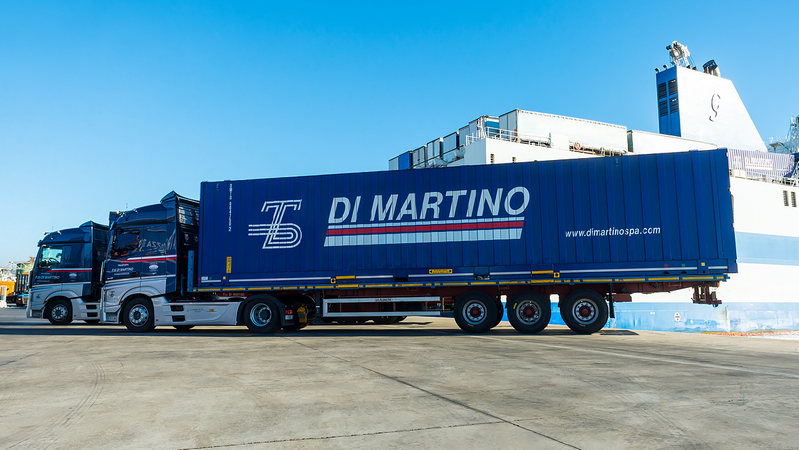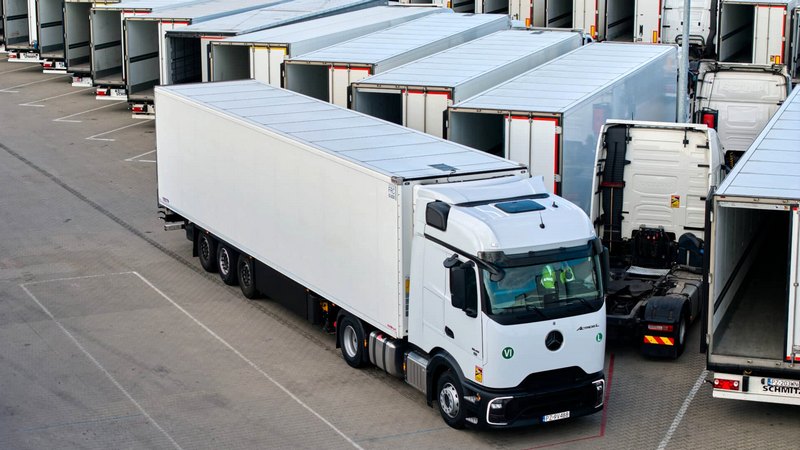
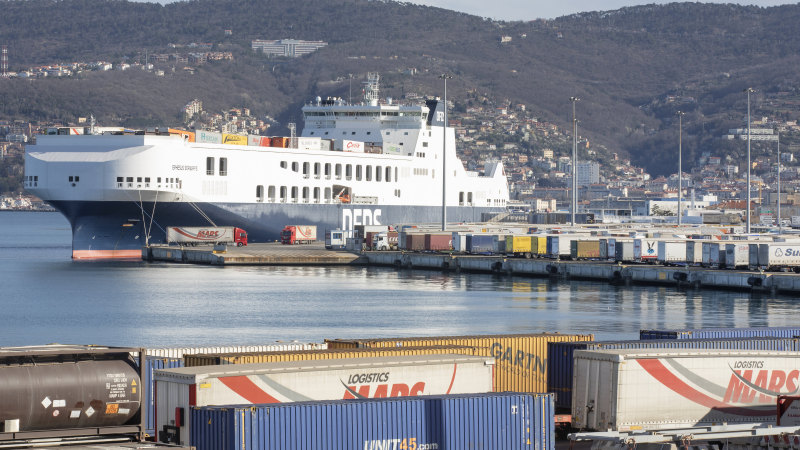





Battery swapping for electric vehicles, as an alternative to fixed charging, is widely used in China and has been a key factor in the rapid growth of electric mobility. A three-way alliance is now bringing this approach to Europe, specifically to road freight between France and Morocco. Announced in early April 2026, the project aims to deploy one hundred electric heavy-duty vehicles along a route of around 2,000 kilometres linking Agadir to the port of Tangier and, via the Strait of Gibraltar, to Perpignan. It is being promoted by Gotion, a Chinese battery manufacturer, Green Power Morocco, a local operator for energy development and integration, and Chery Heavy Trucks, which will supply the vehicles. At the core of the programme is a network of stations where depleted truck batteries will be automatically and rapidly replaced with fully charged units.
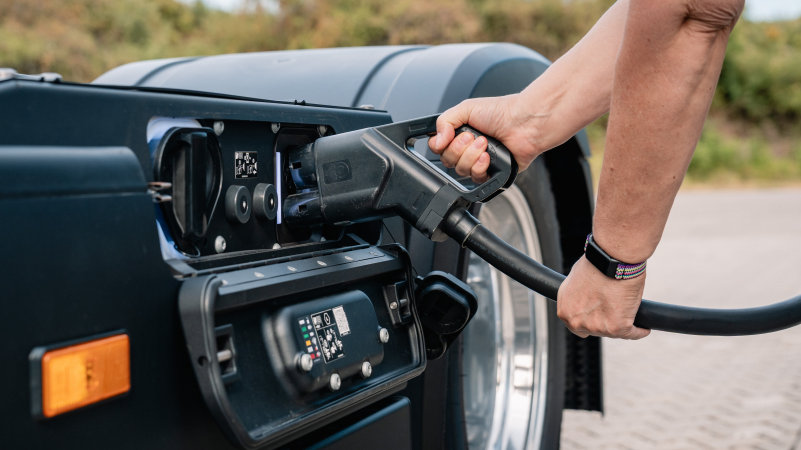
This solution, known as battery swap, addresses one of the main barriers to the adoption of electric trucks: long charging times, which can be incompatible with operational requirements. In addition, charging large battery packs requires high power levels and robust grid connections. Battery swapping seeks to resolve this constraint by separating battery charging time from the time needed to keep the truck in operation.
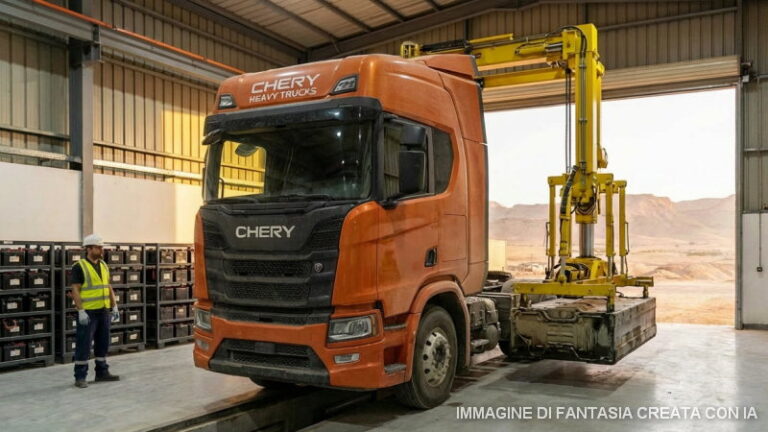
From the haulier’s perspective, the process is straightforward. The truck enters a dedicated bay, the depleted battery module is removed and replaced with a fully charged one, while the first is recharged outside the vehicle’s operating cycle. In current pilot solutions, replacement times for heavy-duty vehicles range between five and ten minutes, much closer to diesel refuelling times than any conventional charging option.
The model does not eliminate the energy challenge, but shifts it. Instead of concentrating energy management within the individual vehicle during downtime, it transfers it to the industrial organisation of the entire network. A battery swapping station can recharge modules flexibly, including during off-peak hours, reducing the need for high instantaneous power. However, this entails significant investment. Beyond civil works and automated handling systems, the network requires an inventory of spare batteries, tying up capital and demanding careful management of state of health, rotation and degradation.
The project’s architecture is vertically integrated. Gotion provides battery technology and part of the energy platform; the joint venture between Gotion and Green Power Morocco will manage the swapping stations, stationary storage systems, intelligent load allocation and operational optimisation along the route; Chery Heavy Trucks supplies vehicles compatible with the swapping ecosystem. While this integration may accelerate the pilot phase, it also raises questions about future interoperability. If the model is to be extended to other operators or manufacturers, a level of standardisation will be required that is not yet defined. Battery pack positioning, mechanical connections, electrical interfaces and software protocols must be compatible between vehicles and stations. Without such uniformity, swapping stations risk remaining proprietary assets usable only by a single brand or network.
Europe is also assessing this approach through the eHaul project in Germany, which has tested the replacement of around 440 kWh batteries on 40-tonne trucks, with swap times of about ten minutes using dedicated infrastructure. The value of eHaul lies less in its limited commercial scale than in demonstrating the technical feasibility of the concept in Europe, outside the Chinese context where battery swapping for industrial vehicles is more established. The Agadir-Perpignan corridor fits into this landscape as one of the first applications of the model on a transcontinental corridor scale, building on a technical paradigm already under validation elsewhere.
The choice of Morocco is strategic. The country has become an industrial platform integrated with Western Europe, particularly in automotive, agri-food and manufacturing sectors, and the port of Tangier is a major node in flows between Africa, the Mediterranean and Europe. This makes it a credible setting to test an electric corridor along an existing high-traffic route, with predictable loads and limited transit points-conditions favourable for battery swapping, which works best on fixed routes where the cost of a dedicated network can be spread over high traffic volumes.
The model also supports a separation between vehicle and battery ownership, enabling battery-as-a-service schemes that can reduce upfront costs for hauliers and shift part of the investment to energy or infrastructure operators. However, experience from the Chinese market shows that operators sometimes continue to rely on conventional charging when the network is insufficiently dense, when real-world swap times are not competitive, or when service costs do not justify the model. Economic viability will therefore depend not only on technology, but on network density and tariff structures.
The integration of swapping stations, stationary storage and intelligent load management points to a systemic approach that distinguishes this project from many European initiatives focused primarily on high-power charging infrastructure. In Europe, zero-emission heavy transport is still seeking a balance between multiple infrastructure models, including megawatt charging, swappable batteries and, in some cases, hydrogen. The Agadir-Perpignan corridor is notable for moving battery swapping beyond the experimental phase and placing it on a commercially significant international axis, offering a concrete case study in an ongoing debate.
Several key questions remain open in assessing the initiative’s real impact: the actual timeline for deploying the first stations and the initial fleet of one hundred trucks; the technical specifications of the Chery vehicles, including battery capacity, real-world range and effective swap times; the number and location of stations along the corridor; and, crucially, whether the system will be opened to other operators and manufacturers. This last point is decisive in determining whether the project will remain a closed, vertically integrated ecosystem or evolve into a broader standard. Beyond the technology itself, the central issue is who will control batteries, infrastructure standards and operational data across a critical segment of zero-emission road logistics between the two sides of the Mediterranean.
M.L.