



At 16:00 (Italian time) on 13 April 2026, the US Navy blockade came into force against all vessels transiting the Strait of Hormuz that also have either an origin or destination in an Iranian port. The measure was introduced by Trump to counter Iran’s partial blockade, which excludes ships linked to countries considered “friendly” to Tehran. From that moment, the first vessel to cross the strait was the container ship Paya Lebar, sailing under the flag of Antigua & Barbuda. Under US criteria, it was not stopped, as it was heading to the port of Dubai from India’s Nhava Sheva. Iran also allowed the ship to pass.
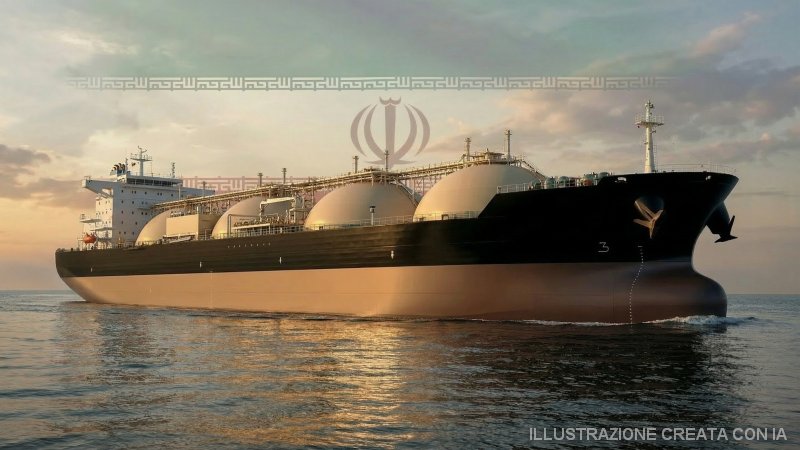
The situation is entirely different for the second vessel currently transiting the Strait of Hormuz. This is an oil tanker already sanctioned by the United States in 2023 for repeatedly violating the energy embargo on Iran, and it could therefore be subject to US enforcement measures. The conditional is necessary because the vessel does not appear to have called at an Iranian port in the Persian Gulf. Its last known port of call is Hamriyah in the United Arab Emirates. The tanker is bound for China and, according to publicly available satellite tracking, initially reversed course when the blockade came into force, before turning back towards the strait, which it has now crossed carrying a cargo of 250,000 barrels of methanol.
Attention now turns to Washington’s decision, as the issue is complex. On one hand, the vessel is under sanctions and should therefore be subject to US action. On the other, it does not appear to have called at Iranian ports and thus has not loaded Iranian products, while the April blockade should apply only to ships with an Iranian port as origin or destination. Further complicating matters is the fact that the Rich Starry sails under the flag of Malawi, a detail that raises suspicion, while at the same time being Chinese-owned. According to several sources, the tanker belongs to Full Star Shipping, linked to the Shanghai Xuanrun Shipping group, which—like the vessel itself—is subject to US sanctions. The crew is also reportedly Chinese.
The vessel is therefore Chinese and is carrying a cargo bound for China. It is worth noting that on 13 April 2026, a Chinese regulation came into force authorising Beijing to intervene if actions taken in an extraterritorial context by third states are deemed “improper” or “undue” and produce effects in China or harm Chinese interests. This appears to be precisely the case if the US Navy were to detain the Rich Starry.
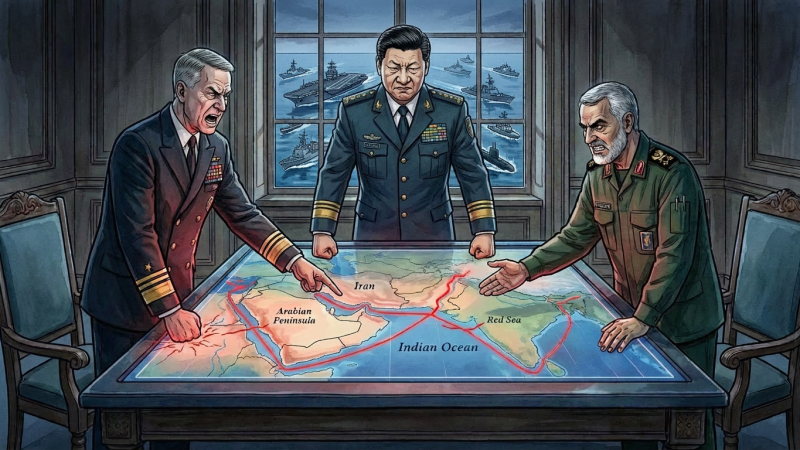
Washington now faces a dilemma: allow the Rich Starry to pass, thereby suggesting that the Hormuz blockade is a bluff and appearing as a “paper tiger”, or stop the vessel—although it is unlikely to be “destroyed” as Trump had threatened in previous days—and then manage the seizure of a Chinese asset in international waters. In the latter scenario, Beijing would not necessarily need to deploy its navy, which has already become a blue-water force. It could instead restrict supplies to the United States of gallium and germanium, over which China holds an effective monopoly in extraction and refining, as well as tungsten, of which it controls 80% of refining, along with other critical minerals needed by Trump to rebuild the arsenal depleted in Iran and to support his ambitious rearmament programme.
M.L.