







The Austrian federal Government approved Öbb’s new Rahmenplan for 2027-2032 in mid-June 2026, allocating around €19.5bn to rail infrastructure, including Austria’s share of the Brenner Base Tunnel. A further €5bn will be allocated to routine network maintenance, including repairs, inspections and restoration work, over the same period. The plan forms part of a series of multi-year programmes of comparable scale: the 2023-2028 Rahmenplan provided for €19bn, while the 2025-2030 version had risen to €19.7bn. The continuity in investment volumes, despite the need to restore public finances, confirms Austria as one of the European countries with the largest rail infrastructure programmes relative to its size.
The Ministry of Mobility stresses that the plan maintains an average of around €3bn a year for network expansion, a level that minister Peter Hanke describes as high despite the context of public finance consolidation. The political message, also reiterated by Chancellor Christian Stocker, is that the Rahmenplan represents a clear commitment to rail. Its stated objectives include increasing capacity for passenger and freight traffic, improving service reliability and digitalising operations, with investment in advanced control systems such as Ertms/Etcs and in operational management platforms.
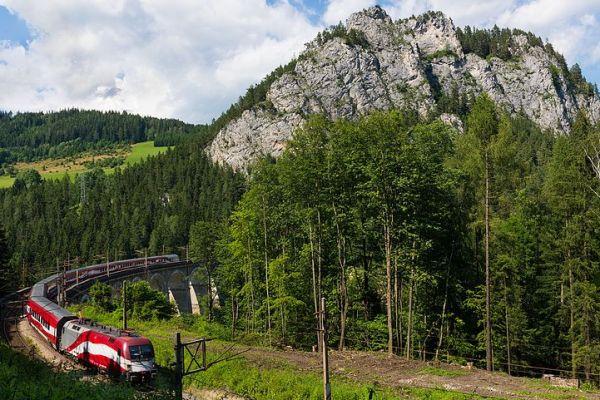
At the Brenner, the Rahmenplan confirms the target of bringing the Brenner-Nordzulauf, the northern access route to the base tunnel, into service in 2039, in line with the project’s overall timetable. The Austrian Government also points to intensive talks with Germany to ensure that infrastructure on the border is synchronised, an issue that remains open given the different pace at which the two countries are advancing their respective access sections. The Semmering Base Tunnel (Semmeringbasistunnel) remains scheduled to enter service in 2029, within the broader framework of the Zielnetz 2040+ plan. At the same time, the historic mountain line between Gloggnitz and Mürzzuschlag will undergo modernisation work to complement the new tunnel, with completion expected by the end of the decade.
The overall volume of the plan remains fixed at €19.5bn, but the Government and Öbb indicate that some projects will be delayed or delivered in phases spread further apart over time, while works already under way will still be completed. According to Öbb chief executive Andreas Matthä, saving money does not mean stopping: every project that has been launched will be completed, with resources focused on works with the greatest impact on network capacity. Examples cited in Öbb’s technical documents include the Nordbahn, where a different structuring of work lots makes it possible to generate savings and bring part of the line into service earlier than originally planned. Some regional sections and minor doubling schemes have instead been postponed compared with previous versions of the Rahmenplan.
Antonio Illariuzzi