





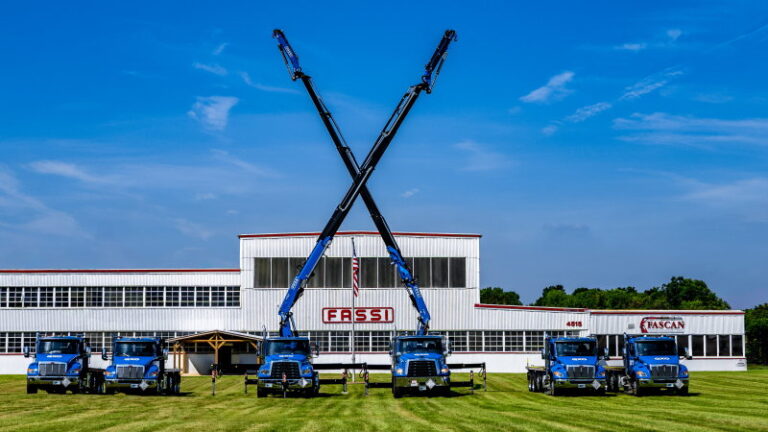
On 13 April 2026, the Fassi Group announced the acquisition of the entire share capital of Fascan International, its historic importer and distributor in the United States. The deal marks the transition of the company from ownership by the Faloney family to direct control by the Bergamo-based group, with the aim of consolidating its industrial and commercial presence in the North American market. Fassi explained that the acquisition forms part of a strategy to strengthen its distribution and technical application capabilities in the United States.
Founded in 1992 and headquartered in Baltimore, Fascan International operates as the exclusive distributor of Fassi cranes in the United States and the Caribbean, managing a network of more than 150 service centres and certified dealers. The company closed 2025 with revenue exceeding 50 million dollars (around 46 million euros) and represents the main access channel for the Italian group’s products in the US market. Over more than thirty years of activity, it has contributed to the spread of thousands of articulated cranes, with an installed base approaching 7,000 units. The transaction does not affect management continuity, as the Faloney family will remain involved in running the company. Bernie Faloney, president of Fascan, highlighted the growth prospects linked to this new phase, while Fassi chief executive Victor Gottardi stressed that direct integration will enable further expansion of the commercial network and technical services across the United States.
Fascan plays a central role in the lifting supply chain, handling not only crane distribution but also value-added activities such as truck installations, scheduled maintenance, spare parts supply and after-sales services. The company works with a broad network of outfitters, logistics operators and construction firms, serving sectors ranging from building and rail infrastructure to energy and defence. The acquisition allows Fassi to strengthen integration between production, which remains entirely in Italy, and its commercial footprint in the United States, a market characterised by high maturity and strong competition. In this context, the availability of an established local structure is a decisive factor in adapting products to specific North American regulations and operating requirements, while ensuring faster response times throughout the equipment lifecycle.