



Array ( [0] => 8 [1] => 41 )

Podcast K44

Cronaca

  • Camionista spara a un collega con pistola scacciacani

    Camionista spara a un collega con pistola scacciacani

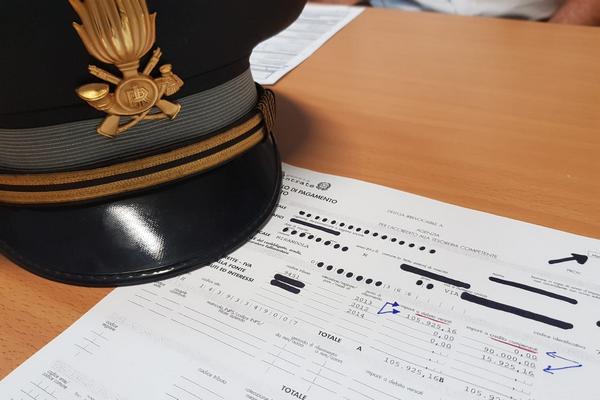
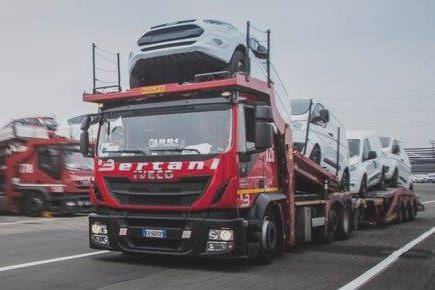
    Un camionista di 42 anni è stato denunciato dalla Polizia Stradale di Modena per minaccia aggravata dopo aver esploso un colpo con una pistola scacciacani contro un collega lungo l'A1, al culmine di una lite tra autotrasportatori nei pressi di Modena Nord.

Transpotalk

Normativa

Mare

  • Il tifone Dolphin ingolfa ancora il porto di Shanghai

    Il tifone Dolphin ingolfa ancora il porto di Shanghai

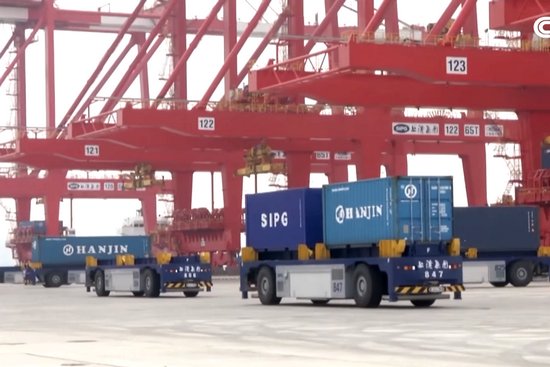
    Dieci giorni dopo il passaggio del ciclone Dolphin i terminal di Yangshan registrano attese fino a dieci giorni prima dell'ormeggio con oltre trenta navi in coda. Nel Nord Asia restano bloccati più di 2,4 milioni di teu di capacità.

Autotrasporto

  • Camion fermi allo Stretto di Messina sono un disagio cronico

    Camion fermi allo Stretto di Messina sono un disagio cronico

    La Lega Autisti Autotrasportatori Indipendenti Siciliani Nazionale denuncia attese fino a sei ore per l'imbarco a Tremestieri e al Porto Storico di Messina durante l'esodo estivo. Non è un caso isolato: il problema si trascina da anni, tra proteste, esposti e promesse rimaste in gran parte sulla carta.

    Concept design for ammonia-fuelled feeder container ship

    Rendering: Deltamarin

    On 4 July 2025, Deltamarin unveiled the concept design for a 3,500 teu ammonia-powered feeder container ship, the result of a partnership with the Mærsk Mc-Kinney Møller Center for Zero Carbon Shipping, Maersk, Eltronic FuelTech, Everllence, Lloyd’s Register, the Decarb Hub and the American Bureau of Shipping. The concept demonstrates that nitrogen-based fuel can be deployed commercially while maintaining the safety standards of conventional vessels. This conceptual study provides shipowners with a ready-to-industrialise platform, while also highlighting the next hurdles to overcome: the development of boilers and auxiliary systems fully compatible with ammonia, the scaling up of bunkering infrastructure, and the completion of a definitive regulatory framework.

    The vessel measures 211.9 metres in length and 35.2 metres in beam, with a capacity of 3,374 teu, including 400 refrigerated containers. At the centre of the hull is a fully refrigerated Type A prismatic tank with a volume of 4,300 cubic metres. This design sacrifices just 128 teu compared to a traditional feeder ship, while maximising volumetric efficiency and minimising fuel evaporation. Propulsion is provided by a Man ES 8G60 dual-fuel engine delivering around 18,500 kW, supported by three auxiliary generators rated at 1,935 kW each, all capable of running on ammonia. Two redundant re-liquefaction systems maintain the tank pressure within a safe range, preventing atmospheric releases and ensuring operational continuity even in the event of a single failure.

    From the outset, safety has been at the heart of the concept design. The tank, bunker station and service areas are located in a segregated “ammonia zone”, separate from the aft superstructure housing crew accommodations and the bridge. An extended vent line directs vapours away from occupied areas, while the fuel preparation rooms are recessed into the base of the accommodation block and separated by a gas-tight cofferdam, reducing the length of piping and crew exposure. Watertight corridors, dedicated ventilation, drainage systems and a potential ammonia release management system form part of the ship’s layered physical and procedural safety architecture.

    Risk analyses confirmed the effectiveness of this approach. The initial Hazid (hazard identification) process identified 24 “extreme” and 77 “high” risk scenarios, all of which were brought within acceptable thresholds through additional safeguards and procedures. The subsequent Hazop (hazard and operability study) reduced the number of “high” risks to eight, while the Qra (quantitative risk assessment) showed that the individual risk index on board falls well within international limits.

    The outcome earned the concept a dual Approval in Principle from Lloyd’s Register and ABS, certifying compliance with the IGF Code and Solas through the “alternative design” pathway. “With this study, we are moving from declarations to engineering reality. We have demonstrated that, by integrating the right barriers from the start, ammonia-fuelled vessels can offer a safe and viable route to shipping decarbonisation,” said Evangelos Fragkoulis, Head of Ship Design at the Danish centre.


    © TrasportoEuropa - Riproduzione riservata - Foto di repertorio
    Segnalazioni, informazioni, comunicati, nonché rettifiche o precisazioni sugli articoli pubblicati vanno inviate a: redazione@trasportoeuropa.it


      Puoi commentare questo articolo nella pagina Facebook di TrasportoEuropa

      bottone newsletter piccolo Vuoi rimanere aggiornato sulle ultime novità sul trasporto e la logistica e non perderti neanche una notizia di TrasportoEuropa? Iscriviti alla nostra Newsletter con l'elenco ed i link di tutti gli articoli pubblicati nei giorni precedenti l'invio. Gratuita e NO SPAM!


    CONTENUTI SPONSORIZZATI


Videocast K44

Aereo

  • Rallenta la crescita a luglio 2026 dei noli aerei

    Rallenta la crescita a luglio 2026 dei noli aerei

    I noli spot del trasporto aereo delle merci sono saliti del 28% su base annua a luglio, a 3,12 dollari per kg, ma il ritmo di crescita rallenta per il secondo mese consecutivo. Secondo Xeneta il mercato affronta una seconda metà del 2026 più debole, con pochi segnali di stagione …

Ferrovia

  • FS Logistix avvia la sperimentazione dell’Hvo

    FS Logistix avvia la sperimentazione dell’Hvo

    Il biocarburante Hvo alimenta due locomotive in prova in Mercitalia Rail, i locomotori di manovra di Santo Stefano Magra e Valdellora e ventuno veicoli industriali Euro VI. Nel 2025 ne sono stati consumati 19mila litri, con circa 40 tonnellate di anidride carbonica evitate rispetto al gasolio fossile.
Persone

  • L’autotrasporto perde Maurizio Longo

    L’autotrasporto perde Maurizio Longo

    Dopo una lunga malattia, il 11 agosto 2026 è morto Maurizio Longo, segretario generale di Trasportounito, associazione dell’autotrasporto di cui è stato anche tra i fondatori dopo anni di lavoro nella Fita Cna.

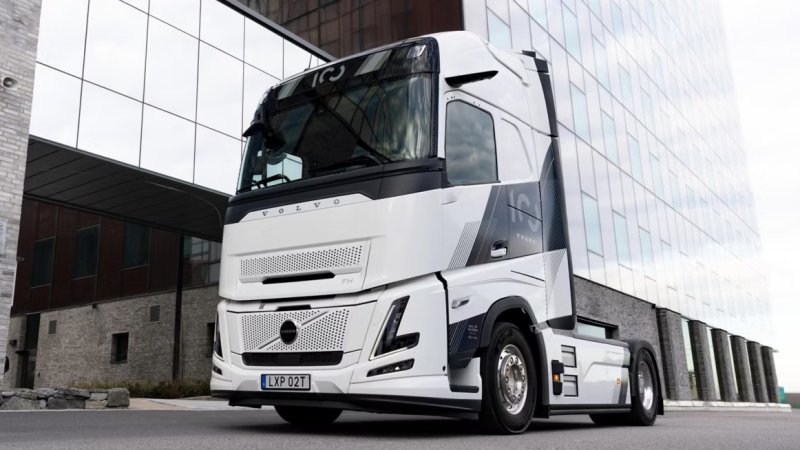
Un Volvo FH speciale per i cent’anni della Casa svedese

TECNICA

Un Volvo FH speciale per i cent’anni della Casa svedese
previous arrow
next arrow
Si allarga il perimetro del ciberattacco a Ceva Logistics

LOGISTICA

Si allarga il perimetro del ciberattacco a Ceva Logistics
previous arrow
next arrow
Perché il gasolio corre mentre il greggio frena

ENERGIE

Perché il gasolio corre mentre il greggio frena
previous arrow
next arrow
Un agente IA di Trimble dedicato alla logistica

SERVIZI

Un agente IA di Trimble dedicato alla logistica
previous arrow
next arrow