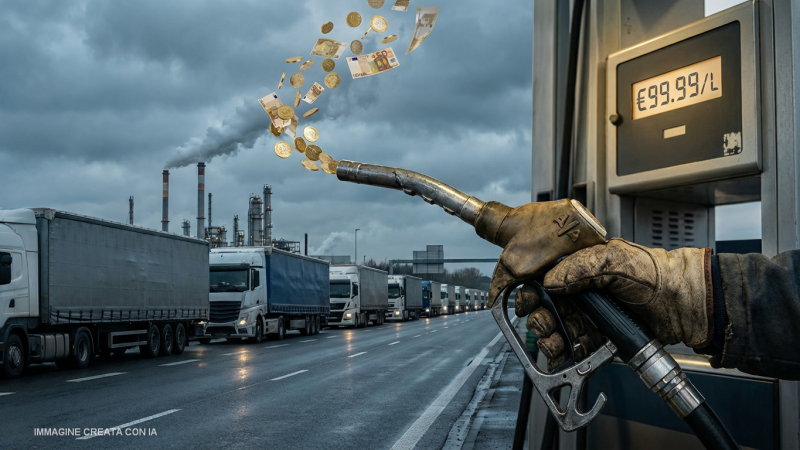








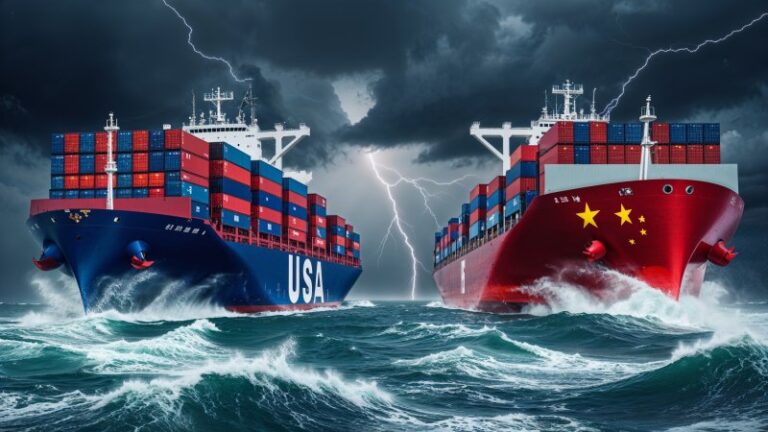
The latest escalation in the US-China trade war is putting immense pressure on the freight transport sector, both maritime and air, unleashing a crisis that could soon ripple across the entire global logistics system. On 10 April 2025, President Donald Trump announced an increase in tariffs on Chinese imports to as much as 125 percent, pointedly excluding Beijing from a ninety-day tariff truce granted to other trade partners. This move, following the previous day’s implementation of duties already raised to 104 percent, marks an unprecedented intensification in tensions between the world’s two largest economies.
Beijing has retaliated by imposing tariffs of 84 percent on American goods and introducing new export restrictions on rare earth elements. US authorities have defended the tariff hikes as a necessary response to China’s aggressive stance, while Xi Jinping’s government has reiterated its resolve to “fight to the end”. The fallout from this escalation has been swift, disrupting trade routes, congesting ports, and straining airports.
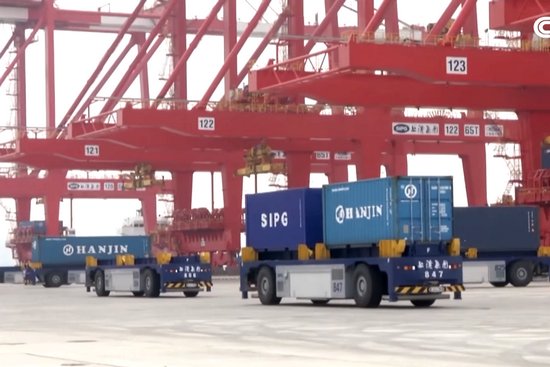
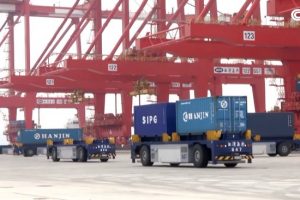
Major Chinese ports—from Shanghai to Tianjin—are reporting increasing congestion, with containers piling up and operations slowing amid rapidly shifting tariff conditions. Port operators are comparing the current confusion to the chaos experienced during the 2022 pandemic. Meanwhile, west coast US ports such as Los Angeles and Long Beach, heavily reliant on transpacific trade, are already scaling back their forecasts. Los Angeles is expecting a 10 percent decline in volumes for the second half of the year, while Long Beach may face losses of around 20 percent. This downturn is fuelling serious concerns about employment and the resilience of the entire sector.
Within days, container shipments from China to the United States have declined. American companies, alarmed by soaring tariff costs, are slashing orders, and some Chinese exporters are abandoning shipments already in transit to avoid further losses. The latest estimates suggest that import bookings to the US have dropped by 67 percent in a single week; specifically from China, the decrease stands at 63.5 percent.
Air freight is faring no better. The removal of the US customs exemption for parcels under 800 dollars from China and Hong Kong, scheduled from the start of 2025, threatens to significantly impact e-commerce-related cargo traffic. Industry players are forecasting up to a 60 percent reduction in demand for air parcel transport, challenging the very business model of direct-to-consumer platforms such as Temu and Shein. From 1 May, each postal package will be subject to a 90 percent tariff or a fixed duty of 75 dollars, which will double to 150 dollars in June.
Some multinationals acted early. The most striking case is Apple, which at the end of March chartered five cargo flights carrying iPhones assembled in China and India to beat the tariff hikes and stockpile strategic reserves. However, such emergency measures are unsustainable in the long run. Relocating production to the United States, as advocated by the Trump administration, appears unrealistic in the short term: the Asian supply chain is too complex, local expertise is lacking, and costs would be prohibitive. Some estimates suggest that an iPhone fully manufactured in the US could cost up to 3,500 dollars.
Meanwhile, uncertainty is spreading throughout the supply chain. Companies are reassessing contracts and suppliers to cope with instability, investing in digital systems to improve logistics visibility, strengthening customs capabilities, and renegotiating cost-sharing arrangements with clients. Some European freight forwarders are even considering recalling goods already en route to the US, fearing substantial losses upon arrival. It is worth noting that a 10 percent tariff on all goods entering the US from any country remains in effect.
What lies ahead is a profound shift in global trade. The 125 percent tariffs imposed by the United States on China are not merely economic measures but a clear political statement. By excluding China from the tariff truce, Washington has unmistakably signalled its pivot towards a new era of protectionism. Global supply chains, already strained by pandemics and conflicts, now face a new wave of volatility, demanding swift decisions and radical adaptation strategies.
Freight transport stands at the eye of this storm. Its ability to adapt—by reconfiguring routes, reorganising flows, and embracing more agile technologies—will be crucial in mitigating the fallout. Yet in this ever-shifting landscape, the hardest factor to manage remains unpredictability. And that is something no tariff, however steep, can ever control.