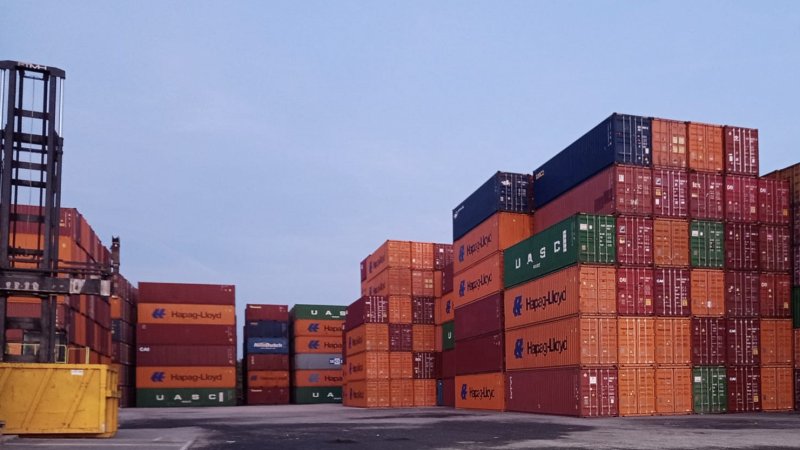



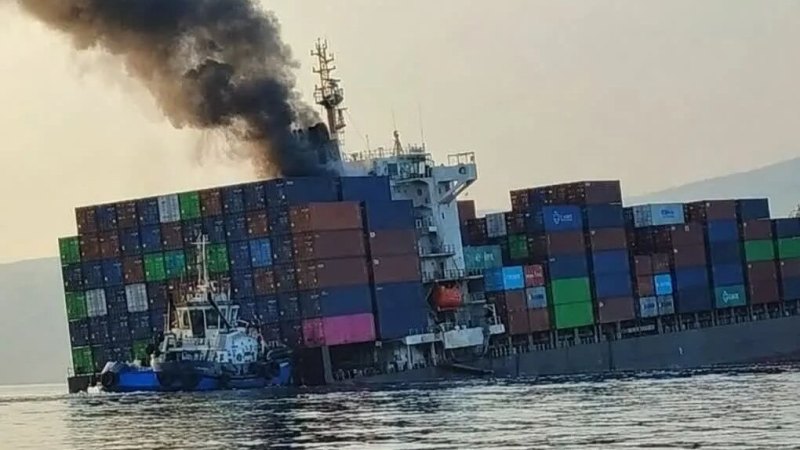







An administrative law judge at the Federal Maritime Commission, Erin Wirth, has ordered Orient Overseas Container Line, the COSCO-controlled shipping company, to pay more than $45.6m in damages to the Bed Bath & Beyond bankruptcy estate for Shipping Act violations committed during the pandemic crisis of 2020-2022. It is the largest single amount of this kind ordered by the Commission in a private proceeding. The decision remains initial and is therefore subject to review by FMC commissioners and possible further appeals. It concerns the relationship between service contracts and the actual availability of vessel space during a period of sharply rising freight rates. The case stems from allegations by the US retailer Bed Bath & Beyond, which later went bankrupt, that OOCL gave priority to cargo sold on the spot market over volumes already covered by service contracts.
The complaint argued that the carrier had in effect "auctioned off" vessel space already contracted with Bed Bath & Beyond, leaving the shipper without the promised capacity or forcing it to rebook shipments on far more expensive markets. The dispute concerns a period when port congestion, capacity shortages and high demand drove container freight rates to exceptional levels, greatly widening the gap between contract rates and spot rates. The first complaints to the FMC date back to 2023 and included claims for more than $165m, later reformulated and expanded to include allegations of retaliation and refusal to deal. The case against OOCL is not unique, as actions have also been brought against other carriers, including MSC, Evergreen, BAL, CMA CGM and HMM, all focused on the same dynamic: the alleged sacrifice of long-term commitments in favour of immediate revenues generated by spot freight rates.
The US judge found violations relating to unreasonable practices in the fulfilment of service commitments, failure to provide transport under the contractual terms, retaliation and refusal to deal. The order awards damages of more than $45.6m, below the initial claim but enough to set a significant benchmark for the sector. By contrast, the judge rejected the claims relating to detention and demurrage, as she found no specific violations of FMC rules on unreasonable practices. This point defines the scope of the case: the decision does not broadly concern all ancillary charges applied during the congestion period, but focuses above all on the management of vessel space and the obligations assumed under service contracts.
OOCL’s defence argued that many of the complaints should be treated as simple contractual breaches under private law, outside the Commission’s jurisdiction. The judge rejected that position, stating that the proceeding concerned broader statutory issues: unreasonable practices, retaliation and refusal to deal fall within the scope of the Shipping Act and therefore within the jurisdiction of the FMC. In practice, the failure to allocate vessel space is not assessed only as a possible breach of an agreement between private parties, but also as conduct potentially contrary to the obligations imposed by US maritime law when it affects the relationship between common carrier and shipper.
For OOCL, the penalty is certainly not a sum likely to have a serious economic impact, but the decision establishes an important precedent that other shipping companies will also have to consider in their relationships with customers. It could also lead to further claims over similar conduct, particularly during the pandemic period. For their part, carriers may reduce binding space commitments in future service contracts, make force majeure clauses more explicit, define priority criteria in the event of congestion and provide automatic mechanisms for revising volumes when available capacity falls below certain thresholds.
For shippers, by contrast, there is growing interest in including minimum shipment levels, financial remedies and more precise dispute procedures. Those with greater bargaining power may also seek stricter clauses on minimum capacity commitments. In addition, for importers, exporters and logistics operators, it may become more important in future negotiations to document space availability, booking confirmations, cancellations, priority given to contractual volumes and the reasons for refusals. Contract management will therefore no longer stop at the tariff, but will need to include verifiable evidence of service execution.
Antonio Illariuzzi