





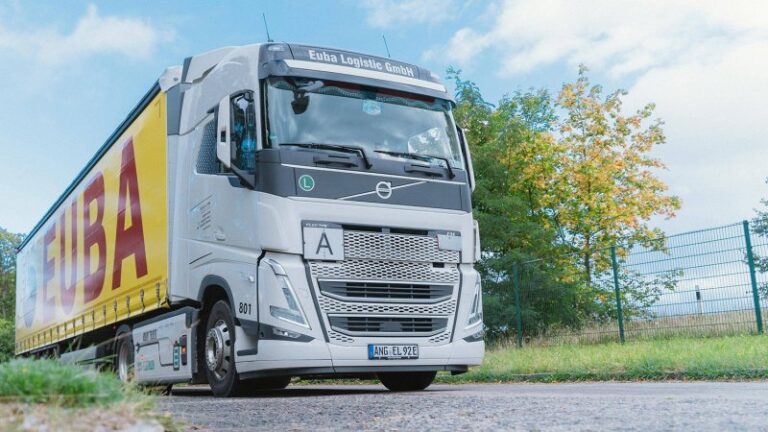
Neuruppin court ordered provisional insolvency proceedings on 28 April 2026 over the assets of Euba Logistic GmbH Internationale Spedition, a German transport and logistics company based in Angermünde, Brandenburg. The company, which has been operating for more than 75 years, is continuing temporarily under court supervision, while provisional insolvency administrator Christian Graf Brockdorff assesses the conditions needed to stabilise the business and preserve continuity. The order concerns a long-established medium-sized German transport company, with 145 employees and annual turnover of about €18 million. The company operates as an international freight forwarder and logistics services provider, with activities in road transport, warehousing and customs procedures. The crisis has been linked to rising operating costs, particularly fuel and labour, and to the difficulty of passing these increases on to customers in a market marked by narrow margins and strong pressure on freight rates.
The proceedings have not led to an immediate interruption of operations. The company is continuing temporarily, honouring existing contracts and maintaining services for customers. Employees are covered by insolvency benefit for the April-June 2026 period, a measure that protects wages in the initial stage of the procedure and gives the administrator time to assess the company’s industrial and financial prospects. The legal form adopted by the German court is a preliminary stage before the possible opening of full insolvency proceedings. At this stage, the judicial authority protects the company’s assets, checks their value and assesses whether there is scope for controlled continuation or restructuring.
Euba Logistic has a long history in German transport. The company was founded in 1949 in West Berlin under the name Thermospedition GmbH. In 2005, it moved its headquarters to Angermünde, where it consolidated its activity as a logistics operator and freight forwarder. In 2024, it celebrated its 75th anniversary with a company event attended by more than 600 guests. Its corporate history therefore shows an industrial continuity that is uncommon in a sector marked by strong fragmentation and frequent turnover among operators. However, its medium size may make it harder to absorb prolonged cost shocks: the company has a structured organisation, but not the same contractual and financial strength as the main continental operators.
The Euba case forms part of a broader deterioration in transport and logistics in Germany. In 2025, German corporate insolvencies rose to 24,064, according to Creditreform/Crif, up 10.3% on 2024 and the highest level since 2014. The transport and storage sector recorded an insolvency density above the national average and ranks among the sectors most exposed to worsening economic conditions. Within the sector, road freight transport is showing particular fragility. In 2025, insolvencies in the haulage segment rose from 622 to 689, an increase of 10.8%. Another indicator points to about 392 high-risk haulage companies for every 10,000, compared with an average of 72 per 10,000 across the German economy. The gap between these two figures shows how business risk in road transport is more concentrated than in other sectors.
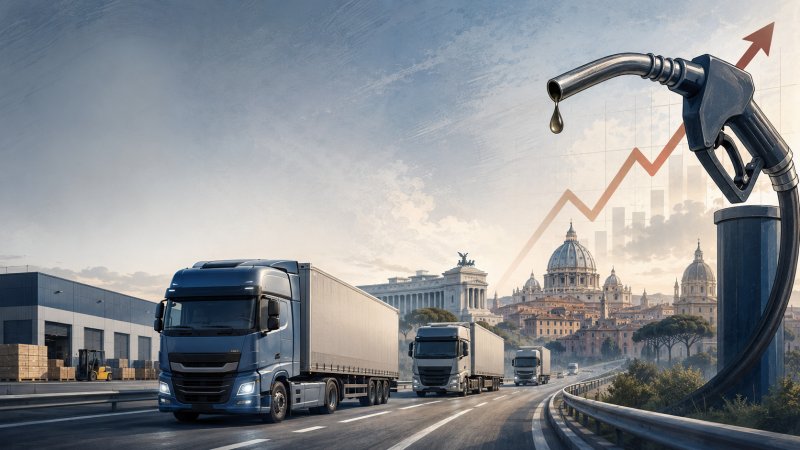
The causes cited for the sector’s crisis are largely consistent with those indicated for Euba Logistic. The first factor is the rise in operating costs, particularly diesel, energy and wages, accompanied by competitive pressure on freight rates. The German, and wider European, road haulage market remains highly competitive, with tight margins and strong price sensitivity among customers. In this context, passing cost increases along the supply chain can be difficult, especially for operators working under existing contracts or with customers that have significant negotiating power.
These factors are compounded by more onerous financial conditions and a slowing economy. Higher interest rates make credit, vehicle renewal and the investments needed to modernise fleets more expensive. Transport decarbonisation also requires capital that not all companies can sustain at a time of pressured revenues and reduced margins.
P.R.