







In the first half of 2026, rail freight transport in Italy stood at 23.7 million train-km, down 8.1% from the 25.8 million recorded in the same period of 2025. This was reported by the half-year monitoring carried out by Fermerci (association of rail freight transport operators): in just six months, the sector lost more than two million train-km. The figure, processed on the basis of Rfi (Italian Railway Network) data, nevertheless remains provisional for June, which is still being finalised from an accounting perspective, meaning the final variation could differ slightly from the figure released so far.
The half-year result forms part of a negative trend that the sector has been recording for several years. The Fermerci Annual Report 2026 had already noted that volumes had fallen from 53.8 million train-km in 2021 to 49.4 million in 2025, a contraction of 7.8% over the 2022-2025 period. In 2025 alone, the decline was 3.5% compared with the previous year, marking the third consecutive annual decrease. If the trend seen in the first six months is confirmed in the second half of the year, Fermerci estimates that 2026 could close with a loss of more than 4 million train-km compared with 2025: the sector would fall to around 45 million train-km, returning to 2015 volumes. Compared with the 53.8 million recorded in 2021, the overall contraction would rise to almost 9 million train-km over five years.
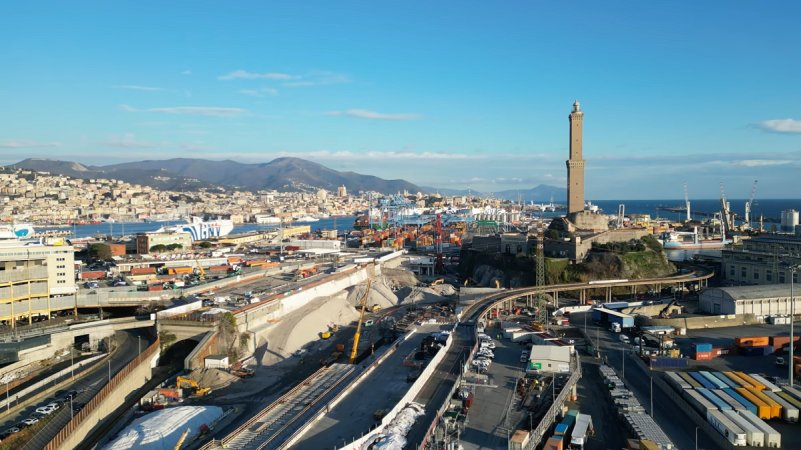
According to the association, the decline is mainly due to the numerous interruptions on the railway network linked to infrastructure upgrade works funded by the Pnrr (National Recovery and Resilience Plan). These are necessary projects to improve network capacity and performance, but they are placing a significant burden on the operations of rail freight companies. The association therefore considers it urgent to introduce support measures for the sector and a multi-year relaunch plan backed by adequate resources, capable of supporting companies through this phase and preventing a further retreat in rail freight transport.
"We are facing a figure that exceeds all expectations. We knew that network interruptions linked to Pnrr worksites would affect volumes, but the impact has proved much more severe than expected and is falling entirely on railway companies," said Clemente Carta, president of Fermerci. "If this trend is confirmed in the coming months, we risk rapidly undermining a significant part of the results built through ten years of public policies designed to support rail freight transport. The concrete risk is that an already evident crisis will become structural. We cannot allow ourselves to stand by while rail freight traffic is progressively eroded without taking action: we are asking the Government to put in place, quickly, instruments that match the gravity of the situation. Supporting companies today means preventing the loss of traffic from becoming irreversible and preserving an industrial and logistics asset that is strategic for the country."