







Array ( [0] => 8 [1] => 41 )

Podcast K44

Cronaca

  • Controllo straordinario sui camion in Germania sull’A2

    Controllo straordinario sui camion in Germania sull’A2

    La Polizia autostradale tedesca di Bielefeld ha controllato circa 130 veicoli industriali sulle aree di servizio Lipperland Nord e Sud, tra Bielefeld e Herford. Contestate 87 infrazioni, di cui 35 su tempi di guida e riposo. La Dogana ha avviato ulteriori verifiche su lavoro irregolare e salario minimo.

Transpotalk

Normativa

Mare

  • Pesanti attacchi a navi cargo nel Mar Nero

    Pesanti attacchi a navi cargo nel Mar Nero

    Droni hanno colpito due navi cargo nel Mar Nero, il giorno dopo l'affondamento della Royad Mammadov, diretta a Ravenna, al largo della Romania. Una nave è affondata e il suo equipaggio risulta disperso, mentre i 18 marinai dell'altra sono stati salvati dopo un incendio a bordo.

Autotrasporto

  • Fusione miliardaria nell’autotrasporto Usa

    Fusione miliardaria nell’autotrasporto Usa

    L'accordo annunciato il 5 ottobre 2026 unisce due dei principali intermediari del trasporto stradale nordamericano, C.H. Robinson e Rxo. La chiusura è prevista nel primo semestre 2027, dopo il voto degli azionisti Rxo e le autorizzazioni regolatorie. L'obiettivo è attuare 300 milioni di dollari di sinergie annue entro due anni.

    Separating container routes to address the Red Sea crisis

    In response to the ongoing Red Sea crisis, which could extend for several months, shipping firms are considering different strategies to keep global transports efficient. The initial response to the Houthi attacks was to reroute container ships along the circumnavigation of Africa. However, this route may not be sustainable in the long term, especially if difficulties in the Bab-el-Mandeb Strait persist beyond the first quarter.

    The ship leasing market is facing increasing pressure, with no quick way to add new capacity. Unlike in 2023, this year has seen a resurgence in ship demolition programs by shipping companies, aiming to dispose of not just the oldest units but the most polluting ones. This strategy could backfire for shipping firms, risking excessive leasing rates for underutilized ships, especially if slow steaming continues to be the norm.

    Upply analyzed this situation, noting that one way to overcome these challenges is the implementation of "butterfly" services, which split a single long rotation into two to reduce sailing times. These services, still relatively rare, could ensure the restoration of long-term transport rates.

    Upply presents this solution in several directions. The first is the African route, which involves shuttle services with short loops between Northern Europe and South Africa (the Cape or Durban) and between South Africa and Asia. This solution, not new, offers significant advantages according to Upply, such as reduced transit times between Asia and Europe and more regular departures and arrivals in Europe. However, there's a real risk of saturation and congestion at South African ports, especially for the Mediterranean and Black Sea ports, which have already felt the turbulence in the Red Sea.

    The second direction pivots on the Middle East, activating a road bridge from Jebel Ali and Dubai to Jeddah in Saudi Arabia. Upply considers it an interesting alternative, though expensive and difficult to implement in the short term. A variant involves a road link from Jebel Ali to Haifa via Jordan, completely avoiding the Suez Canal, but this option is even less plausible due to the organizational complexity required.

    The third possibility is the North-South International Transport Corridor (INSTC), aimed at connecting the Indian Ocean and the Persian Gulf to the Caspian Sea, and potentially, Northern Europe, through an intermodal network of maritime, road, and rail segments. Although the project has made little progress in the last two decades, the current geopolitical situation has reignited interest in this route as an alternative to the Suez Canal. However, its credibility is undermined by political obstacles.

    The fourth and last possibility outlined by Upply is the Northern Sea Route, gaining interest as an alternative to the Suez Canal, becoming progressively more accessible. However, it faces significant ecological and political sensitivities, especially considering the war in Ukraine and subsequent sanctions.

    Upply concludes that there is currently no immediate alternative to the Suez Canal for high-volume, competitive-cost transports, so shipping companies are likely to continue circumnavigating the Cape of Good Hope as long as the current geopolitical situation in the Middle East persists. This route is the least worst solution for high-volume FCL traffic, although it may not be as advantageous in the long term due to the low load factor per slot, which reduces financial profitability even with higher transport rates.


    © TrasportoEuropa - Riproduzione riservata - Foto di repertorio
    Segnalazioni, informazioni, comunicati, nonché rettifiche o precisazioni sugli articoli pubblicati vanno inviate a: redazione@trasportoeuropa.it


      Puoi commentare questo articolo nella pagina Facebook di TrasportoEuropa

      bottone newsletter piccolo Vuoi rimanere aggiornato sulle ultime novità sul trasporto e la logistica e non perderti neanche una notizia di TrasportoEuropa? Iscriviti alla nostra Newsletter con l'elenco ed i link di tutti gli articoli pubblicati nei giorni precedenti l'invio. Gratuita e NO SPAM!



    CONTENUTI SPONSORIZZATI


Videocast K44

Aereo

  • La domanda di cargo aereo supera la capacità ad agosto 2026

    La domanda di cargo aereo supera la capacità ad agosto 2026

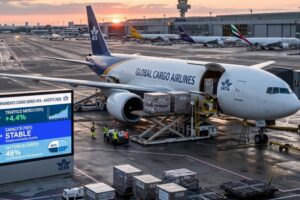
    Le rilevazioni della Iata ad agosto 2026 mostrano che il trasporto merci aereo mondiale è cresciuto del 4,4% su base annua mentre la capacità è sostanzialmente stabile, portando il riempimento al 46%. Guidano Nord America e Asia-Pacifico, arretrano i corridoi mediorientali e il cherosene sale a 157 dollari al barile.

Ferrovia

  • Duisport potenzia i collegamenti ferroviari da Trieste

    Duisport potenzia i collegamenti ferroviari da Trieste

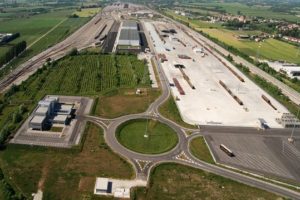
    Duisport porta a quattro le circolazioni settimanali sia sul servizio intermodale Cervignano-Duisburg sia sulla navetta tra il terminal Plt Hhla Italy e l'Interporto di Cervignano. Il servizio, gestito da +.intermodal si basa su un modello neutrale e prevede l'estensione a Wels, in Austria, dal prossimo anno.

Persone

  • L’autotrasporto veronese perde Francesco Corsi

    L’autotrasporto veronese perde Francesco Corsi

    Il 26 settembre 2026 è morto nella sua casa di Colognola ai Colli l’autotrasportare veneto Francesco Corsi. Cominciò nel 1960 con un Leoncino e l’omonima azienda Corsi, specializzata nel trasporto logistica a temperatura controllata e insediata nell'interporto Quadrante Europa di Verona.
L’elettrico Volta Zero torna allo Iaa 2026

TECNICA

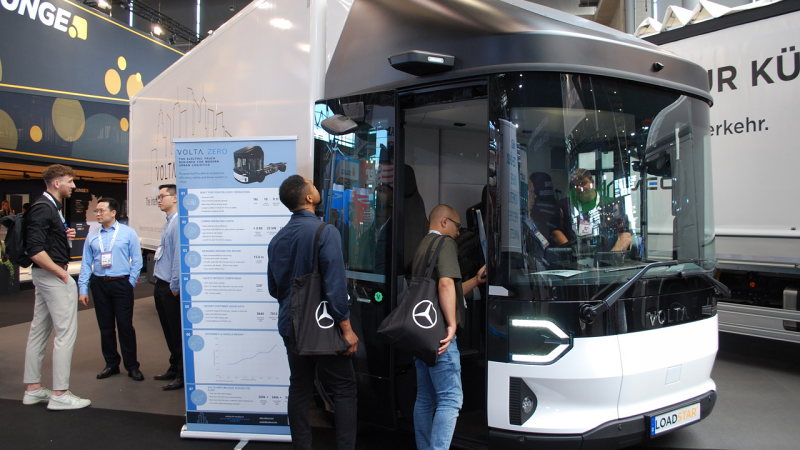
L’elettrico Volta Zero torna allo Iaa 2026
previous arrow
next arrow
Parte la riforma del Codice Doganale europeo

LOGISTICA

Parte la riforma del Codice Doganale europeo
previous arrow
next arrow
Scoperta a Venezia una frode sui carburanti

ENERGIE

Scoperta a Venezia una frode sui carburanti
previous arrow
next arrow
Sanilog avvia una nuova campagna oncologica

SERVIZI

Sanilog avvia una nuova campagna oncologica
previous arrow
next arrow