






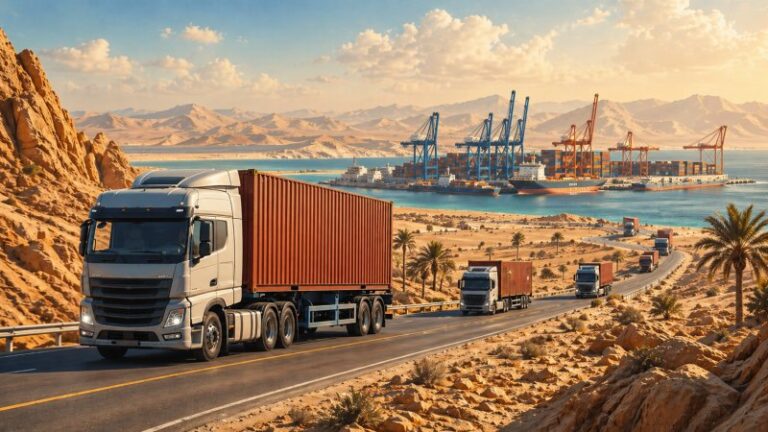
The crisis affecting Middle Eastern maritime routes, caused by the closure of the Strait of Hormuz and risks around the Bab el-Mandeb Strait, is shifting a growing share of traffic onto alternative land corridors between Oman, Saudi Arabia, Israel and other regional ports. According to The Loadstar, demand for these routes is now four to five times higher than available capacity, putting immediate pressure on inland transport, with road freight rates rising sharply and transit times becoming less predictable.
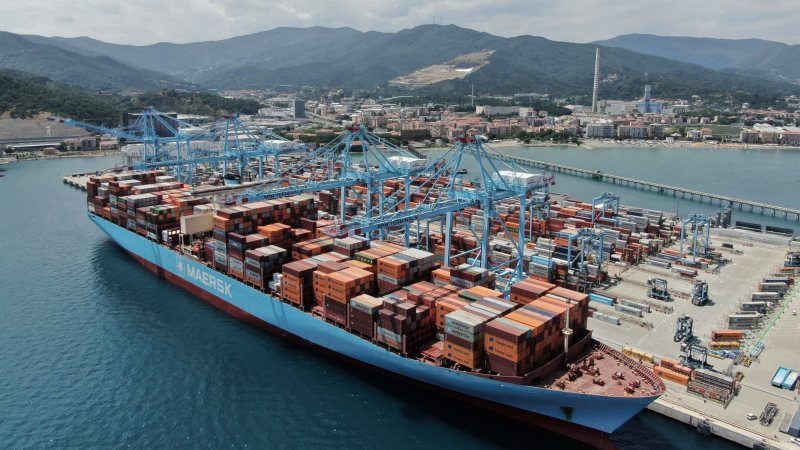
The trend mainly concerns container flows seeking to avoid the most exposed maritime chokepoints, starting with the Strait of Hormuz and the critical sections of the Red Sea. The mechanism appears simple only at first sight: cargo is discharged at a port considered safer, continues by road or rail through one or more countries, and is then reloaded towards its final destination. Under normal conditions, these solutions remain complementary to the direct maritime route. In the current phase, however, they are taking on the role of relief channels for supply chains that cannot wait for full regularity in shipping operations to be restored.
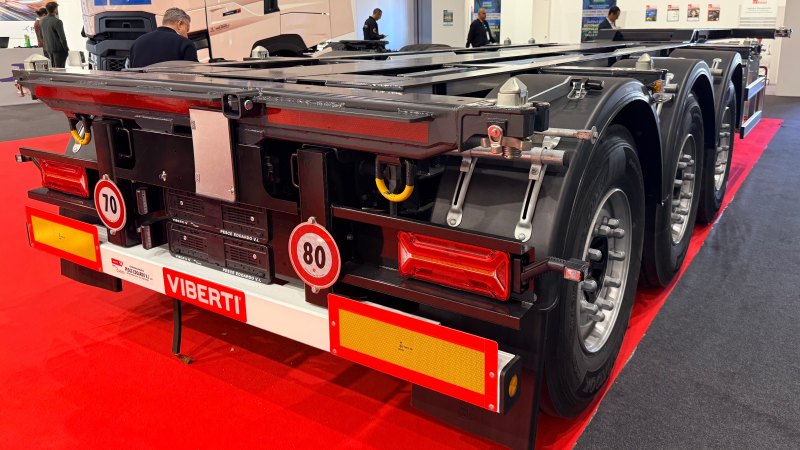
The greatest pressure is on road haulage. The availability of commercial vehicles is not growing at the same pace as demand, while waiting times at terminals, borders and checkpoints are further reducing effective capacity. Rail, where available, also lacks sufficient train paths, terminals and rolling stock in all areas to replace significant shares of maritime traffic. The result is a second-level congestion: not only is the original sea route disrupted, but also the land diversion intended to reduce the risk. The Loadstar also reports a sharp increase in inland freight rates along these corridors, driven by demand exceeding supply. These increases are compounded by geopolitical risk premiums, higher fuel costs, longer driving times, forced stops and the need to coordinate multiple operators across different countries.
For European shippers, the main effect is a loss of predictability. A land-sea corridor can ensure service continuity for urgent or high-value goods, but the door-to-door cost can be significantly higher than that of an all-sea supply chain under normal conditions. The increase does not depend only on truck or rail rates: customs management, security, cargo insurance, reloading planning and the risk of accumulating delays at several points in the chain all weigh on costs. The contractual implications are already clear. Importers and exporters must assess price review clauses, wider delivery windows and the allocation of additional costs among supplier, freight forwarder, carrier and final customer. Without clear agreements, volatility in inland transport costs can turn into commercial disputes, especially in sectors with tight margins or binding delivery times.
For shipping carriers, land corridors are undoubtedly a useful tool for maintaining commercial continuity in areas exposed to the crisis, but they increase the complexity of the entire transport chain. Operations no longer end with managing the ship and the destination port, but require agreements with road hauliers, rail operators, inland terminals, customs authorities and security providers. Each step broadens the number of parties involved and makes it harder to guarantee reliable timings. Regional ports involved in alternative corridors are also in a delicate position. Ports able to attract diverted traffic can increase volumes and strengthen their role in intermodal connections, but they must manage unplanned peaks, insufficient parking areas, congestion at gates and difficulties in coordination with inland transport. For storage and forwarding operators, the ability to integrate bookings, customs documentation and inland transport becomes a central operational factor.
P.R.