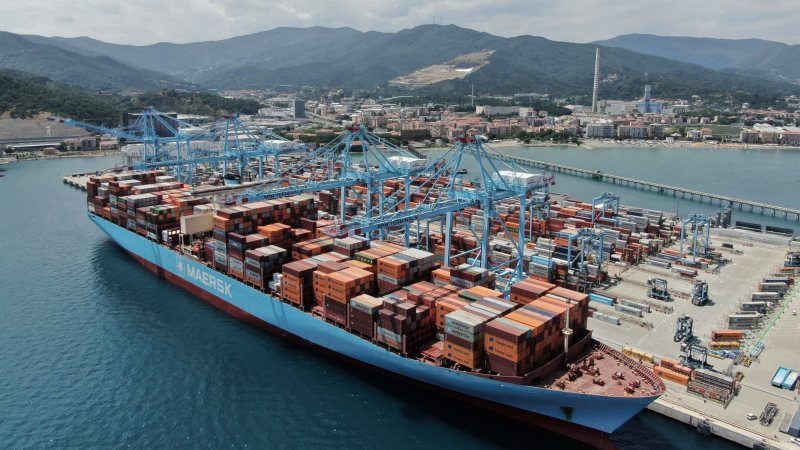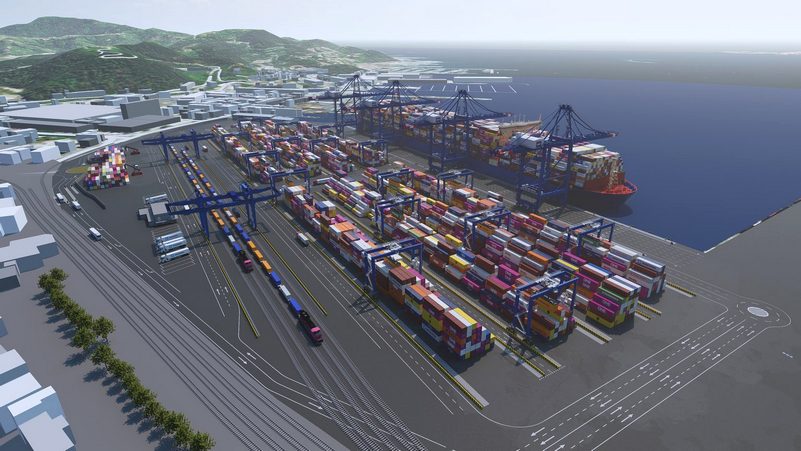







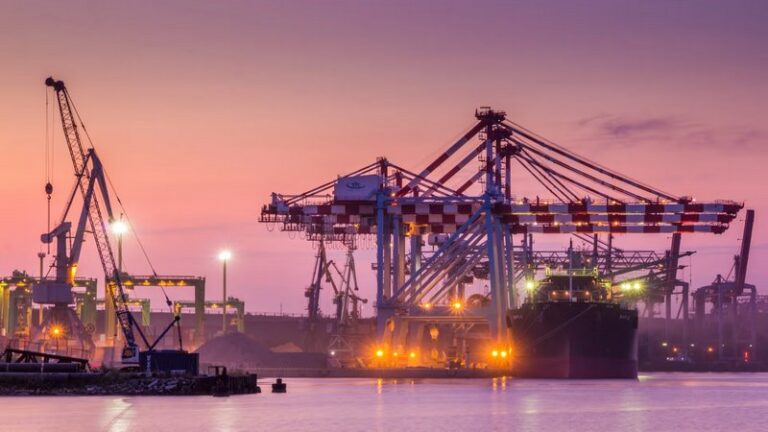
DP World has sold its controlling 51% stake in the Tis Container Terminal at the port of Pivdennyi, formerly Yuzhny, to its Ukrainian partner Tis Group, which now regains full ownership of the asset. The transaction, announced in mid-March 2026 after regulatory approvals were completed, also includes the P&O Maritime Ukraine tugboat business. The deal ends the UAE group’s only direct operational presence in Ukraine, although it was not accompanied by any statement indicating a definitive withdrawal from the country as an investment destination.
The official reasons for the sale were set out in broad terms. DP World linked the disposal to its regional and global strategic priorities, without specifying the weight of country risk or operating conditions in the Black Sea. At the same time, the UAE terminal operator said it would continue to assess new opportunities in the country. This shifts the interpretation of the deal away from a full market exit and towards a possible redefinition of how the group maintains a presence, at least until the risk-return environment becomes more favourable.
To understand the scale of the divestment, it is necessary to go back to 2020. In February that year, DP World announced an agreement to acquire 51% of the Tis Container Terminal and completed the transaction in June after receiving regulatory clearance. The investment was presented as a way to strengthen the terminal’s competitiveness, enhance its domestic rail links and integrate it into the group’s network and Unifeeder’s Black Sea operations, with connections also to Constanta and Yarimca. At the time, the deal was described as one of the main foreign direct investment initiatives in Ukrainian logistics. The partnership between the two groups was not limited to the container terminal. In 2018, DP World, through P&O Maritime, acquired 51% of Lbs Group, the owner of tug operator LB Shipping. Under the new transaction, this business also returns to full Tis control.
The context in which DP World entered and exited the market has changed radically. Since Russia’s invasion in 2022, Ukraine’s Black Sea ports have operated in an environment marked by war risk, higher insurance premiums, route uncertainty and constant adjustments to logistics corridors. This has reshaped trade flows and made the presence of major global operators more complex, while other Black Sea and European Union ports, led by Constanta, have strengthened their role as alternatives or support hubs. Against this backdrop, DP World’s decision appears consistent with greater selectivity in capital allocation and a preference for assets where operational visibility is higher.
For Tis Group, by contrast, regaining 100% ownership of the terminal and tug operations expands its industrial room for manoeuvre. Full control allows the Ukrainian group to decide independently on tariffs, investment and integration with the other terminals operating at Pivdennyi, particularly those handling dry and bulk cargo. At a time when management flexibility matters as much as access to capital, a fully local ownership structure can accelerate operational decisions and adaptation to changing routes.
The issue remains, however, of the terminal’s ability to attract global customers, shipping lines and institutional investors. The presence of a multinational operator such as DP World gave the terminal commercial, relationship-based and reputational support in a sector where international scale also influences traffic-routing decisions. Losing that foothold may reduce the asset’s appeal, at least in part. On the other hand, the fact that the terminal remains in the hands of an experienced local operator already established at the port reduces the risk of short-term disruption and makes a destabilising transition phase less likely.
Pivdennyi nevertheless retains a central role in logistics that goes beyond a single corporate transaction. The port is one of Ukraine’s most important, with a strong specialisation in agrifood and mineral bulk cargoes, as well as a role in container traffic. Its combination of nautical depth, industrial profile and inland connections keeps the area’s strategic value high. The sale of the 51% stake should therefore be read more as a reshaping of ownership and risk profile than as an automatic reduction in the port’s importance. More broadly, for infrastructure investment in Ukraine, the case offers a concrete measure of the shift from expansion to caution. In 2020, DP World’s entry symbolised the country’s ability to attract international capital into logistics; in 2026, its exit from the Pivdennyi terminal reflects a context in which major groups are reassessing exposure, payback periods and operational sustainability.
Antonio Illariuzzi