




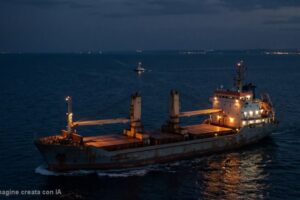


At 09:35 (UTC), a fire ignited on the main deck of the Grimaldi con-ro vessel Grande Brasile while navigating the south-west lane of the Dover Strait, 15 nautical miles off Ramsgate (United Kingdom). Reports vary regarding the nature of the incident: while most initial accounts indicated a single outbreak, later data from the Grimaldi Group confirmed a second fire occurring on a different deck at 20:00 local time, necessitating the temporary evacuation of the crew. The spread of the flames was contained by the crew through the activation of the CO2 suppression system, although the complexity of the operation required the deployment of external firefighting resources, including the French vessel Abeille Normandie and the Dutch tug Multratug 35.
Within thirty minutes of the initial alarm, the propulsion and steering systems were compromised, leaving the vessel adrift at a residual speed of one knot. The lack of manoeuvrability made containment efforts critical, with the risk of collision or grounding mitigated by the swift establishment of a safety zone coordinated by British, French, and Dutch authorities. Analysis of the Automatic Identification System confirmed the "Not Under Command" status for over 24 hours, highlighting the extent of damage to the electromechanical systems.
Built in 2000 at the German Flensburger Schiffbau-Gesellschaft shipyard, the Grande Brasile (IMO 9198123) belongs to the G4 class of con-ro vessels, with a gross tonnage of 56,000 GT and a capacity of 1,300 TEU plus 3,515 linear metres for rolling cargo. Its hybrid design, combining container holds and vehicle decks, was developed to optimise trade between Western Europe and West Africa, where demand for used cars intersects with that for general cargo containers. The vessel, registered in Malta but managed by the Swedish company ACL Atlantic Container Line, had passed three Port State Control (PSC) inspections in 2024 without any deficiencies being recorded.