




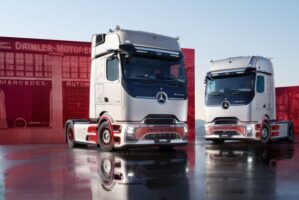
Amazon expands electric fleet
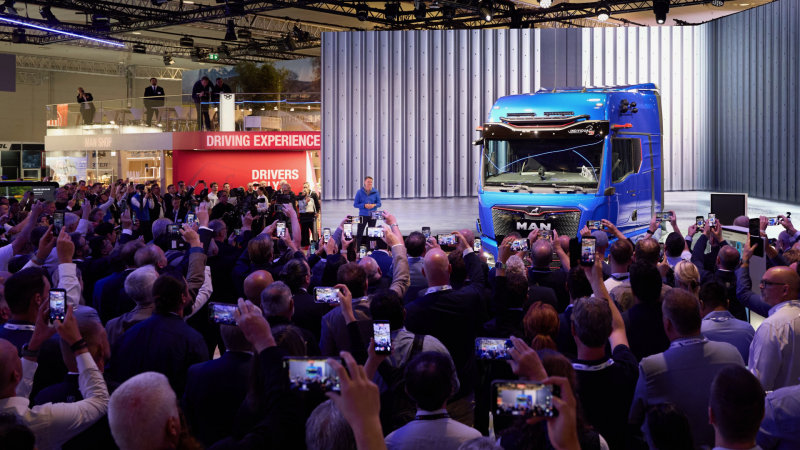
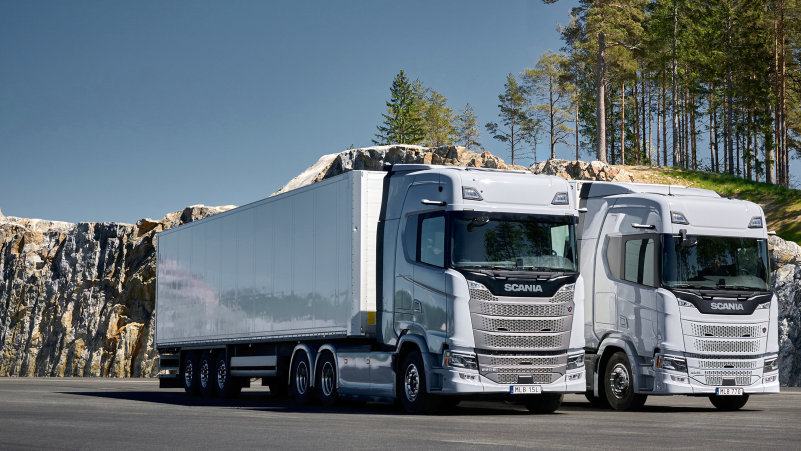
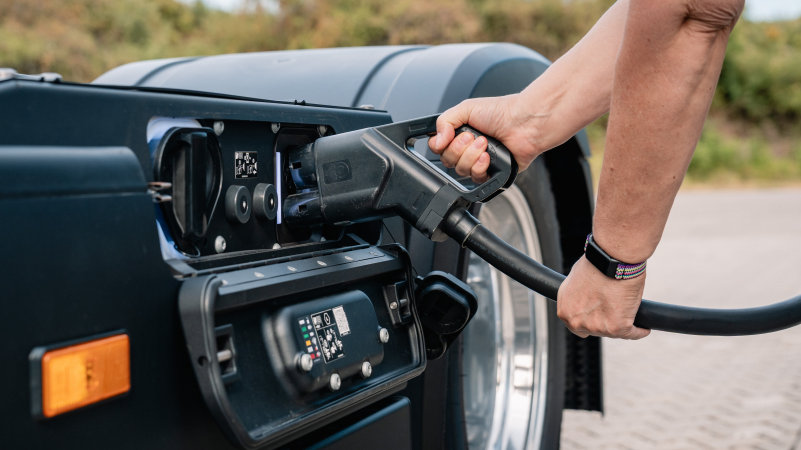
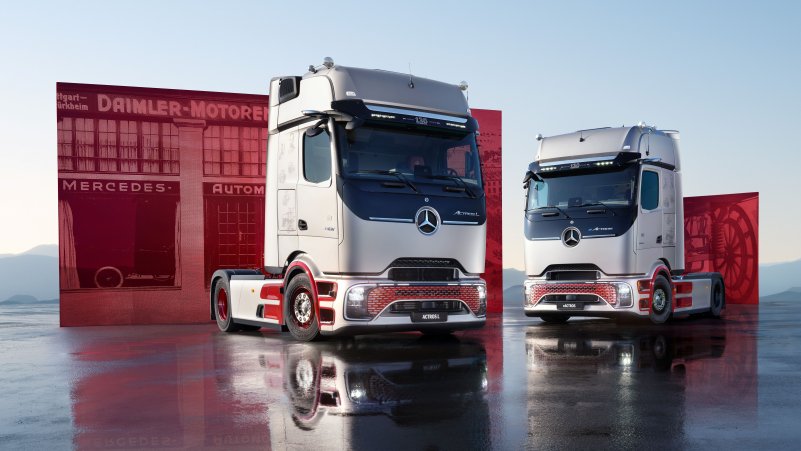
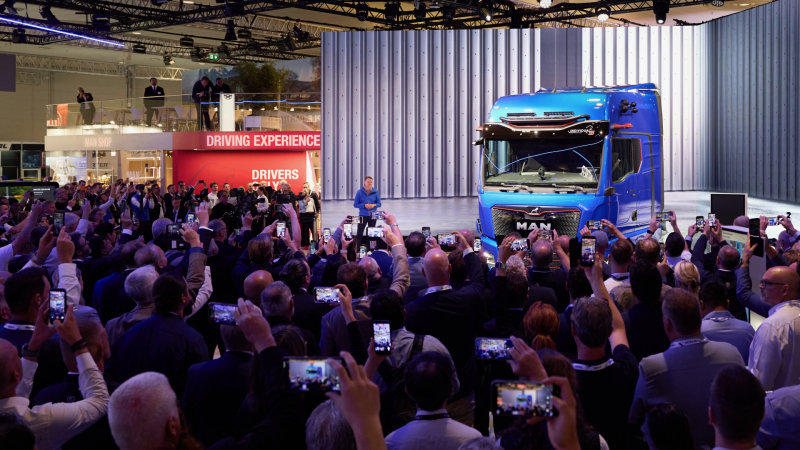
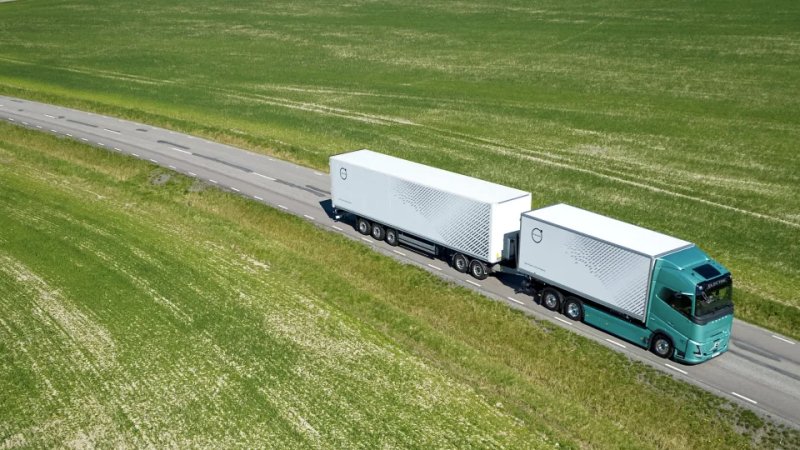
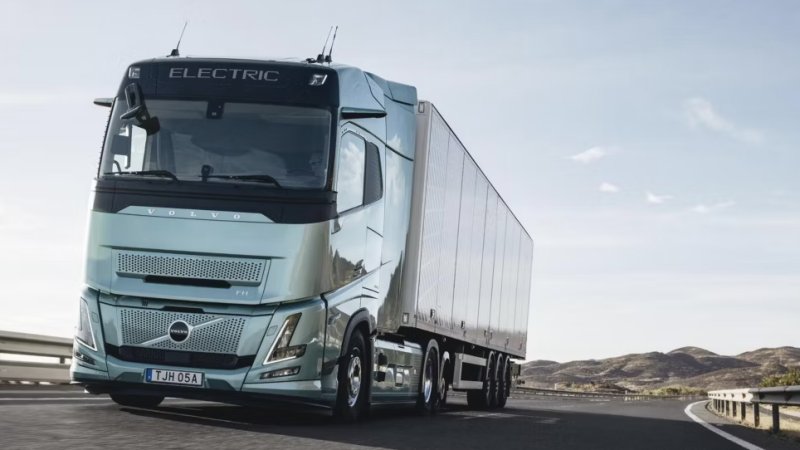
Mercedes-Benz Trucks has delivered the first 27 battery-electric eActros 600 trucks to Amazon for use in Germany, where more than 50 vehicles of the same model are expected to be operating in the group’s transport network by the end of 2026. The deliveries are part of a contract signed in early 2025 for more than 200 electric heavy goods vehicles, described by Mercedes-Benz Trucks as the largest order of its kind ever placed by Amazon. Most of the fleet is destined for the UK, where deliveries began in late 2025. The tractor units are being used on middle-mile routes between logistics centres and urban areas. The eActros 600 has three 207 kWh batteries, providing a total installed capacity of 621 kWh, and can travel 500 km without intermediate charging at a gross combination weight of 40 tonnes. In its most efficient configuration, the range can reach 560 km, while charging during drivers’ mandatory breaks makes it possible to cover more than 1,000 km a day where suitable infrastructure is available. Amazon is installing hundreds of charging points for heavy goods vehicles at its European sites, allowing batteries to be charged from 10% to 80% in around 70 minutes. The company plans to invest more than €1 billion in electrifying and decarbonising its European transport network, with more than €400 million allocated to operations in Germany.
Container ships beyond 24,000 TEU
Alphaliner has revived the prospect of a new generation of container ships with a capacity of around 27,500 TEU, exceeding the current 24,000 TEU threshold, although no orders have been confirmed. According to the analysis, the theoretical Gigamax-25 design would be about 414 metres long and 63.3 metres wide, and could carry containers across 25 rows. Capacity would be more than 3,000 TEU higher than the largest vessels currently in operation and around 7,000 TEU above that of a previous-generation 20,500 TEU megamax. The design would be optimised for slow steaming, with speeds of up to 18 knots and LNG dual-fuel propulsion. According to Alphaliner, this configuration would result in fuel consumption only marginally higher than that of a roughly 20,500 TEU megamax, while spreading it across greater capacity. Any introduction of Gigamax vessels would be primarily linked to the major east-west routes and a network concentrated around a limited number of major ports, supported by feeder, rail and road connections. Their size would require terminals with adequate water depth, berths, cranes and turning basins, as well as sufficient yard capacity and inland connections. Larger vessels would concentrate greater container volumes at each individual port call, with implications for the organisation of port operations. The economic advantage would depend on economies of scale and high vessel utilisation rates. The analysis also links increasing capacity to higher energy and emissions costs. The EU maritime ETS has applied since 1 January 2024, while FuelEU Maritime has been in force since 1 January 2025. The proportion of emissions covered by the EU ETS rises from 40% in 2024 to 70% in 2025 and 100% from 2026. FuelEU, meanwhile, requires a 2% reduction in the greenhouse gas emissions intensity of energy used by ships in 2025 and a 6% reduction in 2030 compared with the 2020 reference level. Increasing vessel size could therefore reduce energy and emissions costs per container, provided capacity utilisation remains high. However, the risk of oversupply remains: according to Unctad, global container shipping capacity grew by 10.1% in 2024, equivalent to almost 3 million TEU, compared with a 7.1% increase in demand. Projections also point to capacity growth of 6.7% in 2025 and 4% in 2026.
Portugal negotiates sale of TAP
The Portuguese Government will begin a further round of negotiations with Lufthansa and Air France-KLM over the sale of a minority stake in TAP, with the aim of securing better terms before selecting the preferred bidder. According to Bloomberg, the decision to continue discussions with both groups reflects the very close overall assessment of their bids. Binding offers were submitted on 29 July and subsequently reviewed by the state-owned company Parpública, which forwarded its assessment to the Government. Portugal plans to sell up to 49.9% of TAP, with 44.9% allocated to a strategic investor and up to 5% to employees. The process will now enter a phase in which Lufthansa and Air France-KLM can improve their respective offers before a single bidder is selected for final negotiations. According to Minister of the Presidency António Leitão Amaro, the decision should be made within a few weeks and will take the national interest into account rather than focusing solely on price. Chief executive Luís Rodrigues considers the entry of a new shareholder necessary to address growing market uncertainty. TAP ended the first half with a €99 million loss, partly due to higher fuel prices. The airline had also received substantial public funding during the pandemic. For Lufthansa and Air France-KLM, TAP offers an extensive network linking Europe with Brazil, Latin America and Africa and could strengthen their respective positions in southern Europe. Air France-KLM has confirmed its interest in the airline, while Lufthansa has said it intends to continue with the process in the coming weeks.
MSC Shipmanagement sentenced in the US
The United States has ordered MSC Shipmanagement Limited and Hong Kong Spirit Shipping and Trading Limited, owner of the container ship MSC Samira III, to pay a combined $1.75 million. According to the US Department of Justice, the two companies each admitted to two violations of the Act to Prevent Pollution from Ships in connection with incidents that occurred between June 2024 and January 2025. Oily bilge water was allegedly discharged into the sea through two separate systems designed to bypass or manipulate pollution-prevention equipment. Between June and September 2024, it was transferred from the bilge holding tank to the sewage tank before being discharged overboard without passing through the oily water separator. From September 2024 to January 2025, fresh water was instead passed through the oil content monitoring device while bilge water was discharged into the sea through the separator. The limit cited by the authorities is 15 ppm of oil. The operations were not properly recorded in the Oil Record Book, the mandatory record of discharges and transfers of oily residues. The case came to light following two calls by MSC Samira III at Philadelphia in January 2025, when a record book considered to have been falsified was presented to the US Coast Guard. According to The Maritime Executive, inspections also identified maintenance deficiencies and the vessel was detained for periods.