






In 2025, global maritime incidents involving vessels over 100 GT fell by 16% to 2,818 cases, while total losses reached a historic low of 43 ships, confirming a structural decade-long decline in losses at sea.
Machinery failures remain the leading cause of incidents, with 1,505 cases in 2025, equal to 53% of the total, worsened by an ageing fleet, with an average age of 23 years, and the growing use of non-original spare parts.
Emerging risks are increasing: fires linked to lithium-ion batteries, cargo declaration fraud and interference with GNSS signals, alongside geopolitical tensions in maritime chokepoints such as Hormuz and the Red Sea.
Allianz’s Safety and Shipping Review 2026 portrays a maritime sector that, overall, has never been safer in terms of total losses, but is also facing a profound shift in the nature of operational risks. According to the report, global incidents involving vessels over 100 GT fell by 16% in 2025, down to 2,818 cases from 3,353 the previous year. Total losses stood at 43 vessels, the lowest figure ever recorded, within a ten-year trend in which annual losses averaged 70 in 2021-2025, compared with 111 in the previous five-year period.
Behind this overall improvement, however, the report identifies three expanding areas of risk: machinery failures, which remain the main cause of incidents, accounting for 53% of cases in 2025; geopolitical instability in key maritime passages, from the Strait of Hormuz to the Red Sea, which has permanently reshaped global trade routes; and the technological evolution of transported goods, particularly lithium-ion batteries, which has made onboard fires a more complex threat to manage. A fourth, more recent factor has also emerged: interference with GNSS satellite signals, which is disrupting electronic navigation systems in several parts of the world.
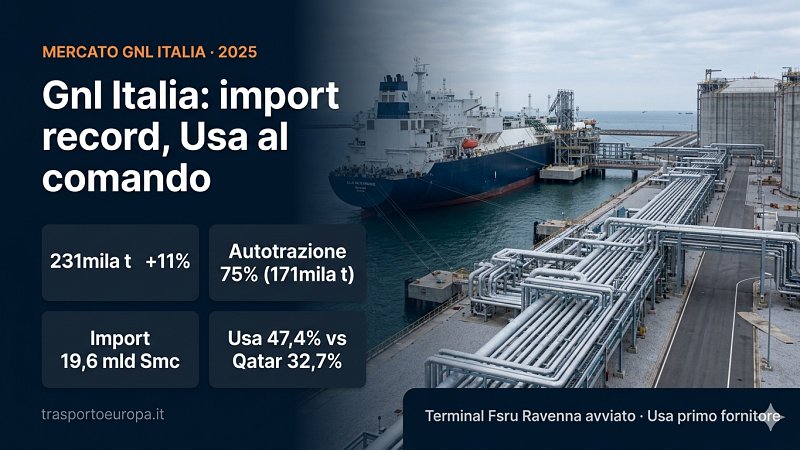
In economic terms, the report estimates capital expenditure for decarbonisation at between $150bn and $200bn over 2021-2025, with more than 58% of container shipping tonnage ordered in 2025 compatible with LNG. However, a regulatory gap remains: technologies for alternative fuels such as ammonia and methanol are advancing faster than regulatory and insurance frameworks, while the deadlock at the IMO (International Maritime Organization) over the net-zero emissions framework is fuelling uncertainty over shipowners’ future investment decisions.
Machinery failures are the leading cause of incidents. In 2025, there were 1,505 such events, almost six times the number of collisions, which stood at 260 cases. Over the decade from 2016 to 2025, the report recorded 12,991 machinery failures compared with 2,822 collisions, confirming that technological breakdown has overtaken human manoeuvring error as the main source of danger at sea. According to analysts, this trend is directly linked to the ageing of the global fleet, whose average age reached 23 years in 2025.
Almost a quarter of container ships in operation are more than 20 years old, and older vessels account for more than half of all safety-related incidents. Delays in fleet renewal, caused by bottlenecks at shipyards and regulatory uncertainty, are forcing many shipowners to keep obsolete units in service, while repair cost inflation and shortages of original spare parts are driving greater use of non-original components. This combination increases the risk of sudden blackouts on board, with loss of propulsion and vessel control: an event that, if it occurs in ports or narrow navigation channels, can have catastrophic consequences, as shown by the case of the container ship Dali in Baltimore in 2024.
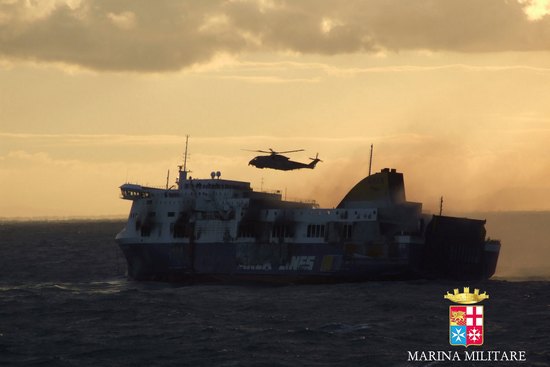
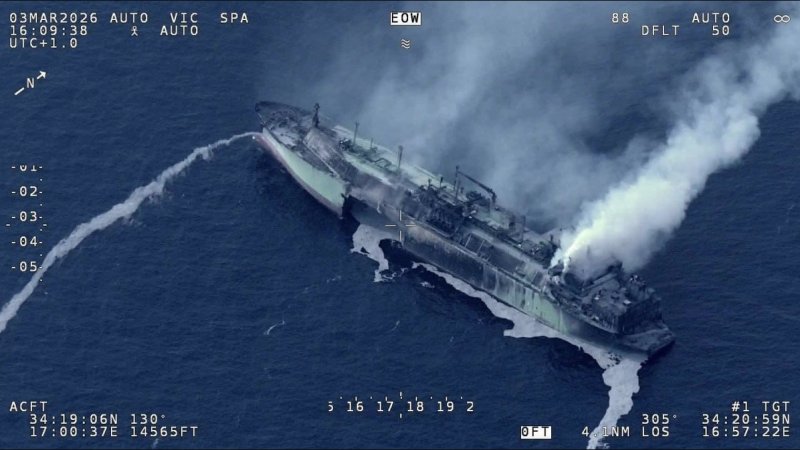
Fire risk remains one of the most serious causes of total loss, although it declined compared with 2024: 218 cases were recorded in 2025, down from 255 the previous year, but still the second-highest figure of the decade. The growth in vessel size has made fires harder for crews to manage, often forcing them to abandon ship before specialist assistance arrives. The energy transition is further complicating the picture: the increase in the transport of lithium-ion batteries, both inside electric vehicles and as general cargo, creates fires that are difficult to extinguish, particularly on ro-ro vessels and car carriers, many of which were designed decades ago without fire-fighting systems suited to the thermal risks posed by these batteries. The report notes that 25% of cargo-related fires are attributed to undeclared or mislabelled cargo, a trend that has led to an increase in general average declarations, with cargo owners required to share salvage costs that can reach 50% of the value of the goods. To counter the problem, artificial intelligence-based tools are being developed, such as the WSC/NCB (World Shipping Council/National Cargo Bureau) programme, to screen millions of bookings and identify undeclared dangerous goods in advance.
The eastern Mediterranean and Black Sea recorded the highest number of incidents in 2025, with 622 cases, followed by the British Isles with 619. In terms of total losses, however, the hotspot remains the region between southern China, Indochina, Indonesia and the Philippines, where 255 vessels have been lost over the past ten years, the highest concentration worldwide, linked to the huge import and export traffic volumes that saturate the area. Cargo vessels were the worst affected over the decade, with 328 total losses out of 905, followed by fishing vessels with 141 cases. The main causes of total loss over the decade remain sinking, at 41%, fire or explosion, at 20%, and grounding, at 19%. The report also focuses on Arctic routes, which are increasingly used as an alternative to Suez to halve transit times via the Northern Sea Route. Over the past ten years, more than 500 incidents have been recorded in the Arctic Circle, almost half of them caused by machinery failures, an alarming figure given the complete absence of rescue and repair infrastructure in the area.
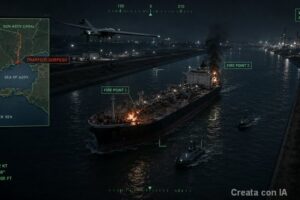
Among the emerging risks flagged by the report is the increase in jamming and spoofing of GNSS signals, which is compromising critical systems such as AIS and electronic navigation, particularly in geopolitically unstable areas. These phenomena have already caused unintended diversions and groundings, as in the case of the MSC Antonia, as well as increasing the risk of collision. Geopolitical tensions remain central to the report’s analysis, which cites the Red Sea crisis and the blockade of Hormuz. Ships trapped in conflict areas such as the Persian Gulf also face indirect risks, including extreme biofouling, with biological growth on the hull sharply reducing operational efficiency, and critical disruption to maintenance schedules caused by the failure to source spare parts.
Mara Gambetta