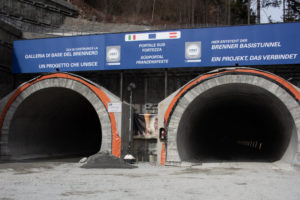









Almost by an irony of fate, within just a few days, two events focused on transport policy between Italy and France highlighted a completely different picture: the first offered few illusions, while the second was visionary and optimistic. At the Italy-France Intergovernmental Conference in Chambéry on 17 June 2026, doubts emerged over completion times and the funds available to finish work on the new Turin-Lyon transalpine railway. Above all, it became clear that France was showing little attention, not to say a lack of willingness, to schedule and design the access line for which it is responsible to the Mont Cenis base tunnel, an infrastructure in an advanced stage of construction by Telt, the Italian-French public promoter responsible for building and managing the cross-border section.
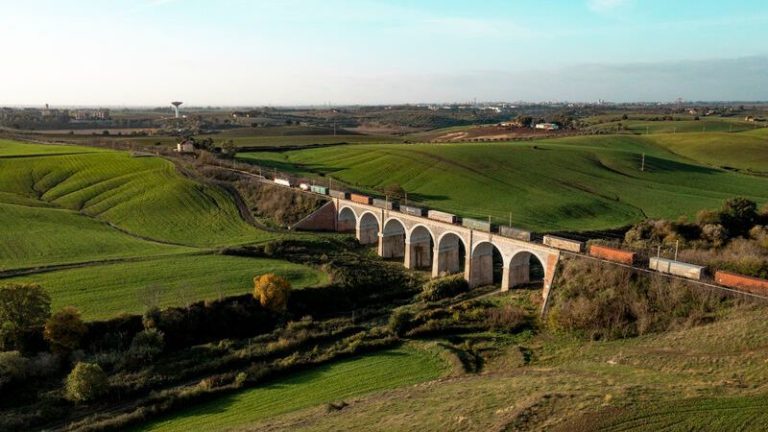
A few days later, on 25 June 2026, the France-Italy Economic Forum was held in Le Cannet, just a few kilometres from Cannes. In contrast with the first event, it clearly showed a willingness to upgrade the railway between Genoa, Nice and Marseille. This line, which runs along the Ligurian and French Riviera, is one of the two rail links between Italy and France, making it an alternative to the route from Turin towards the Frejus. Nor was this simply a matter of renewed interest in a corridor that, despite being included in the core network, still has a single-track section in Italy between Finale Ligure and Andora, which therefore still needs to be doubled.
At the Forum between Italy and France, an agreement was reached on a specific request to be taken to European level: to include the Genoa-Marseille railway in Europe’s cross-border corridors, where it currently plays only a marginal role compared with Turin-Lyon. This step would be the turning point for accessing co-financing from the European Union, as well as encouraging the search for national funding for completion projects.
At this point, what appears to be a contradiction becomes clear: on the one hand, the Turin-Lyon line, a project already under construction and approved at every institutional level, is being left in procedural and financial uncertainty; on the other, a fast lane is being envisaged for Genoa-Marseille, pursuing an objective that still has to be built in the hope that Europe will show interest. And all this as if it were a swap of playing cards. After all, it can hardly come as a surprise that the main sponsors of this agreement are Genoa-born deputy transport minister Edoardo Rixi and Philippe Tabarot, from Cannes, who heads the corresponding French ministry.
Leaving aside any local interests, however, it is useful to focus on the facts in a hypothetical parallel comparison between Turin-Lyon and Genoa-Marseille. Let us start with France, because here a fully mirrored picture emerges, to the disadvantage of both routes. While delays, uncertainty and limited attention on the French side to the national section between Lyon and Saint-Jean-de-Maurienne also emerged during the recent Italy-France Intergovernmental Conference, the Paris authorities have also put forward ambitious and visionary projects for Genoa-Nice, only to backtrack.
Back in 2005, the public debate was launched on a project for a new high-speed railway line between Marseille and Nice, known as the Ligne Nouvelle Provence-Côte d'Azur (New Provence-Côte d'Azur Line), or LGV PACA, as a response to the current line, which is clearly saturated. After a long and laborious process in which several route variants were examined in depth, the project ran up against the drastic cuts affecting many of the new high-speed lines planned in France. For now, all that remains of that project is a first, limited phase in the Marseille rail node, which has entered the operational stage. Here too, therefore, the fate of the Riviera line certainly does not look more fortunate than that of the route between Lyon and the Mont Cenis base tunnel.
Turning to the Italian section, the 32 kilometres between Finale Ligure and Andora still need to be doubled on a new variant alignment, with plans for at least 25 kilometres in tunnel. At present, only the design phase is funded, while all the funds needed for construction still have to be found, and the whole-life estimate stands at €2.5 billion. Moreover, the outlook is not encouraging because there is no definitive agreement on the project, which is therefore drifting further into the future. If the Turin-Lyon line is not in the best of shape, it is not as though Genoa-Marseille, despite its political sponsorship, was born under a lucky star.
Piermario Curti Sacchi