




Sono tre i tunnel ferroviari di base attualmente in avanzata fase di costruzione in Europa, quello del Moncenisio sulla Torino-Lione, quello del Brennero e quello del Semmering tra la Bassa Austria e la Stiria sulla direttrice tra Vienna e Graz. Ma mentre per i primi due trafori le previsioni sulla conclusione dei lavori continuano a essere posticipate, per il Semmering è ufficialmente partito il conto alla rovescia. La galleria austriaca lunga 27,3 chilometri sarà aperta all’esercizio a dicembre 2029, rispetto all’ultima previsione che parlava genericamente di 2030. I tempi quindi saranno rispettati, anzi anticipati di una manciata di mesi. La conferma viene direttamente dal ministero austriaco della Mobilità e dall’amministratore delegato delle ferrovie federali Öbb durante una recente visita in cui il tunnel è stato interamente percorso.
I lavori nella doppia galleria del Semmering sono partiti formalmente il 25 aprile 2012 e pertanto arriveranno alla loro conclusione dopo quasi 17 anni di cantieri, ormai con una data certa. Ma per essere obiettivi occorre ricordare che il progetto in passato ha avuto un iter decisamente travagliato. La prima progettazione risale al 1989, ma soprattutto per dubbi di natura ambientale e difficoltà con le realtà locali, il tempo è trascorso fino al 2005 senza alcun riscontro, anzi a quel punto il progetto è stato addirittura abbandonato. Un nuovo tracciato è stato ripresentato nel 2010, ma anche in questo caso non sono mancate le peripezie anche dal punto di vista giuridico-amministrativo, con disaccordi tra i diversi Länder, fino al via definitivo arrivato solo nel 2012.
E siamo alla cronaca recente. Alla fine del 2024 sono terminati tutti gli scavi delle due canne del tunnel da Gloggnitz a Mürzzuschlag e dall’estate 2025 è partito l’allestimento tecnico delle gallerie con tutti gli impianti necessari per l’esercizio ferroviario, quindi binari, alimentazione elettrica, sistemi di segnalamento, sicurezza e antincendio. Non devono sorprendere i lunghi tempi che riguardano questi lavori, perché del tutto allineati a quelli di altre opere analoghe, come per esempio il tunnel di base del Gottardo che è stato inaugurato nel 2016, ma gli scavi si erano conclusi tra il 2010 e il 2011.
Con l’apertura all’esercizio del Semmering nel 2029 arriva a conclusione anche uno dei progetti più impegnativi e dalle rilevanti ricadute positive per tutta la rete ferroviaria austriaca. Il nuovo tunnel di base, infatti, può essere considerato un tassello che va a completare la nuova ferrovia ad alta capacità, cuore del corridoio Ten-T Baltico-Adriatico, dopo che nel dicembre 2025 è entrata in funzione la nuova Koralbahn, la ferrovia lunga 125 chilometri tra Graz e Klagenfurt con il tunnel di base sotto la Koralpe di 32,9 chilometri. In cento giorni di esercizio, considerando la preapertura a novembre riservata solo al traffico delle merci, la Koralbahn ha visto il transito di mille treni cargo con oltre un milione di tonnellate di merci trasportate.
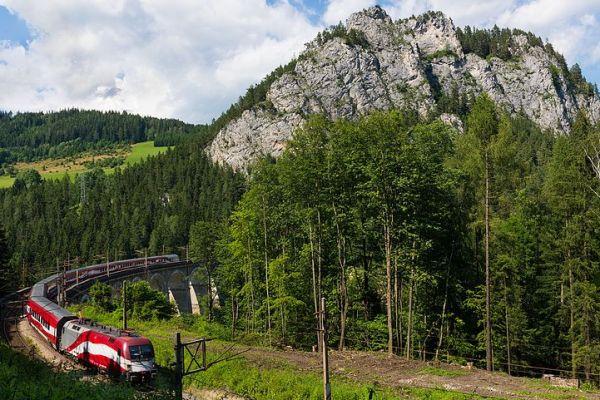
Il tunnel del Semmering sostituisce la storica ferrovia realizzata a metà dell’800 dall’ingegnere italiano Carlo Ghega, conosciuto in Austria con il nome d’arte di Karl von Ghega. All’epoca questa linea era considerata un capolavoro dell’ingegneria ferroviaria di montagna (ora patrimonio Unesco), ma ormai risulta superata e inadatta al traffico attuale, soprattutto merci, per le pendenze elevate e le curve a corto raggio, oltre alla presenza di gallerie con un profilo che non consente il transito dei treni intermodali a grande sagoma.
Piermario Curti Sacchi