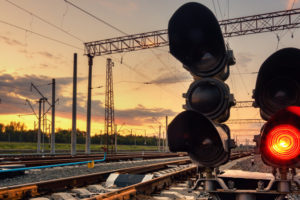



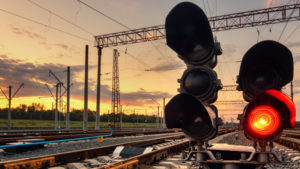
The aspiration of railway companies offering their services in Europe has always been to have a perfectly interconnected network, without technical or regulatory barriers. This seemed within reach with European integration, but the hope now appears to be a utopia, if not an illusion. The idea of adopting a single management, control, and signaling system for European railways dates back to 1989 and led to the Ertms/Etcs standard, whose first concrete implementation was in Italy, on the Rome-Naples high-speed line in 2005.
However, what was supposed to be a single language spoken throughout Europe turned out to be a collection of idioms, if not different dialects. The blame lies partly with increasingly rapid technological development and partly with the evolving European and national regulations. As a result, we don't have a single Ertms standard; instead, Europe has four levels of Etcs with three different baselines, forming a deck of cards: L1 BL2, L1 BL3 MR1, L1 BL3 MR1 with Radio Infill, L1 BL3 R2, L2 BL2, L2 BL3 MR1, and L2 BL3 R2.
And it doesn't end there. The integration between the various ground systems, that is, the lines, with onboard systems varies and is identified by Esc Types (Etcs system compatibility), which number in the dozens. In fact, considering the entire European network, the Esc Types exceed a hundred. This Babel has serious consequences for railway companies, especially economically, as equipping locomotives becomes costly. As a result, not all locomotives are suitable to run on all European corridors.
"On interoperable corridors like those represented by passes between Italy and neighboring networks," explains Alberto Lacchini, head of the Italian division of Railpool and president of Assorotabili, the association including manufacturers, leasing companies, and companies specializing in freight railway rolling stock maintenance, "Etcs and national systems coexist, but locomotives equipped with dual systems can only operate using the Etcs system." So far, this sounds coherent, but temporary solutions are not certified, which means that it will not be possible to increase international freight traffic in the coming years.
"In Italy, one of the main corridors towards Switzerland is partially equipped with Etcs L1 with Radio Infill," Lacchini explains again, "but most of the interoperable locomotives currently operating are equipped with BL2 or BL3.4 systems, and the main technology providers are investing everything in BL3.6 without updating the previous series. The new evolution of signaling will likely be available and authorized by 2026, meaning no interoperable locomotive currently equipped with Etcs can run on these corridors before that date."
All of this comes at a cost of hundreds of thousands of euros per machine: each Esc Type authorization can cost between 350,000 and 700,000 euros per model, and upgrading to a higher version of Etcs can cost up to 300,000 euros per train. There is also the accelerated plan for Etcs conversion launched by Rfi in 2024: the risk is that when the national system is "switched off," many locomotives will lose their ability to operate. To Rfi's credit, aware of the difficulties, it is trying to find a temporary solution for lines equipped with Radio Infill, allowing railway companies to continue operating temporarily.
But the surprises don't end there, as bureaucracy has created a set of rules supposedly meant to ensure safety, which in practice turn into regulations bordering on common sense. One such rule concerns the qualification of train drivers. This is not only linked to the type of train or locomotive, which would be logical, but also to the specific railway lines, down to individual routes. The driver must obtain what is called "line knowledge," which allows them to travel on a particular route or multiple routes.
This qualification is valid for two years and then must be renewed, with train crews referring to this as "line knowledge maintenance." To draw a parallel, it's as if a truck driver who doesn't travel on a specific highway for two years loses the right to use it without renewing the "permit." So, on top of construction sites, line closures, cancellations, and skyrocketing energy costs, technology also stands in the way of railway companies.
Piermario Curti Sacchi