








The drought affecting the Danube basin in summer 2026 has reduced the river’s flow to its lowest level since 1996, paralysing commercial navigation and putting electricity generation under pressure in Romania, Hungary and Serbia. At the point where the river enters Romanian territory, the flow has fallen to around 1,500 cubic metres of water per second, compared with a July average of 4,700, according to readings by the Romanian state agency for water resources management. In Budapest, the level reached a new historic low of 23 centimetres on 29 July, below the previous record of 33 centimetres set in 2018, while in Croatia the river dropped by more than 130 centimetres in just one week. The crisis has been caused by a shortage of rainfall, which the Hungarian meteorological service puts at 80-130 millimetres below the long-term average over the past 90 days, combined with heatwaves that have affected the Balkans and central Europe for much of the summer.
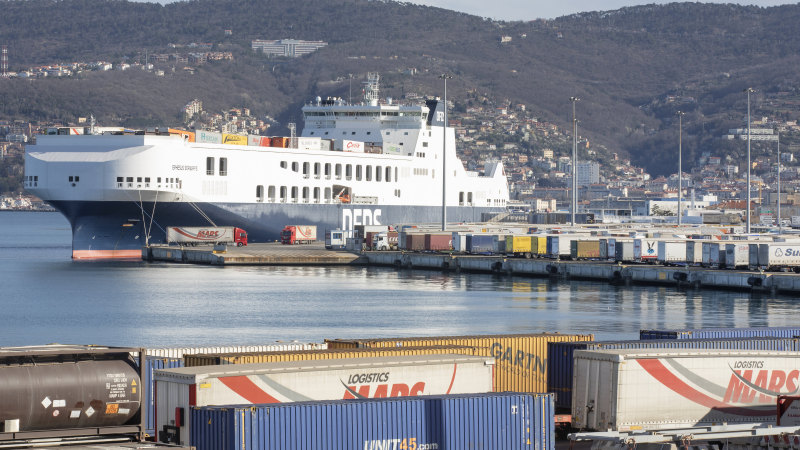
The impact on river navigation has been swift. In Serbia, the decline in flow has halted traffic in several areas, disrupting fuel imports, while in Novi Sad hundreds of small boats and several cargo vessels have been left stranded on riverbanks that have now dried out. In Bulgaria, a cruise ship that had departed from Turnu Măgurele ran aground about 25 kilometres from the port of Vidin, forcing police to evacuate 186 tourists. Barges still operating are having to sail with sharply reduced loads to avoid running aground. That means more journeys to carry the same volume of goods, and rising logistics costs for industry operators.
The most sensitive issue concerns the cooling of nuclear power plants that depend on river water. In Romania, state-owned company Nuclearelectrica disconnected reactor 1 at the Cernavodă power plant from the grid, with its restart not expected before 4 August. The Romanian Navy detonated almost 200 kilograms of explosives near the Bala canal to remove a rock formation and increase the flow of water towards the plant. Interim prime minister Ilie Bolojan then announced the shutdown of the second 706 MW reactor as well. It would be the first time both units at the plant have stopped simultaneously because of drought. The Romanian Government has declared a state of alert in the energy sector, urging citizens to reduce consumption during evening hours.
In Hungary, the Paks power plant, which supplies almost half of the country’s electricity, has cut output across several units since 29 July because of the shortage of cooling water, with the plant’s four reactors falling below 50% of total capacity. Hungarian authorities have not ruled out a full shutdown if the Danube level continues to decline. In the meantime, the country is offsetting the shortfall with higher electricity imports from neighbouring countries.
In Serbia, the country’s two largest hydroelectric power plants, Djerdap 1 and Djerdap 2, which together cover about 18% of national electricity demand, are operating at 20% and 30% of capacity respectively, according to energy minister Dubravka Đedović. Prime minister Đuro Macut has asked citizens to reduce consumption over the next 10 days. The effects are also being felt in company accounts. Austrian group Verbund, which generates about 85% of its electricity from hydropower plants, has estimated a reduction of around €370 million in first-half operating profit compared with a year with normal hydrological conditions. France’s Edf has downgraded its outlook for 2026, forecasting a decline of about 10% in annual Ebitda linked both to energy prices and to lower production.
The drought is also affecting irrigation and agriculture in the Balkans, where the fall in the Danube has already forced restrictions on water withdrawals for fields and complicated the transport of grain along the river route, one of the most widely used corridors for exports to European markets. Hydrologists do not expect conditions to improve for at least another month.
Antonio Illariuzzi