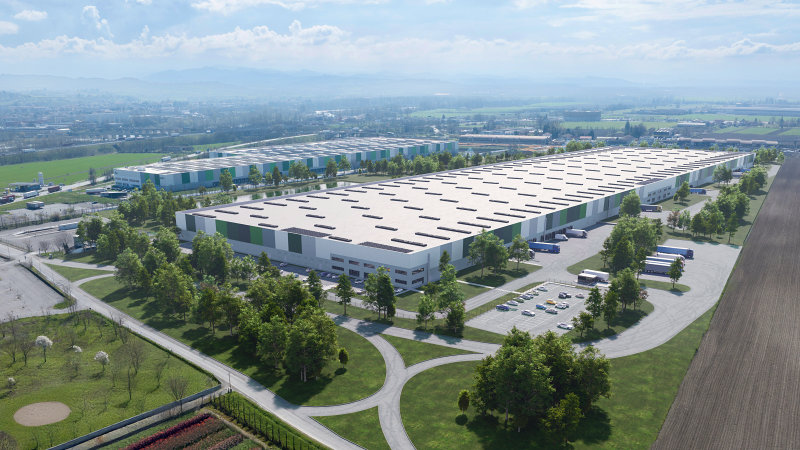






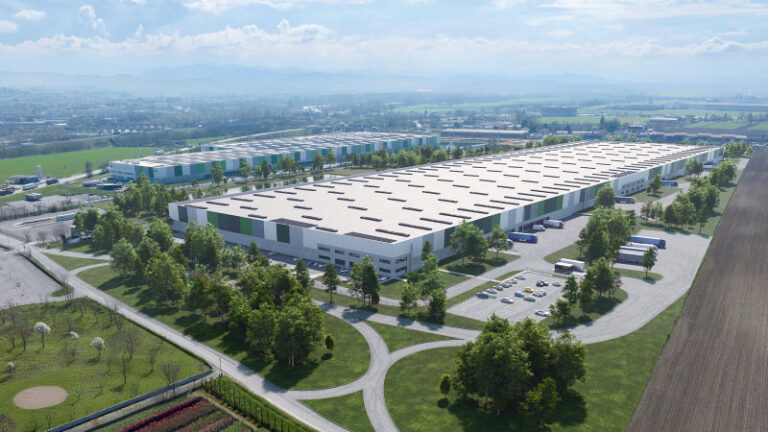
A major new logistics platform has become operational at the intersection of the Milan-Genoa and Turin-Piacenza corridors, in the hinterland of the Port of Genoa. Inaugurated on 16 September 2026 in Tortona, the facility, developed by Garbe Industrial Real Estate Italy, covers a total area of 101,657 sq m, including 96,704 sq m of warehouse space, 3,316 sq m of offices and 1,439 sq m dedicated to vehicle charging, as well as additional technical and service areas. It has a modular layout divided into three separate, self-contained units and has been designed to offer flexibility for either a single tenant or several tenants at the same time. Preliminary lease agreements have already been signed for 50% of the total space.
"We chose Tortona for its strategic location between Milan, Genoa, Turin and Piacenza, in an area that is playing an increasingly important role in European logistics corridors," said Marco Grassidonio, Managing Director and Country Head Italy at Garbe. Grassidonio added that the project combines scale, construction quality, flexibility and sustainability, in line with the approach the company calls "Sustainonomics", under which environmental performance and the economic sustainability of the investment are regarded as two aspects of the same standard of property quality.
From a technical perspective, Sara Labrini, Head of Technical & Development at Garbe Italy, said the project had been overseen at every stage, from pre-construction through to handover, using advanced construction solutions designed to achieve the highest levels of energy efficiency. She added that LEED Platinum certification was awarded just a few months after completion of the works, in line with Garbe's other developments in Italy. The logistics hub incorporates a photovoltaic system for on-site consumption, designed to accommodate future expansion and expected to meet a significant share of the facility's energy requirements. The project also includes extensive green areas designed to promote biodiversity and help mitigate the urban heat island effect. Property management includes environmental clauses in lease agreements, alongside a property and facilities management model focused on continuously improving the site's environmental and operational performance.