






- The equatorial Pacific has entered an active phase of the El Niño weather phenomenon at a pace unprecedented in climate models. Noaa puts the probability of its official onset between May and July 2026 at 82%, rising to 96% in winter, with the risk of an event of exceptional intensity, the so-called Super El Niño.
- The Panama Canal will reduce its maximum draught from 3 July for the first time in two years, anticipating possible water restrictions linked to El Niño, as has already happened in the past.
- In Europe, the Rhine faces the risk of falling water levels that could cut barge capacity by up to 75%, while flash floods threaten northern Italy and the Balkans. India, South-East Asia and Australia face risks affecting monsoons, palm oil, rice and wheat, prompting governments and companies to activate mitigation plans.
The transition of the equatorial Pacific towards an active phase of the Southern Oscillation, known as El Niño, is taking place with exceptional speed and predictive convergence in global climate models. According to data released in mid-May 2026 by the Climate Prediction Center of Noaa (National Oceanic and Atmospheric Administration), the system has moved beyond the neutral phase, recording positive thermal anomalies in sea surface temperatures. This situation has led statistical and dynamic models to assign an 82% probability to the official onset of the phenomenon in the May-July 2026 quarter, with stabilisation potentially reaching 96% during the northern hemisphere winter between December 2026 and February 2027. This is a periodic natural phenomenon, but this year sub-surface ocean temperatures in the equatorial Pacific are showing anomalies more than 6°C above historical averages, creating a thermal reservoir capable of fuelling a strong or very strong event, commonly known as Super El Niño or El Niño Godzilla.
This phenomenon will also affect freight transport and logistics supply chains, entering an international context already marked by geopolitical and energy tensions that amplify the vulnerabilities of distribution chains. The Hormuz crisis will continue to have consequences in the coming months, even if the agreement between the US and Iran holds and ship transits can resume at a regular pace. Port congestion could worsen just as El Niño begins to influence the main maritime and inland navigation channels.
The infrastructure most exposed to the changes induced by El Niño is the Panama Canal, because of its dependence on freshwater reserves in Gatún and Alhajuela lakes. In 2025 and the first months of 2026, abundant rainfall enabled the Autoridad del Canal de Panamá (Panama Canal Authority) to keep reserves above historical averages, ensuring stable transit of about 38 ships a day without operational restrictions. The strengthening of predictive models for El Niño has, however, prompted the authority to launch a preventive water conservation strategy, involving a gradual reduction in the maximum draught allowed for ships transiting the Neopanamax locks. From the first days of July 2026, the maximum limit will fall from 15.24 metres to 15.09 metres in tropical freshwater. This measure will affect only a small proportion of ships, but it is a worrying signal because it is the first restriction imposed on the canal after almost two years of hydrological stability.
In practical terms, the draught reduction affects large 13,000-15,000 TEU container ships operating on pendulum routes towards the east coast of the United States, forcing shippers to lighten loads or redistribute volumes across alternative routes. The situation is complicated by rising demand for transit from tankers and gas carriers loaded with energy products exported from the United States to Asian markets, a route accelerated by the consequences of the blockade of the Strait of Hormuz. With Panama’s infrastructure operating close to its physical limit, waiting times for unbooked southbound ships had already risen to an average of 10.6 days at the beginning of June 2026.
Hydrology experts at the Autoridad del Canal de Panamá (Panama Canal Authority) say the most severe impacts of a moderate or strong El Niño event on the water reserves of Panama’s basins have historically tended to emerge several months after the Pacific thermal anomaly, concentrating the biggest operational problems in 2027. The authority is therefore already preparing operational projections for next year, assessing the possibility of reducing the number of daily transits if the drought scenario seen in 2023-2024 is repeated, when the canal was forced to cut operations to a record low of about 18 transit slots.
The weather changes linked to El Niño will not spare Europe, and especially its internal logistics and waterways, with the risk of disruptions to inland supply chains and a shift in freight flows towards more expensive emergency channels. Particular attention will have to be paid to the Rhine, Europe’s most important inland waterway, which supports the flow of petrochemical raw materials, coal, minerals and semi-finished metallurgical products for industrial centres along its banks in Germany, the Netherlands and Switzerland. High temperatures and low summer rainfall linked to global anomalies in 2026 are raising fears of a fall in basin water levels, and risk simulations indicate the possibility that the benchmark gauge at Kaub could drop below 75 centimetres during summer 2026. Below this level, the carrying capacity of river barges falls to just 25%, making the transit of ordinary cargo uneconomic or impossible.
The experience of 2022 showed that a water crisis on the Rhine can drive barge freight rates on the Rotterdam-Karlsruhe route up eightfold, from about €5 to more than €40 per tonne, forcing plants such as Basf’s Ludwigshafen facility to halt production because of the inability to receive a steady supply of raw materials by river. Europe’s shallow-water fleet, estimated at about 8,900 vessels, would require adaptation investments of more than €90bn, highlighting the difficulty of short-term engineering solutions and the need for shippers to assess a shift towards rail and road, which are themselves saturated and constrained.
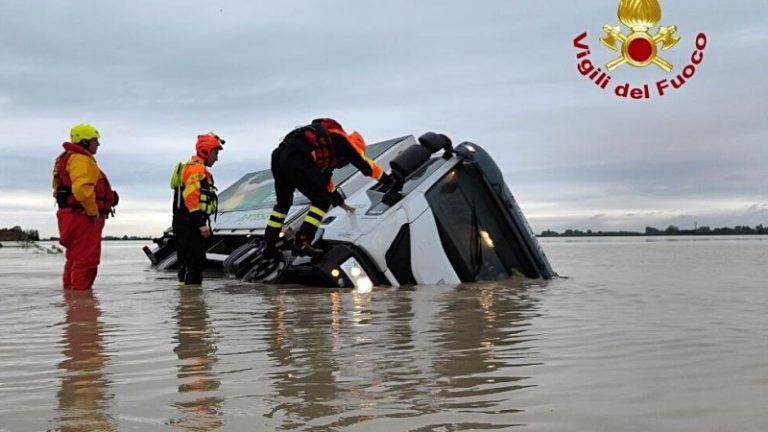
While drought conditions affect the central and northern parts of the continent, the collapse of summer heat domes over southern Europe favours the development of severe storms. Rainfall concentrated on drought-hardened ground causes rapid surface run-off and mudslides. The areas at greatest hydrogeological risk in summer 2026 include northern Italy, Austria, Slovenia and the entire Balkan region. Flash floods could damage or wash away road embankments and railway lines crossing the valleys of these areas, interrupting the land corridors used to exchange semi-finished products and components between the industrial clusters of the Po Valley and central Europe. The interruption of land links forces operators to use alternative road routes that add days of transit to just-in-time assembly chains, driving demand for emergency cargo aircraft capacity and pushing up regional air freight rates.
El Niño is now a global phenomenon, so its consequences affect every continent. In South Asia it can reduce monsoon rainfall by up to 20%, triggering prolonged drought that would hit yields of rice, wheat, sugar, cotton and soya, and therefore the transport flows linked to these products. Australian agriculture could also be affected, reducing wheat production destined for export to Asian markets. In addition, from spring, between September and November, through to the summer peak between December and February, the country faces a high risk of bushfires along the eastern coasts, threatening the rail and port infrastructure through which global flows of iron ore and coal pass.
In the Americas, El Niño produces divergent impacts. Beyond the Panama case already mentioned, in South America the northern areas of Brazil are affected by drought that increases the risk of fires in the Amazon, with effects that will become fully apparent in 2027, while the western coastal regions of Peru and Ecuador are exposed to flood rains and debris flows that put copper mining and port infrastructure dedicated to hydrocarbon and seafood exports at risk. In Brazil, residual rainfall from La Niña supported soya harvests at the beginning of 2026, but the prospect of future drought is pushing the government to allocate growing shares of soya oil to domestic biofuel production, up to 20% in biodiesel, to protect the internal market from energy supply shocks linked to the Middle East crisis, reducing the share available for global export.
To ensure business continuity and protect the profitability of supply flows, the entire supply chain must act on several fronts. The first concerns granular mapping of the supply chain down to the second and third tier, to move beyond visibility limited to the primary supplier and identify the real exposure of chemical and industrial raw materials to sensitive logistics bottlenecks, such as the Rhine or South-East Asian ports, identifying the origin of electronic components and semi-finished products before supply disruptions occur. A second intervention concerns the preventive build-up of safety stocks for raw materials exposed to climate factors and sourced from areas at higher risk of fire or flooding, to be completed before the expected peak in thermal anomalies between November 2026 and January 2027, so as to avoid having to buy emergency supplies at high spot prices.
The third front is modal diversification, through the integration of multimodal options combining sea, air and land transport to bypass port congestion and blockages on inland channels. Commercially, it is useful to negotiate transport contracts with clear fuel indexation formulas and transparent clauses for sharing peak-season surcharges, limiting reliance on the spot market, which will remain highly volatile throughout 2026.
A further tool is parametric insurance cover, which protects corporate cash flows from losses caused by indirect logistics disruptions, such as low water levels on the Rhine or transit delays in Panama, through policies that guarantee rapid payouts when physical thresholds measured by independent meteorological bodies are exceeded, bypassing traditional claims assessment procedures. Finally, companies must assess energy contingency plans for production centres located in countries heavily dependent on hydropower, preparing auxiliary generation systems or investing in storage and self-generation solutions from renewable sources, to limit tariff increases and blackouts caused by drought.
Antonio Illariuzzi