





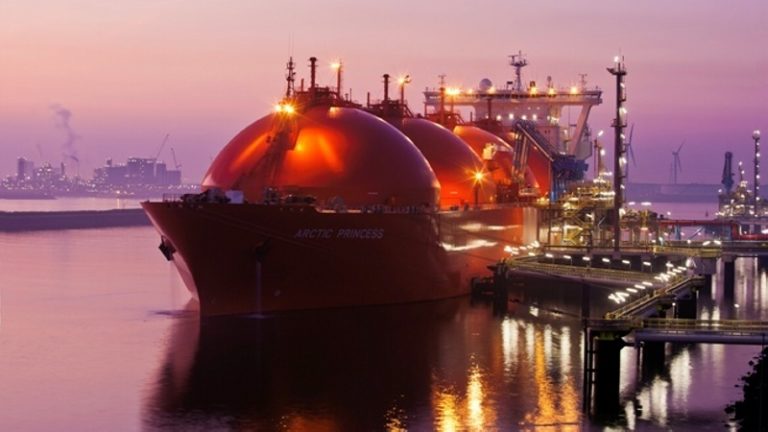
- The Italian liquefied natural gas market reached 231,000 tonnes in 2025, up 11% on 2024. Road transport remains the dominant segment, accounting for 75% of consumption, equal to 171,000 tonnes, but growth slowed to 3%, affected by regulatory uncertainty and the end of life of the existing fleet.
- On the geopolitical front, Italy reached a historic record in 2025 for seaborne LNG imports, with the equivalent of 19.6 billion standard cubic metres. The United States became the country’s leading supplier, with 47.4% of the market, overtaking Qatar, which fell to 32.7%, also thanks to the start-up of the Ravenna FSRU terminal.
- The outlook to 2028 points to a possible doubling of national consumption to 460,000 tonnes a year in the most favourable scenario. Growth would be driven by ship-to-ship bunkering, launched at the end of 2025, while the Ravenna terminal already accounts for 51% of national road withdrawals.
2025 was a good year for natural gas in Italy, despite the shock caused by the Hormuz crisis. This is shown by the data in the LNG 2025 report, released in June 2026 by Assogasliquidi, according to which the Italian LNG market ended the year with 231,000 tonnes consumed, up 11% on 2024. However, overall growth masks very different trends across individual segments. Road transport remains the main pillar of demand, with 171,000 tonnes, equal to 75% of the national total, but its expansion slowed to 3% because of regulatory uncertainty and the gradual end of life of the first generation of heavy goods vehicles. The slowdown in road transport was offset by the industrial segment, which grew by 39% to 50,000 tonnes, or 22% of the total, driven by uptake at isolated facilities not connected to the methane grid, known as off-grid sites, and by its cost advantage over fuel oils.
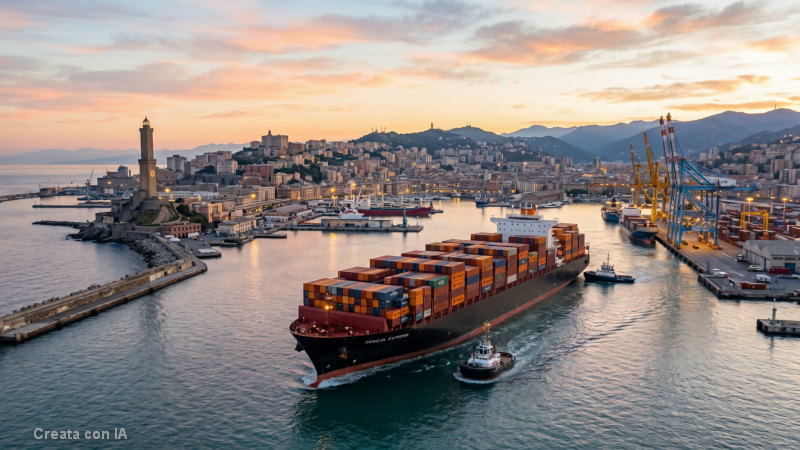
2025 also marked a turning point in supply. Italy imported the equivalent of 19.6 billion standard cubic metres of LNG by sea, a historic record according to the association. The United States became the country’s leading supplier, with a 47.4% market share, rising from 1.6 billion cubic metres in 2019 to 9.3 billion in 2025, while Qatar, although maintaining stable flows of 6.4 billion cubic metres, fell to second place with 32.7%. On prices, industrial LNG recorded a sharp decline during 2025, from 64 euros per megawatt hour to a low of 43 euros per megawatt hour, the steepest fall among all energy carriers monitored in the report, with a cost advantage of 64 euros per megawatt hour over diesel and 28 euros per megawatt hour over fluid fuel oil. In the first four months of 2026, however, renewed international geopolitical tensions pushed prices back up, reaching 68 euros per megawatt hour in March. A structural premium also remains for Italy’s PSV index compared with European hubs, averaging 3.1 euros per megawatt hour over France’s PEG and 2.8 euros per megawatt hour over Spain’s PVB.
Assogasliquidi’s projections to 2028 point to a crossroads for the sector. In the most favourable scenario, defined as High in the report, national consumption could double to 460,000 tonnes a year, with growth attributed mainly to the take-off of ship-to-ship marine bunkering, launched at the end of 2025. By contrast, the Low scenario envisages a contraction in the road transport market linked to the failure to renew existing fleets.
For road haulage in particular, the report highlights a picture of marginality despite the segment’s dominant role in overall consumption. The circulating fleet of LNG-powered heavy goods vehicles registered in Italy reached 4,202 units, up 5.5% on 2024. Including foreign-registered vehicles refuelling in Italy, the effective fleet estimated by the association rises to about 5,400 units. This still represents only 0.5% of the total heavy goods vehicle fleet, while in 2025 diesel still accounted for 96.7% of new heavy goods vehicle registrations. New registrations of LNG-powered vehicles stood at 326 units in 2025, compared with 310 in 2024, an increase that Assogasliquidi considers insufficient to generate structural fleet renewal.

The report describes what it calls the total cost of ownership, or TCO, paradox. In 2025, the price of LNG stabilised between 90 and 115 euros per megawatt hour, making it 45-50% cheaper than diesel even taking into account excise duty rebates for road hauliers. In the first quarter of 2026, the price rose back above 110 euros per megawatt hour because of geopolitical tensions, but according to the association its advantage over diesel remains. However, the TCO of LNG vehicles is less competitive than that of diesel vehicles, because higher purchase costs and operating costs cancel out the savings achieved at the pump, thereby blocking new investment by road hauliers. The report also highlights the risk linked to the end of life of the first generation of LNG vehicles: without regulatory intervention, operators could return to diesel instead of renewing their fleets with gas-powered vehicles.
The road distribution network also slowed its expansion. LNG and L-CNG refuelling stations totalled 180 in 2025, growing by just 3% on the previous year, compared with 11% in 2024. This network also remains heavily unbalanced geographically, with most facilities concentrated in central and northern Italy, including 27 in Lombardy, 24 in Veneto and 32 in Emilia-Romagna, and almost no presence in the South, with one site in Calabria and one in Sicily. According to the report, this makes it difficult for logistics operators in southern Italy to adopt gas-powered vehicles efficiently. A positive note concerns the composition of the fuel consumed by road transport: 13% of the overall 171,000 tonnes consists of biologically derived LNG, either physical or through PoS certificates, which Assogasliquidi says shows the sector is ready to absorb decarbonised molecules when the right conditions are in place.
As regards operational regasification facilities, Italy had five large plants in 2025, with an overall capacity of about 28-29 billion standard cubic metres a year. The asset base includes a traditional onshore terminal, Panigaglia, owned by Snam, which has been active since 1971 in La Spezia, with a capacity of 3.5 billion cubic metres a year and storage of 100,000 cubic metres. In 2025 it was authorised for truck loading services, with marine loading expected to start in 2028. There is also an offshore Gravity Based Structure terminal in Rovigo, Adriatic LNG, which has been operational since 2009 and has the country’s largest single capacity, at 10.4 billion cubic metres a year, with storage of 250,000 cubic metres. The picture is completed by three floating FSRU units: the OLT Toscana terminal, active since 2013 with a capacity of 5 billion cubic metres a year; the Piombino FSRU terminal, operated by Snam since 2023 with the same capacity; and the Ravenna FSRU terminal, which became fully operational in 2025 with 5 billion cubic metres a year and storage of 170,000 cubic metres.

Alongside the large plants, the report describes a small-scale network dedicated to road distribution and industrial consumption, which handled a total of 226,000 tonnes in 2025. The Ravenna onshore depot, operated by Edison and active since 2021 with storage of 20,000 cubic metres, remains at the centre of national logistics, accounting for 51% of road withdrawals. However, dependence on foreign sources remains significant: the Fos/Marseille terminal in France alone covers 37% of Italian road supplies, forcing operators to make cross-border journeys. In Sardinia, the Oristano depot, operated by Higas and active since 2021 with 9,000 cubic metres of storage, supplies the island’s isolated networks and off-grid industrial consumption. A new onshore depot with 19,800 cubic metres of storage is under construction in Vado Ligure and is intended to serve the north-western area.
The infrastructure map outlined by Assogasliquidi also highlights a marked geographical imbalance: all the main projects for southern Italy remain at the planning stage. These include the Gioia Tauro terminal, proposed by LNG Medgas Terminal, with a planned capacity of 12 billion cubic metres a year and storage of 265,000 cubic metres, and the Porto Empedocle terminal, proposed by Nuove Energie, with a capacity of 8 billion cubic metres a year and 320,000 cubic metres of storage. For Sardinia, plans include an FSRU unit in Oristano with capacity of 1.8 billion cubic metres a year, further coastal depots in Oristano operated by Edison and Ivi Petrolifera, and a depot in Cagliari with 22,000 cubic metres proposed by Sardinia LNG. On the Ionian coast, the Crotone depot proposed by Ionio Fuel is also planned, with storage capacity of 20,000 cubic metres.
Presenting the report, Costantino Amadei, chairman of the LNG Group of Federchimica-Assogasliquidi, set out the association’s requests to institutions to support the sector’s development. On road haulage, he called for dedicated measures to renew fleets, including incentives to purchase heavy goods vehicles powered by LNG and Bio-LNG, tax credits on consumption, and reductions in motorway tolls and vehicle tax, tools deemed necessary to narrow the total operating cost gap with diesel. The chairman welcomed the 590 million euro fund allocated by the latest Budget Law to renew the fleets of road haulage companies, but called for the distribution of resources, currently being defined by the relevant department of the ministry of Transport, to provide benefits for LNG and Bio-LNG powertrains, both through a higher unit contribution for individual purchases and through a dedicated reserved share of the fund. Amadei also urged the Government to respect the announced timetable, so that companies can access incentives from 1 January 2027, and to issue the still-missing implementing measure promptly.
A second request concerns extending the diesel tax credit, introduced by the Government in March following the conflict in the Gulf area, to LNG-powered heavy goods vehicles. Assogasliquidi has supported this addition since the first measure on the reduction of excise duties, noting that it has already gained support among parliamentary forces but has not yet been approved. According to Amadei, limiting the tax credit to diesel trucks alone conflicts with the objective of reducing the carbon footprint of the heavy goods vehicle fleet.

For the maritime sector, Amadei pointed to the need to facilitate LNG bunkering operations by simplifying authorisation procedures, through full and uniform implementation in all Italian ports of the guidelines issued in May 2025 by the ministry of Transport, the Comando generale delle Capitanerie di porto (General Command of the Port Authorities) and the Corpo nazionale dei Vigili del fuoco (National Fire and Rescue Service), which are considered a decisive factor for the attractiveness of Italian ports.
On Bio-LNG, Assogasliquidi is calling for a stable regulatory and certification framework, with the harmonisation of traceability tools, from guarantees of origin to Proofs of Sustainability and certification of the chain of custody. In view of the implementation phase of Legislative Decree 5/2026, which transposes the RED III Directive, Amadei called for greater recognition of Bio-LNG in the allocation of Certificati di immissione in consumo (Certificates for release for consumption), both for the physical product and through virtual liquefaction mechanisms. He also proposed that the certificates should be issued in Italy to the party that releases the product for consumption.
The chairman cited Germany’s THG-Quote system as a model, which Assogasliquidi says has supported growth in registrations of LNG and Bio-LNG heavy goods vehicles in Germany that has not yet been replicated in Italy, where registrations remain stagnant. Finally, Amadei called for resources generated by the ETS and FuelEU systems to be directed towards infrastructure investment, technological innovation and the promotion of lower-carbon fuels such as LNG and Bio-LNG, with particular benefit for the shipping, road haulage and industrial sectors.
Pietro Rossoni