








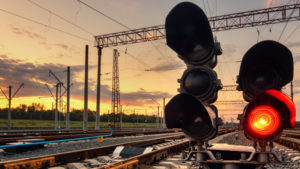
What could be more ordinary than a switch in an IT network, a simple device that acts as a connector and enables communication between different pieces of equipment? Yet a standard faulty switch was enough to bring down not just a control unit, but the entire German railway network on the evening of 23 June 2026. DB InfraGo, Germany’s infrastructure manager, has identified what might appear to be a minor fault as the cause of one of the most serious blackouts ever to affect the country’s railways. The device caused the GSM-R network to fail, with the R standing for railway: the international mobile communications standard dedicated to rail operations, developed to ensure train safety and control. Without a GSM-R signal, trains are forced to stop. The enforced stoppage on the evening of 23 June lasted more than two hours, before DB InfraGo was able to restore the network connection and resolve a situation that appeared almost absurd, given the origin of the incident.
The episode highlights the fragility of some maintenance operations that appear entirely routine, but in which technology, instead of supporting staff, can instead mislead them. The evidence is that the faulty switch generated no error message, as though everything had been carried out correctly. But that was not all, because bad luck played its part in full. The situation was worsened by the fact that the redundancy function of the GSM-R system, in practice the back-up designed precisely to provide a rapid response in a crisis, did not activate automatically, despite being fully operational. As a result, trains stopped and communications were lost until DB InfraGo technicians carried out what is described as a manual system switchover, a procedure intended for emergencies.
That was the event itself, with severe consequences not only for rail operations but also in economic terms, owing to delays, train cancellations and compensation offered to all passengers affected. For the railway infrastructure manager, it was a harsh lesson, but also a spur to implement all the necessary countermeasures to prevent a repeat of what happened. As a precaution and as an initial urgent measure, the replacement of components similar to the one found to be faulty has been suspended. It has also been decided that all maintenance work will take place only after midnight. Beyond these measures, however, DB InfraGo has launched a full review of the entire GSM-R network, with the aim of strengthening redundancy levels, using the public mobile network as well if necessary.
The GSM-R standard, after all, is still expected to play a leading role in railway communications for around another decade. Ironically, almost at the same time as the events in Germany, the system that will replace GSM entered its basic testing phase: FRMCS, the Future Railway Mobile Communication System. The FP2-Morane-2 consortium, led by the Union internationale des chemins de fer (International Union of Railways, UIC), has published the first set of specifications and confirmed the start of large-scale laboratory testing at three European integration centres, marking a significant step towards replacing the current railway communications standard. The tests cover both trackside components along the lines and onboard train systems, including all functions such as integration with ETCS signalling, automated train operation management, control and emergency functions. The first tests have begun with the collaboration of the infrastructure managers of Spain, Germany, the Netherlands and Sweden, and will move into the full operational phase from 2027.
Piermario Curti Sacchi