






Asian congestion could last into 2027
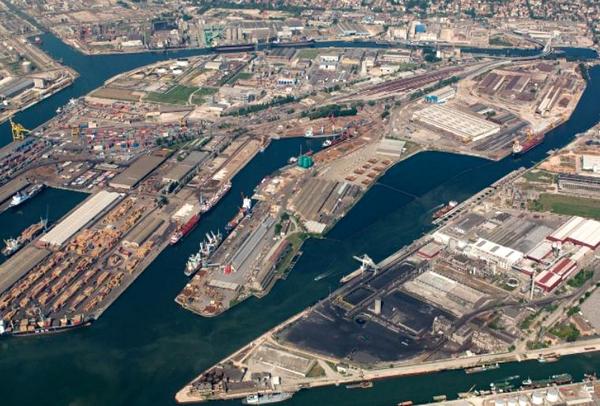
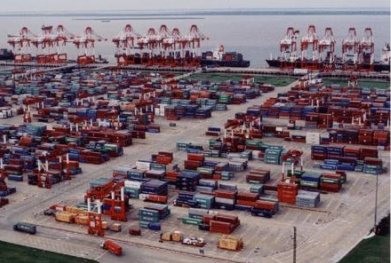
Congestion at Asia’s main container ports could take up to ten months to return to the particularly low levels recorded in mid-2025. In July 2026, global container shipping schedule reliability fell to 56.4%, down 6.1 percentage points from June, while the average delay for vessels arriving behind schedule rose to 6.06 days. Shanghai recorded just 21% of arrivals on time, Ningbo-Zhoushan 34.6%, Singapore 43.2% and Busan 40.9%. By the end of August, global capacity waiting for berths had exceeded 4.3 million TEU, with a strong concentration in northern Asia. A succession of typhoons caused port closures and slowdowns, but the disruption has spread to vessel rotations, transhipments and the actual availability of capacity. When ports reopen, vessels tend to converge within the same operating windows, increasing pressure on berths and container yards. Carriers are responding with port omissions, changes to rotations and the diversion of cargo to alternative ports. Nominal fleet capacity is therefore higher than the capacity actually available. Normalisation could take six to eight months to return to conditions seen at the end of 2025 and seven to ten months to regain June 2025 levels. There is a risk that instability could continue into the period ahead of Chinese New Year 2027. The main effects concern delivery-time reliability, the availability of empty containers and the regularity of arrivals in Europe. For Italian ports, the main risk is a greater concentration of off-schedule vessels arriving from the Far East. Developments will nevertheless depend on the operational continuity of Chinese ports, the possible arrival of further typhoons and the system’s ability to absorb accumulated delays.
Israeli issue remains for Zim
The revised proposal by Hapag-Lloyd and Fimi to acquire Zim has failed to overcome concerns raised by workers and the Israeli authorities, focused primarily on the autonomy of the future national company. The plan envisages separating the global operations, which would go to Hapag-Lloyd, from a Zim Israel controlled and managed in Israel by Fimi. The new company would be allocated at least 16 vessels, including 12 owned ships, together with the staff considered essential to maintain strategic connections. The revised offer also introduces a direct weekly service to the Far East, in addition to Mediterranean and transatlantic routes. It also provides for stronger state powers through the special shareholding, with greater safeguards over corporate control and the continuity of Israeli operations. The project includes an independent IT system, dedicated reefer container capacity and the transfer to Israel of expertise in ship management. On employment, the proposal provides for a specific collective agreement, ten-year safeguards for longer-serving employees and no redundancies until the end of 2027. These changes, however, have not resolved the main point of contention. Workers and the Ministry of Finance object to the operational and commercial dependence that Zim Israel would retain on Hapag-Lloyd. The authorities also believe that a smaller fleet could restrict the company’s ability to guarantee independent services during crises. The Ministry of Finance has therefore issued a negative opinion on the structure of the transaction, followed by opposition from the Prime Minister’s Office. Union opposition increases the pressure on the negotiations but does not in itself constitute a formal power to block the acquisition. The decisive step remains state approval linked to the special shareholding and the protection of national interests. Zim shareholders have already approved the transaction, while completion remains subject to Israeli government and regulatory approvals. The debate therefore centres on whether the future Zim Israel would be able to operate as an autonomous and sustainable shipping company while maintaining sufficient connections during emergencies.
Almería turns to rail
Renfe Mercancías is considering a new rail service to shift part of the fruit and vegetable exports from the Almería area to central Europe onto rail. The project depends on completion of the new railway between Almería and Murcia, which is intended to connect the area directly with the Mediterranean Corridor. In 2025, the region exported fruit and vegetables worth more than €4 billion, a volume that the operator sees as potentially attractive for rail freight. The plan would use semi-trailers and refrigerated containers on standard-gauge tracks, with an estimated transit time of three days to central Europe. Renfe Mercancías has opened discussions with Coexphal, the fruit and vegetable producers’ association, to assess the operating conditions for the service. A working session devoted to rail freight and intermodality is also planned by the end of the year, with Renfe, Adif, logistics operators, ports and local companies expected to take part. The project forms part of the development of rail motorways in Spain, where an intermodal connection between Valencia and Portugal via Madrid is already operating. Other projects concern the Algeciras-Zaragoza corridor, while a similar service has been tested between Huelva and Córdoba. The Port of Santander is also considering a rail motorway to Madrid. For Almería, the launch of the service therefore remains dependent above all on the availability of the necessary infrastructure and the subsequent organisation of the refrigerated logistics chain.
Cargotech integrates flows and AI
Volatility in air cargo in 2026 is accelerating demand for digital tools capable of supporting rapid decisions on capacity, networks, revenue and compliance. Cargotech is expanding its ecosystem by connecting solutions from Aerios, Wiremind Cargo, Rotate and Cargoai across different stages of the operational chain. Among the developments planned is a compliance and sanctions-screening tool integrated into Rotate’s technology infrastructure. The offering is intended to extend further into cargo operations, following Wiremind’s Skypallet and Cargoai’s Cargo Quality. Interest is also growing beyond airlines, freight forwarders, GSSAs, GHAs and airports to include charter operators, leasing companies and MRO businesses. Agentic AI is taking on a growing role and has already moved from project development to operational trials with some customers. Applications are intended to automate repetitive tasks, standardise procedures across airports and improve decisions on pricing, capacity and flight planning. Integration between systems also makes it possible to bring operational and commercial data together in a single digital flow. In the Aerios Carrier application, an RFQ can be converted into a quotation by combining cargo data, market rates and competing capacity. The average time needed to prepare a quote is therefore reduced to less than one minute, compared with the tens of minutes previously required.
New dry ice container
Cold Chain Technologies has launched Ecoflex Dry Ice, a reusable container for ultra-low-temperature shipments available in four payload sizes. The solution incorporates the patented Air Shield system, designed to regulate airflow around the dry ice and reduce the risk of supercooling caused by excessively rapid sublimation. The container is intended particularly for clinical trials, cell and gene therapies and other pharmaceutical shipments sensitive to low temperatures. The internal structure supports an angled payload box, while dry ice is placed along the sides and in a dedicated upper tray. This configuration simplifies packing operations and allows dry ice to be replenished during transport without removing the payload. The container can accommodate up to two data loggers, with temperature probes directed into the payload chamber. Tracking can be integrated with the Medassure platform and the Cct Care monitoring and intervention service. A removable labelling system also allows dangerous-goods markings to be taken off once the dry ice has fully sublimated, preventing them from remaining in place during the return journey. Ecoflex Dry Ice is compatible with the Renew programme for refurbishing and reusing thermal packaging. The product is already available in small, medium, large and extra-large configurations.