





Blank sailings ahead of Golden Week
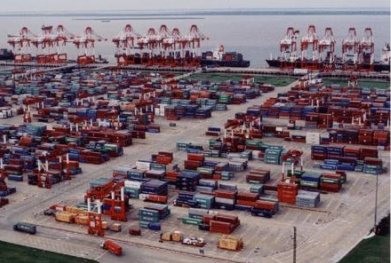
Container shipping lines are increasing blank sailings ahead of China’s Golden Week, which runs from 1 to 7 October, to adjust capacity to the seasonal decline in cargo volumes. Available data indicate cancellations equivalent to around 11-13% of capacity or scheduled sailings on Asia-Europe and Asia-North America routes, with differences reflecting the scope of the various analyses. Reducing the number of sailings allows carriers to concentrate volumes on fewer ships, maintain load factors and limit downward pressure on spot freight rates. Maersk has already cancelled three Asia-Europe sailings scheduled between 28 September and 10 October. Cancellations are concentrated on the transpacific, while on the Asia-Europe trade the increase in scheduled capacity is also a factor. The scale of the cuts nevertheless remains below the levels recorded during the Golden Weeks of 2025 and 2023. Capacity management therefore appears focused on seasonal traffic trends and balancing demand with available vessel capacity.
Kühne+Nagel opens up about its past
Kühne+Nagel’s board intends to examine the company’s role during the Nazi era and is considering commissioning an independent historical investigation, although its mandate, the historians involved, timetable and scope have yet to be defined. Chairman Jörg Wolle has indicated that the company wants to examine the issue, opening a new phase after years of controversy over the reconstruction of the group’s activities between 1933 and 1945. The main issue concerns its involvement in the so-called M-Aktion, the operation used to transfer to Germany furniture and other property seized from Jews in occupied territories. Almost 70,000 homes were plundered between 1942 and 1944, and Kühne+Nagel is reported to have held a dominant position in the transport operations connected with the scheme. Another issue concerns Adolf Maass, a partner in the Hamburg branch with a 45% stake, who left the company in 1933 without, according to available accounts, receiving compensation for his holding. In the same year, Alfred and Werner Kühne joined the Nazi Party, the NSDAP. In 2015, the company acknowledged its involvement in the wartime economy and in transporting confiscated goods. Any investigation will need to clarify access to archives, the independence of the researchers and publication of the findings. The announcement therefore marks the start of a possible historical review, rather than a formally launched investigation.
Maersk to raise surcharges in Italy
From 1 October, Maersk will increase the fuel surcharge applied in Italy to the inland legs of its intermodal solutions. For road transport, the rate will rise from 16% in September to 18%, while for RCO services it will increase from 8% to 9%. The rates apply to both imports and exports and cover the inland component purchased through Maersk, not the ocean freight. Application depends on the PCD, the date used by the carrier to determine the tariff: for traffic not subject to FMC rules, the new rate will apply from 1 October, while for FMC-regulated traffic it will take effect on 24 October. The surcharge is calculated on the relevant inland charge rather than on the total cost of the shipment. The update replaces the September rates and forms part of a monthly revision linked to developments in energy and fuel markets. The difference between road transport and RCO also reflects their different exposure to fuel costs.
InfraRed acquires Hector Rail
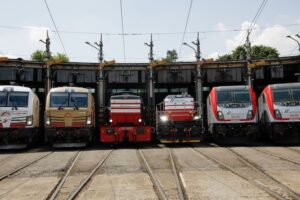
Ancala has agreed to sell 100% of Hector Rail to funds managed by InfraRed Capital Partners at an enterprise value of SEK2.61 billion, around €230 million. Completion is expected by the end of 2026 and remains subject to the necessary approvals. Stockholm-based Hector Rail operates rail freight services in Sweden, Norway, Denmark and Germany. The company mainly serves the forestry supply chain, intermodal traffic, heavy industry, raw materials and the energy sector. In the 12 months to 30 June 2026, revenue reached SEK1.65 billion, compared with SEK1.18 billion when Ancala acquired the company. Over the same period, EBITDA rose from SEK72 million to SEK199 million. Its fleet comprises around 100 locomotives, most of them owned by the company, which employs about 400 people. InfraRed plans to support growth through further investment in the fleet, maintenance and greater operational efficiency. The transaction will further strengthen Hector Rail’s role in rail freight links between Scandinavia and Germany.
Maersk takes over Puma logistics
Maersk has begun operating Puma’s three distribution centres in the United States, expanding the partnership from freight transport to integrated contract logistics. The network comprises facilities in Torrance, Phoenix and Whitestown, with a combined area of around 216,300 m2. All three sites use AutoStore automated systems and serve B2B distribution, directly operated stores and e-commerce. The operation allows Maersk to connect warehousing with the ocean, air, customs and inland transport services it already provides to Puma. From 2027, the Torrance distribution centre is also expected to become Maersk’s first multi-customer AutoStore installation in North America. The site will be able to provide capacity for other brands, with stated operating potential of around 20 million units a year. The arrangement does not involve Maersk acquiring the warehouses, but taking over their operation.
SAR expands rolling stock
SAR concluded its participation at InnoTrans 2026 with contracts and financing agreements covering 10 new passenger trains, 33 freight locomotives and 782 rail wagons, as well as projects involving systems, maintenance and modernisation. In freight, SAR awarded Progress Rail a contract for 33 locomotives and Greenbrier an order for 782 wagons, with the aim of supporting freight volumes and the related logistics chains. Alstom Transport will provide technical assistance and maintenance services. Further agreements involved Hitachi Rail and Astrag, while two memoranda aim to transfer technology and localise the production and maintenance of braking-system components and spare parts in Saudi Arabia.
Lego expands logistics in Mexico
Lego will invest more than $400 million to expand its production complex in Ciénega de Flores, in the Monterrey area of Mexico. The project will add 62,000 m2 and increase the site’s overall production capacity by 35%. The expansion includes a new packaging facility and an automated high-bay warehouse integrated with the existing industrial operations. Work is expected to begin in early 2027 and be completed in 2029. The site, which currently employs around 7,300 people, is expected to add another 1,300 jobs during the expansion period. The new warehouse is designed to increase storage density and automate the handling of load units. The investment will strengthen integration between production, packaging and storage for the Americas market. The project continues previous phases of expansion at the Mexican complex and reinforces the site’s role within Lego’s production and logistics network.