




The new Divača–Koper railway line has entered the operational testing phase, a decisive technical step before commercial services are due to begin by the end of March 2026, according to the official schedule of 2Tdk, the company that built it. The tests cover the new 27.1-kilometre link between the inland hub of Divača and the port of Koper (Capodistria), including dynamic assessments of the infrastructure, safety systems, electrification and integration with the existing network. The aim is to secure final authorisation for the regular operation of freight and passenger trains on a route set to reshape Slovenia’s logistics landscape.
The project, classified by the Slovenian state as the country’s most significant infrastructure scheme, has been entrusted to the public company 2Tdk – Družba za razvoj projekta (Company for the Development of the Project), responsible for the design, construction and future management of the line. The scheme forms part of the Baltic–Adriatic TEN-T corridor and addresses the need to strengthen the rail connection between the port of Koper and the hinterland, overcoming the structural constraints of the historic line, which is characterised by steep gradients and a winding alignment.
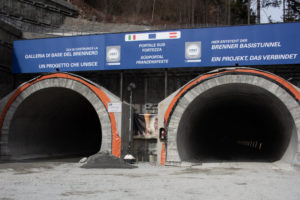
The new infrastructure is conceived as a “second track” alongside the existing line, but has been built on a completely new alignment. In its initial phase it will operate as a single-track line, although it has been designed from the outset to allow for full duplication in the future. The route extends for 27.1 kilometres, around 75 per cent of which runs through tunnels, with seven tunnels totalling more than 20 kilometres and three main viaducts, including the Vinjan viaduct, approximately 620 metres long. Only 5.4 kilometres run at surface level, in a complex geological setting typical of the Karst region.
The line has been designed for speeds of up to 160 km/h for passenger services and 120 km/h for freight, with maximum gradients of 17 per mille. Journey times between Divača and Koper will fall from the current 43–48 minutes on the historic line to 15–21 minutes. Capacity on the new alignment alone is estimated at around 120 trains per day or 25.7 million tonnes per year. Taking both the historic and the new lines together, this rises to 212 trains per day or 36.9 million tonnes annually.
By 2025, works had surpassed 80 per cent completion, including the completion of key sections between Koper and Črni Kal, comprising five tunnels totalling almost 12 kilometres and two viaducts, as well as progress on the Lokev tunnel. As early as 2023, a 900-metre deviation at Divača had been completed to connect the new alignment to the existing line, with new tracks, turnouts, electrification and signalling systems.
The origins of the project date back more than 25 years, when the growth of the port of Koper and the saturation of the historic line highlighted the need for a second rail link. Over time, the scheme has been consolidated as a priority intervention for sustainable mobility in Slovenia, with total investment of around €1.2 billion. Financing combines national resources, European funds and loans, including a €250 million facility from the European Investment Bank.
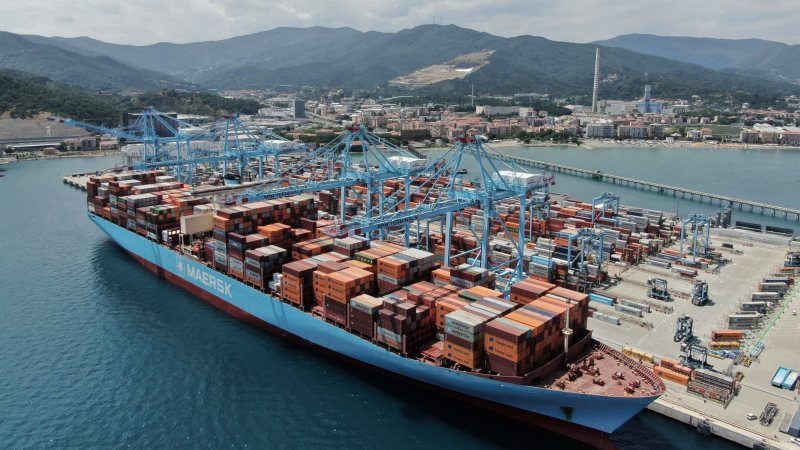
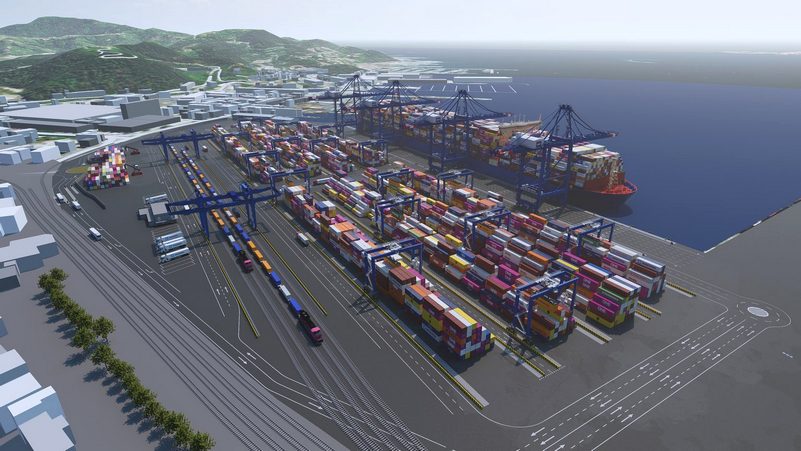
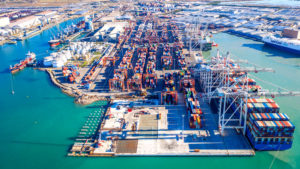
The port of Koper is the main beneficiary of the project. The port records a rail modal share of more than 50 per cent of volumes and handled over 20,000 trains in 2023, confirming its strong intermodal focus. Strengthening the connection with Divača is intended to remove the bottleneck limiting traffic growth towards Austria and Central Europe, reinforcing the competitive position of the northern Adriatic.
The project has not been without challenges. The geological complexity of the Karst region, with its cavities and caves, required adjustments during construction and specific environmental measures, while the lengthy decision-making process and the initial choice to build a single-track line fuelled political debate and observations from local communities and environmental groups. In 2024, the Slovenian parliament approved construction of the future second track along the new alignment, with works scheduled to start in 2026 and completion targeted for 2030.
The launch of operational testing therefore marks the transition from construction to the pre-operational phase of an infrastructure that directly affects freight flows between the port of Koper and the rest of Europe. For transport and logistics operators, a transitional phase now begins in which the new capacity can be progressively integrated into service planning, pending completion of the full double-track configuration.
Antonio Illariuzzi