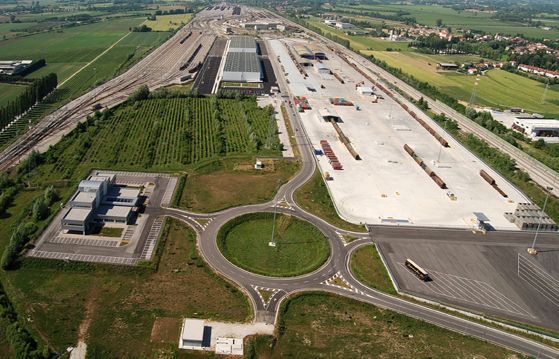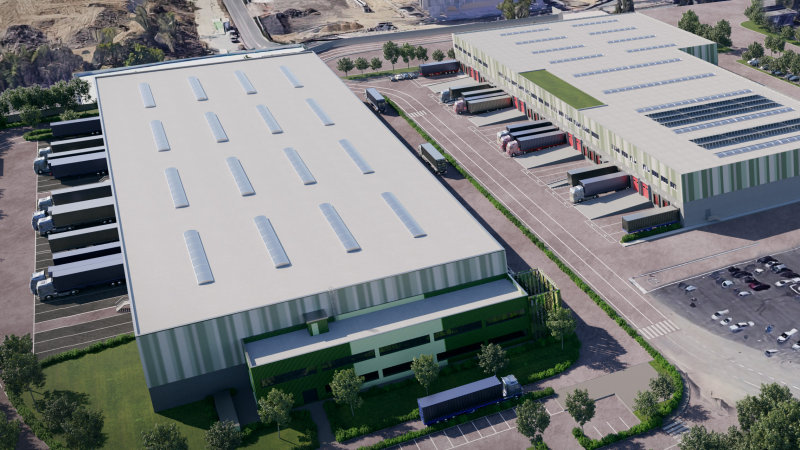
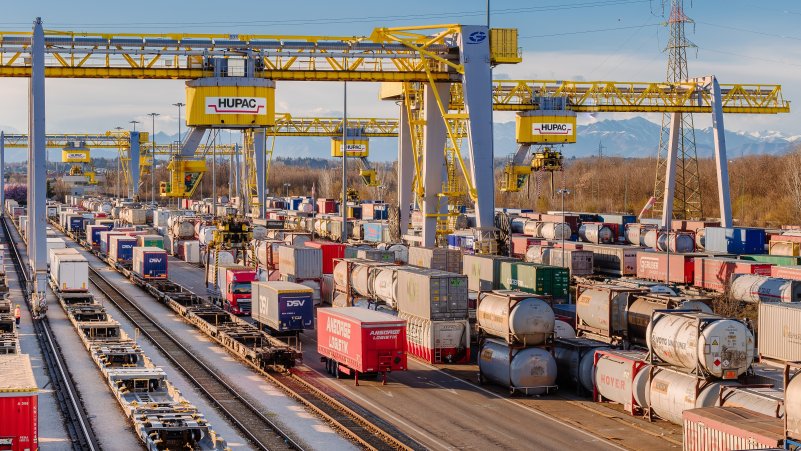





On 2 October, the European Commission authorised an Italian State aid package worth €24.5 million to expand the rail terminal of Bologna’s freight village. The project includes the construction of five new 750-metre tracks, the extension of the operational platform by 80,000 square metres and the installation of two gantry cranes, with completion scheduled for 2026.
The decision, adopted on 2 October 2025 under EU State aid rules, was deemed proportionate and necessary to encourage a shift from road to rail transport, reducing congestion and emissions in line with the EU’s sustainable mobility strategy and the European Green Deal. The Commission found that the measure would not significantly distort competition and that it was essential for the project’s implementation.
The funding covers the construction of a new rail terminal within the logistics hub. The five planned tracks, each 750 metres long, will meet European standards and accommodate longer and heavier trains than the current Italian average, still largely limited to 500–600-metre convoys. Expanding the operational area by around 80,000 square metres will enable the handling of a greater number of loading units, boosting overall throughput and reducing waiting times for storage operations.
The two rail-mounted gantry cranes, with a lifting capacity of up to 40 tonnes, will handle containers and semi-trailers more efficiently, lowering operating costs and speeding up loading and unloading processes. The automated equipment will be integrated with digital freight management systems to improve intermodal flows between rail and road transport. The plan also includes upgrades to the terminal’s internal road network, with new yards and direct connections to the motorway network to streamline heavy vehicle access.
The overall development plan for the freight village, worth more than €71 million, aims to increase capacity from the current 7,500 trains per year to around 12,000 by 2032. In addition to the European contribution, the company has received €4.3 million from the Ministry of Transport for crane purchases and €20 million from the Emilia-Romagna regional development and cohesion funds.