




- Volvo Group told investors at a meeting held in Sweden on 10 June 2026 that revenue from its autonomous transport division could approach $3bn, about €2.75bn, within five years. The first series-produced autonomous trucks are expected on US highways by the end of the third quarter of 2026, with more than 300 units due to be in operation by the end of 2027.
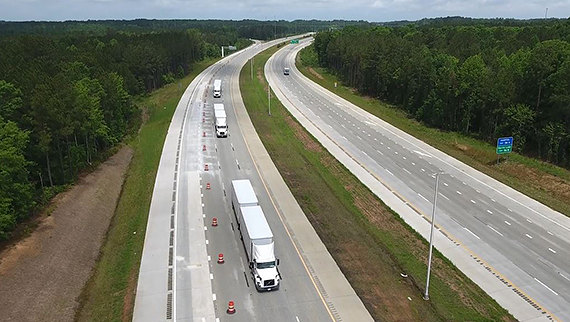
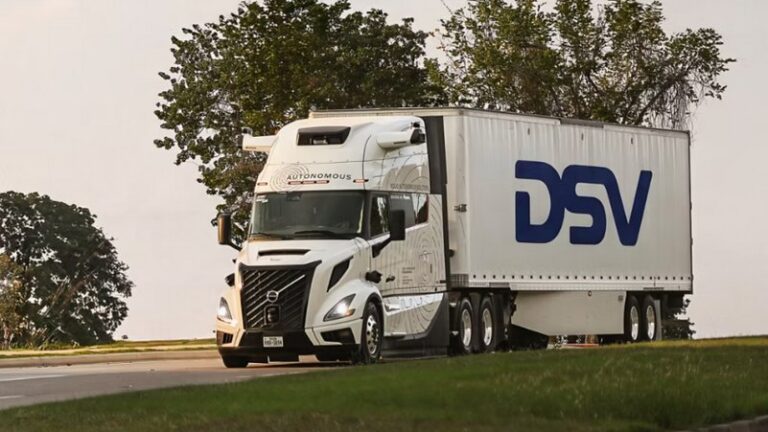
- The operating model taking shape in the US is hub-to-hub: level 4 autonomous heavy-duty vehicles cover highway sections between predefined terminals, while the first and last mile remain handled by human drivers. Aurora has already launched an autonomous corridor of about 1,600 kilometres between Texas and Arizona, the first route of its kind in the United States. Volvo is working with Aurora on the VNL Autonomous model, produced at the New River Valley plant in Virginia.
- The federal regulatory framework is evolving. The Federal Motor Carrier Safety Administration (Fmcsa) is updating 49 CFR rules to adapt them to driverless vehicles, while the Self Drive Act of 2026 introduces the possibility of self-certification by manufacturers. At state level, fragmentation remains significant: Texas encourages testing, California is opening up slowly, and Delaware has proposed a preventive ban. Employment concerns are fuelling political resistance in several states.
Volvo Group AB expects revenue from its autonomous transport division to rise to almost $3bn, about €2.75bn, within five years, with the first autonomous operations on US highways expected to start by the end of the third quarter of 2026. The announcement was made on 10 June by Nils Jaeger, head of the Swedish group’s autonomous division, during an investor meeting in Sweden. According to estimates presented by Jaeger and reported by Bloomberg, more than 300 autonomous heavy-duty vehicles will be operating on American highways by the end of 2027. "We are the first movers and we are here to scale this business," Jaeger said, summing up the group’s ambition in a phrase that also captures what is at stake for the whole sector. Volvo’s plan comes at a time of rapid acceleration for autonomous heavy-duty vehicles in the US, driven by a combination of active commercial trials, expectations of comprehensive federal standards and a still uneven map of state regulations.
According to Volvo’s projections, autonomous trucks could double vehicle utilisation rates compared with the limits imposed by permitted driving hours for human drivers, helping to ease the structural driver shortage affecting the North American road haulage sector. On the same date, the debut of Swedish start-up Einride AB on the New York Stock Exchange, where it was listed on the Nyse on 10 June, confirmed growing investor interest in the segment, turning the day into a dual industrial and financial signal for the entire autonomous freight transport supply chain.
The operating model becoming established in the United States is the so-called hub-to-hub approach: level 4 autonomous vehicles cover highway sections between predefined terminals, while the first and last mile remain entrusted to human drivers. This model closely matches the architecture described by Volvo for its VNL Autonomous, developed in partnership with Aurora and equipped with Aurora Driver technology. The vehicle is produced at the New River Valley plant in Virginia and is designed for long-distance operations between North American hubs on fixed routes.
Aurora is among the most frequently cited examples of the shift from pilot programmes to commercial transport. In early 2026, the company launched an autonomous driving corridor of about 1,600 kilometres between Texas and Arizona, the first route of its kind in the US operated without a driver on board. Texas has emerged as the preferred testing ground for heavy autonomous trucks, thanks to a favourable regulatory environment and weather conditions that make trials easier. The aim is to gather operational data from this corridor under relatively stable conditions before extending the network across the wider Sun Belt.
At federal regulatory level, the central role remains with the Fmcsa, which has for years been working on a dedicated framework for the "Safe Integration of Automated Driving Systems-Equipped Commercial Motor Vehicles". The aim is to adapt the provisions of 49 CFR, which assume the presence of a human driver for driving hours, checks and pre-trip inspections, to scenarios in which some or all functions are performed by an automated driving system. Fmcsa, the National Highway Traffic Safety Administration (Nhtsa) and the Federal Highway Administration have identified 2026 as the expected deadline for clearer federal standards on autonomous vehicles, including heavy-duty vehicles, as reiterated in a joint address at CES 2026.
Two proposed pieces of legislation are attracting the sector’s attention. The Self Drive Act of 2026 would allow manufacturers to self-certify their products against federal standards, while raising unresolved questions over liability in the event of an accident, namely whether responsibility should fall on the fleet, the OEM or the software supplier. The Build America 250 Act, meanwhile, contains for the first time bipartisan language aimed at creating a comprehensive federal framework specifically for autonomous trucks. In drafts circulating within the road haulage sector, a key clause would require a human operator to be present on board a heavy-duty vehicle equipped with an ADS system in certain cases, which would effectively limit autonomous services even where the technology is already ready.
The approach of individual states remains decisive and uneven. Texas is strengthening its position as a favourable environment for trials, with established freight corridors and relatively permissive rules. California, after years of restrictions on heavy-duty vehicles, began reviewing rules from the Department of Motor Vehicles (Dmv) towards the end of 2025. In the draft proposals, this opens for the first time a regulated pathway for large-tonnage autonomous vehicles, although the political climate remains divided between industry pressure and concerns over safety and employment. At the opposite end of the spectrum, the Delaware Senate proposed in 2025 a preventive ban on driverless trucks, closely echoing a 2024 California proposal that was later blocked. This fragmentation is pushing the main operators to select corridors where the legal framework is more predictable, such as Texas, Arizona and the Sun Belt, while waiting for federal harmonisation.
The main industry associations and the professional road haulage community stress that, despite technological optimism, significant issues remain unresolved: the management of so-called edge cases, adverse weather conditions, interaction with human-driven traffic, cyber security and legal liability in the event of an accident. Discussions within the road haulage community recognise a growing role for autonomous trucks in controlled settings such as terminals, yards and long highway routes, but insist on the need for a human component for special loads, dangerous goods, abnormal loads and situations involving high operational complexity. Politically, concerns over the employment impact are fuelling proposals for restrictions even where the technology would already be ready for autonomous driving, while federal agencies and operators are focusing their argument on reducing road accidents and improving supply chain efficiency.
Michele Latorre