




- The Strait of Hormuz, closed at the end of February 2026, has triggered an unprecedented energy and logistics shock. Jet fuel at about $152 a barrel, up 68.8% year on year, is squeezing margins across the aviation sector, which now expects net profit for 2026 to halve to $23bn and the margin to fall to 2%, the weakest financial performance since the pandemic.
- Growth in global passenger transport is slowing to 2.1%, with the Middle East down 11.4%. The loss of belly capacity in this region has removed vital cargo space from scheduled passenger aircraft holds, pushing cargo yields up by 6.2% in the first quarter and to a peak of 33.1% in April.
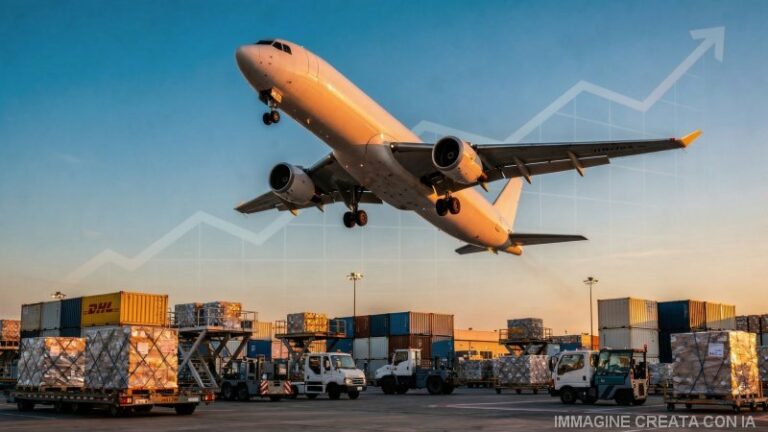
- Cargo volumes are stabilising at 71.7m tonnes, up 0.7% year on year, but the market has already changed. Freighter aircraft now account for 60% of total capacity, reversing the trend of the past two years, while cargo revenues are rising to $162bn, up 7.2%.
The shock that hit air transport in 2026 did not originate in demand, but in energy supply. The closure of the Strait of Hormuz on 28 February removed 19% of global crude oil and 23% of global jet fuel exports from the market, pushing the expected price of aviation fuel to about $152 a barrel, a 68.8% year-on-year increase. The macroeconomic effects have quickly spread across the industry: global GDP growth is slowing towards 2.5%, global inflation is approaching the 5% threshold and the threat of stagflation is weighing on energy-importing economies. This is the backdrop to the IATA (International Air Transport Association) Outlook 2026, the association’s June update to its forecasts for the current year.
In this context, analysts say profitability across air transport is being sharply compressed. Total industry revenues are reaching $1.165tn, partly supported by ancillary revenues of $165bn, but fuel costs account for 31.4% of total expenditure, equal to $350bn. The operating EBIT margin is falling to 4.1% and net profit is halving to $23bn, bringing the margin down to 2%. The gap between return on invested capital (ROIC), at 4.3%, and the weighted average cost of capital (WACC), at 8.5%, confirms a structural erosion of value not seen since the pandemic.
This is compounded by underlying fragility in aircraft availability. The 30,407 jets formally in flight operations are not enough to meet actual demand. Airlines are offsetting the shortage by extending the use of about 890 aircraft beyond standard operating limits, keeping 1,700 airframes that are ready for retirement in service and filling every available seat on board. The result is an effective shortfall estimated at about 3,170 aircraft, with ageing fleets reducing fuel savings and making the energy shock even more costly.
To understand air cargo dynamics in 2026, it is necessary to start with passenger traffic, as the holds of scheduled passenger aircraft account for a significant share of global cargo supply. When passenger flights contract in a geographic area, the space available for cargo falls accordingly, with direct effects on yields. The IATA report revises down global growth in revenue passenger kilometres (RPK) for 2026 to 2.1% compared with pre-crisis estimates, but the trend varies widely by region. The Middle East is recording the sharpest contraction, with RPK down 11.4% year on year and traffic falling by as much as 60% in the spring, when the airspace blockade hit major intercontinental transit hubs hardest. Africa and Asia-Pacific are growing by 10.0% and 5.1% respectively, benefiting from flows diverted away from Middle Eastern routes, while nominal return fares are rising on average to $462, reflecting both cost pressure and the forced reshaping of networks. It is this contraction in Middle Eastern passenger traffic that is the main trigger of the capacity crisis in air cargo. The region normally handles about 13% of global cargo supply, and the blockade of its hubs has removed a significant share of belly hold capacity, setting off the chain of effects that has swept through the entire market.
Looking only at cargo traffic, global demand measured in cargo tonne-kilometres (CTK) is growing by a modest 0.7% compared with 2025, with physical volumes reaching 71.7m tonnes carried, against 71.5m the previous year. Already limited growth has been revised down from IATA’s initial forecast of 2.6%. The market is, however, offsetting stagnant volumes through pricing. Average yields rose to $2.5 per kilogramme in the first quarter, up 6.2% year on year, while preliminary April data indicate a further acceleration, with a peak of 33.1%. The nominal freight rate is rising from 53.3 to 56.8 US cents per CTK, an increase of 6.5%, putting yields 40% above pre-pandemic levels in 2019. The cargo load factor reached 46.4% in the first quarter, up 0.6 percentage points year on year, signalling that available capacity is now being used more intensively. Despite the substantial stability of physical volumes, total cargo revenues are increasing by 7.2% to $162bn in 2026. The market has shifted from a model driven by volume expansion to one focused on yield optimisation.
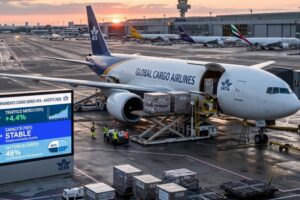
The most important structural change of the year, however, concerns the composition of capacity. In 2024 and 2025, the gradual recovery in passenger flights had lifted belly capacity to 41% in 2024 and 43% in 2025, in a process that appeared to be moving towards post-pandemic normalisation. With the outbreak of the crisis at the start of 2026, that trend reversed abruptly: freighter aircraft have regained share, rising to 60% of total capacity. In absolute terms, cargo operators added 1.7bn nominal CTK, mainly on the Europe-Asia axis, compared with just 0.3bn added by passenger aircraft holds, heavily reduced by cancelled flights in the Middle East. The operational flexibility of all-cargo aircraft has proved the main tool for bypassing the blockade of hubs and ensuring continuity for urgent freight flows.
The geography of cargo directly reflects the geography of the crisis. The Middle East recorded a 15.2% contraction in volumes in the first quarter, the sharpest fall of any macro-region, while Asia-Pacific absorbed much of the diverted traffic and grew by 5.6%, confirming its role as the global engine of the segment. Africa recorded growth of 5.4%, benefiting from the trade diversification triggered by the reconfiguration of routes, while Europe held up with growth of 2.4%, partly supported by the replacement of traffic lost by Middle Eastern carriers. By contrast, Latin America recorded a 2.5% decline, while North America grew by a marginal 0.7%, held back by the base effects of the previous year and by changes in US trade policy, including the removal of the de minimis exemption that had supported cross-border e-commerce.
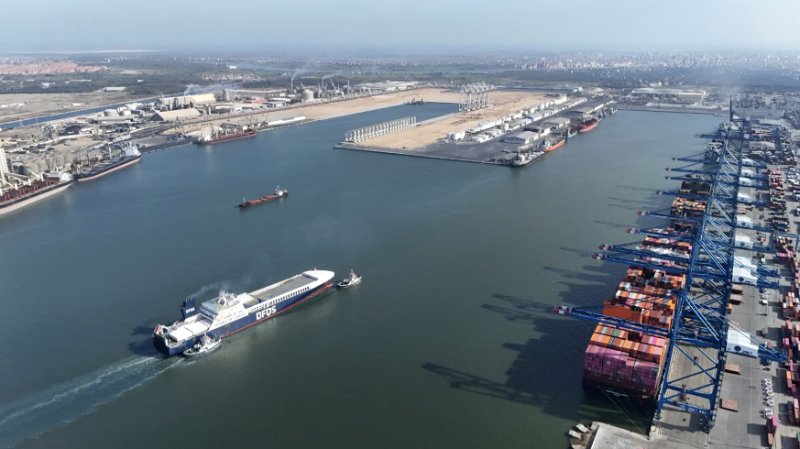
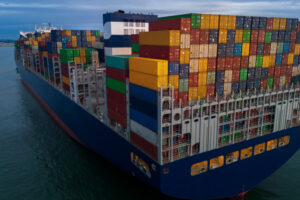
The Asia-Europe axis is emerging as the most dynamic corridor of 2026, absorbing more than three quarters of the incremental growth on routes connected to Asia. Flows are moving away from the historic trajectories via the Middle East and being redrawn along alternative routes, while the Asia-North America axis is falling to historically low shares. Congestion in maritime transport is also strengthening the position of air cargo. The need to sail around the Cape of Good Hope to avoid the Bab el-Mandeb had already lengthened transit times on Asia-Europe routes, and the closure of Hormuz has added another element of instability. Maritime freight rates on the Asia-Europe route rose by between 20% and 40% year on year in April, prompting shifts to air for urgent and high-value goods, particularly e-commerce and semiconductors. The price gap between sea and air is narrowing, making air transport an economically justifiable alternative for product categories that would once have travelled exclusively by sea.
A.M.B.