







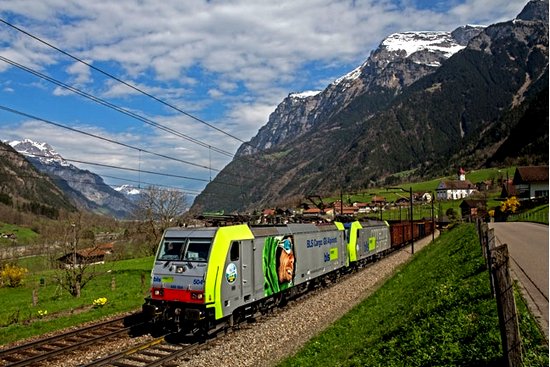
Switzerland is taking the initiative and, as seen with other border railways, is promoting a project to enhance cross-border lines to boost rail freight transport, particularly intermodal transport. This sector often faces the limitations of the historical railway profiles. This time, the infrastructure upgrade will focus on the Alsace Railway, which connects Switzerland to France (towards Strasbourg) through the Basel hub, a crucial crossroads between European networks.
The project is currently undergoing approval through local consultations. Barring any unforeseen obstacles, construction is expected to begin in the second half of 2025 and be completed within four years. The €115 million works will cover the section between the Swiss station in Basel and the French border, spanning 4.2 kilometers and including two tunnels (800 meters and 285 meters) and intersecting some road structures. Specifically, the project involves lowering the track bed to increase the clearance in tunnels and under road bridges, as well as renewing the overhead electric line. Simultaneously, all related utility adjustments will also be carried out.
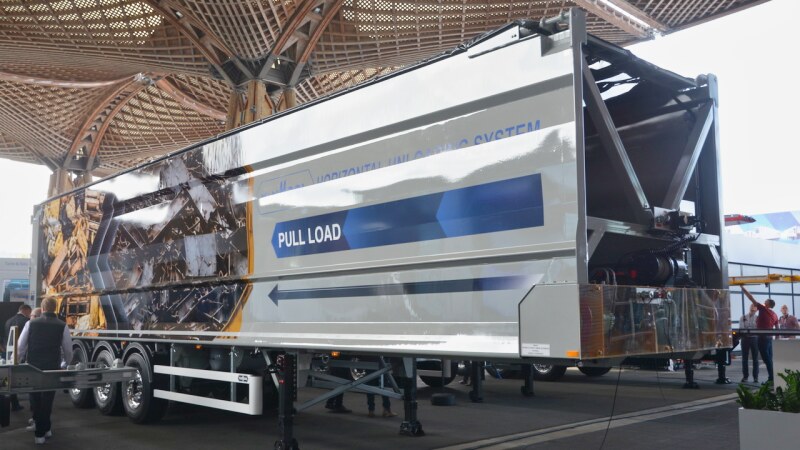
This intervention aims to encourage the French railway administration to implement a similar upgrade program along its section. Once completed, there will be no more clearance limitations for intermodal transport, allowing standard pocket wagons to carry semi-trailers with a corner height of four meters. These semi-trailers will then be able to reach the base tunnels of the Gotthard and Lötschberg from France. The Swiss project aims not only to promote rail transport but also to apply the lessons learned from the 2017 Rastatt incident, ensuring alternative routes for major transport corridors without limitations.
The Swiss initiative effectively responds to operators' demands, such as the call from the Hupac group on May 28, 2024, during the presentation of the 2023 financial statements. Given the limited capacity of the railway along the Rhine Valley, alternatives through France must be promoted. A priority intervention could be to upgrade the railway's clearance and load capacity from Belgium, through Metz and Strasbourg, to Basel.
It is in Switzerland's interest to ensure that intermodal transport between Belgium and Italy follows the shortest route through France to the Gotthard base tunnel. Therefore, according to Hupac, Switzerland should co-finance the expansion of the Vosges tunnels, as it has done with Italy, first with the Luino route and now with the Simplon route, investing over €260 million in non-repayable funds.
Piermario Curti Sacchi