




New CHEP hub in Lacchiarella
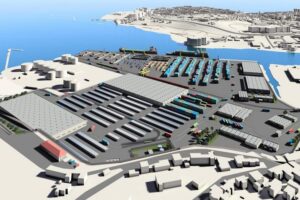
CHEP has opened its largest Italian service centre by pallet throughput in Lacchiarella, south of Milan, developed in partnership with AF Group. The 35,000 square metre facility has been designed to increase operating capacity compared with the previous site and support business growth over the next decade. The centre introduces a high level of automation in pallet handling, starting with camera-based inspections to check compliance and identify pallets requiring repair or washing. The lines include automated systems to remove surface contamination, measure wood moisture, apply paint and detect ISPM-15 phytosanitary marks. The energy plan includes installing a photovoltaic system and gradually converting handling equipment to an all-electric fleet. An electric pallet-drying system is also planned.
Hapag-Lloyd raises earnings forecast
Hapag-Lloyd has raised its 2026 earnings forecast for the second time, supported by demand and spot freight rates. The shipping company now expects group EBITDA of between $3.9 billion and $4.4 billion, compared with the $2.7–3.7 billion range announced in July, while EBIT is forecast at between $1.25 billion and $1.75 billion. The improved outlook follows a first half in which revenue fell by 4.8% to €9.22 billion, while volumes grew by 1.5% to 6.684 million TEU. Average freight rates rose to $1,475 per TEU in the second quarter, however, compared with $1,330 in the first three months of the year. Demand from Asia, longer routes and operational disruption linked to the geopolitical situation in the Middle East are supporting rates. These factors absorb shipping capacity and entail higher fuel consumption, repositioning and longer transit times. Hapag-Lloyd nevertheless continues to highlight considerable uncertainty over freight rates and geopolitical developments. A more sustained return to routing through the Suez Canal could release capacity and change the balance between supply and demand in container shipping.
FedEx orders 131 trucks in Europe
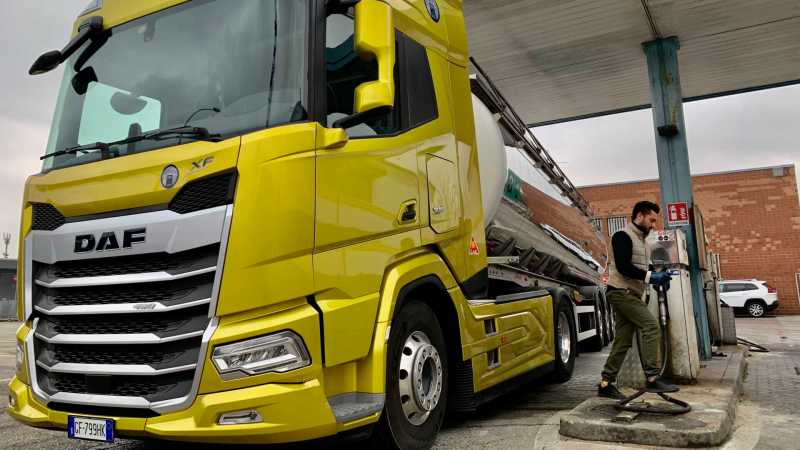
FedEx has ordered 131 commercial vehicles from DAF Trucks to renew and expand its European fleet. The order comprises 100 DAF XD tractor units for daily operations in the United Kingdom, 11 DAF XG vehicles for the Netherlands and 20 DAF XF vehicles for long-distance transport in France. It will both replace trucks already operating on existing routes and introduce DAF trucks into FedEx’s French operations for the first time. The models were selected to meet the different operating requirements of the European network. The DAF XD 450 will be used for regional and national distribution, while the DAF XF 480 Sleeper Cab will handle longer journeys. The DAF XG 480 will operate on routes requiring more interior cab space.
MIT and Mecalux launch AI course
The MIT Center for Transportation & Logistics and Mecalux have launched an executive course on using artificial intelligence in supply chain decision-making. The first edition takes place on 1 and 2 October 2026 at MIT’s Cambridge campus and is aimed at executives from Mecalux customers and partners. Developed with researchers from the Intelligent Logistics Systems Lab, the programme combines lectures, practical case studies and workshops to identify AI applications with operational and financial benefits. Participants are asked to define a priority use case and the scope of a subsequent pilot project within their company. The initiative forms part of the research partnership between MIT and Mecalux launched in 2024. Projects already developed include Genesis, a simulator that uses machine learning and a genetic algorithm to compare inventory management strategies across networks of multiple warehouses. Among other variables, the system assesses inventory levels, replenishment, transfers between warehouses and transport strategies. The course aims to give logistics managers the tools to select and develop AI applications before wider deployment.
Mobile storage grows in the US
Demand for temporary logistics capacity is increasing in the United States, although the broader picture measured by the WOW Supply Chain Activity Index remains weaker. The index rose from 36.4 to 43.7 points in August 2026, its highest level since February 2023, but remains in contraction territory. Of the 7.2-point monthly increase, six points came from WOW’s Deployment Ratio, which measures the ratio of semi-trailers rented to those returned. The ratio rose from 0.75 to 1.18, moving above one for the first time since March and indicating net growth in trailers used as temporary capacity. Meanwhile, the Logistics Managers’ Index shows an increase in warehousing capacity, with the corresponding indicator at 53.5 points. The warehousing utilisation index fell from 66.1 to 59.6 points, a reading that still indicates growing use of space, but at a slower pace. Warehousing prices continue to rise, with the indicator at 75 points. The figures therefore suggest greater demand for flexible capacity ahead of the peak season, without yet pointing to a broad recovery in US logistics.
First caisson installed off Ravenna
The first of 18 caissons forming a breakwater to protect the FSRU BW Singapore from adverse weather and sea conditions has been installed off Ravenna. The project, worth more than €200 million, was awarded by the Autorità portuale di Ravenna (Ravenna Port Authority) to a consortium led by RCM Costruzioni with Spain’s Acciona. The breakwater will be around 900 metres long and comprise cellular reinforced-concrete caissons measuring 53 by 22 metres, prefabricated in the port of Ravenna using the Kugira Dos floating dock. Ten units have already been completed and the eleventh is being prepared. The first caisson was towed around six miles along the Candiano Canal and positioned on a stone foundation laid on the seabed at a depth of 17 metres, reinforced with more than 26,000 gravel columns. Positioning and sinking operations were carried out using divers and GNSS satellite systems, under the coordination and supervision of the Capitaneria di porto di Ravenna (Ravenna Harbour Master’s Office). Construction of the superstructures and wave wall, which will rise 10.5 metres above sea level, is also scheduled to begin next year. The project is due for completion by the end of 2027. BW Singapore, installed by Snam and operational since spring 2025, has so far received more than 30 LNG cargoes.