





Array ( [0] => 8 [1] => 39 )

Podcast K44

Cronaca

  • Multa di 6.000 euro per una bisarca polacca a Monfalcone

    Multa di 6.000 euro per una bisarca polacca a Monfalcone

    A Monfalcone la Polizia Locale ha multato con oltre seimila euro l’autista di una bisarca immatricolata in Polonia dopo un'analisi retrospettiva dei dati tachigrafici su 56 giorni, in cui ha rilevato diverse violazioni dei tempi di guida e riposo.

Transpotalk

Normativa

Mare

  • Samsung chiede a Cma Cgm risarcimento di 186 milioni

    Samsung chiede a Cma Cgm risarcimento di 186 milioni

    Il colosso coreano dell'elettronica Samsung ha presentato alla Federal Maritime Commission un reclamo da almeno 186 milioni di dollari per addebiti di detention, demurrage e stoccaggio ferroviario legati alle spedizioni "store door" del periodo pandemico. La compagnia francese respinge le accuse e afferma di aver rispettato le regole.

Autotrasporto

  • Tndm Trucking cambia il nome in Girteka Dedicated

    Tndm Trucking cambia il nome in Girteka Dedicated

    Il gruppo lituano Girteka ha rinominato la controllata Tndm Trucking in Girteka Dedicated, riportandola sotto il marchio principale nell'ambito della strategia One Girteka. Per i clienti referenti e servizi sono invariati.

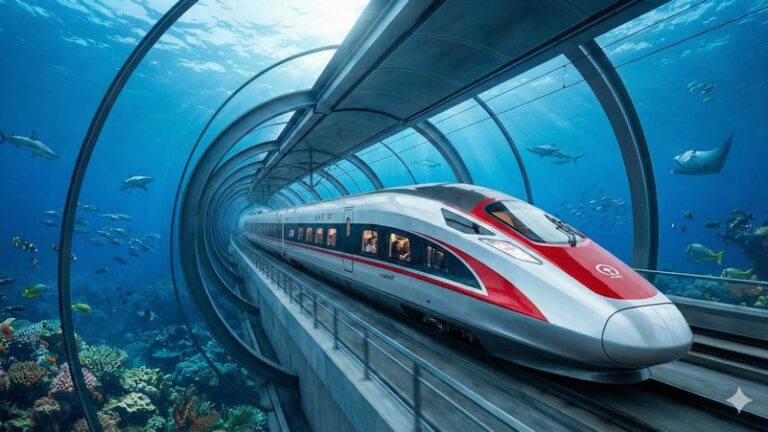
    World’s longest railway tunnel approved in China

    Illustrazione: TrasportoEuropa IA

    China has given the green light to the most ambitious and visionary infrastructure project ever attempted, the construction of two parallel railway tunnels stretching for more than 120 kilometres, with 90 kilometres excavated beneath the seabed. Known as the Bohai Strait Tunnel, or Bohai Strait transmarine corridor, the project will cross the stretch of sea of the same name, linking Dalian on the Liaodong Peninsula with Yantai in Shandong province. The location is in the easternmost part of China, at a relative distance from the two Koreas. The underwater section would set a new global record compared with existing infrastructure, as Japan’s Seikan Tunnel extends for 23.3 kilometres, while the Channel Tunnel between France and Great Britain is just under 38 kilometres long.

    Beijing’s authorities are placing strong emphasis on the time savings for high-speed passenger services. Compared with the current ferry crossing between the two shores of the Bohai Strait, which takes between six and eight hours, the new underwater infrastructure would reduce the journey to just 40 minutes. Other rail services are also envisaged, including the possibility of loading cars onto dedicated wagons with a shuttle service between the two sides, as well as the transport of fast-moving freight, such as goods carried in roll containers.

    The cost of building the Bohai Strait Tunnel is estimated at around €25 billion, but when the railway connections to the existing network are included, the overall budget rises to more than €36 billion. The Bohai tunnel is not only an unprecedented engineering challenge, but also a strategic element in completing China’s infrastructure network, as it would strengthen links between the north-eastern industrial regions, the regional economic zone and the Yangtze River Delta, historically also referred to as the Shanghai economic zone. The Bohai Strait Tunnel would therefore not merely be a symbolic flagship for Chinese engineering or a showcase for Beijing’s authorities, but a powerful logistical and economic lever.

    The project is, unsurprisingly, of unparalleled scale and technical complexity, not least because it crosses a geologically sensitive area, particularly from a seismic perspective. Although the region is distant from major tectonic plate boundaries, China, like much of Asia north of the Himalayan range, experiences infrequent but sometimes severe seismic activity, as demonstrated by the Pyongyang earthquake in 1952 and the Tangshan earthquake of 1976, which occurred on the northern shore of the Bohai Gulf roughly 100 kilometres from the planned tunnel route.

    Chinese engineers, and in particular China Railway Engineering Corporation (Crec), a state-owned holding company and one of the world’s largest transport infrastructure contractors, are fully aware of the complexity of the challenge. They nonetheless intend to proceed using the most advanced technological innovation to manage and monitor every phase of construction and, above all, the future operation of the tunnels, with cutting-edge emergency systems. One aspect that may seem striking from a European perspective is the estimated construction timeframe, expected to be around ten years or just over.

    Piermario Curti Sacchi

    © TrasportoEuropa - Riproduzione riservata - Foto di repertorio
    Segnalazioni, informazioni, comunicati, nonché rettifiche o precisazioni sugli articoli pubblicati vanno inviate a: redazione@trasportoeuropa.it


      Puoi commentare questo articolo nella pagina Facebook di TrasportoEuropa

      bottone newsletter piccolo Vuoi rimanere aggiornato sulle ultime novità sul trasporto e la logistica e non perderti neanche una notizia di TrasportoEuropa? Iscriviti alla nostra Newsletter con l'elenco ed i link di tutti gli articoli pubblicati nei giorni precedenti l'invio. Gratuita e NO SPAM!


    CONTENUTI SPONSORIZZATI


Videocast K44

Aereo

  • Lufthansa Cargo cresce in aeroporto con Lug Aircargo Handling

    Lufthansa Cargo cresce in aeroporto con Lug Aircargo Handling

    Lufthansa Cargo ha annunciato a settembre 2026 un accordo per rilevare l’intero capitale di di Lug Aircargo Handling, società di movimentazione aeroportuale tedesca del gruppo Dettmer, ampliando la capacità nelle merci a supporto del piano di crescita del programma Lccevo.

Ferrovia

  • Il raccordo Orbassano-Avigliana nelle proteste No Tav

    Il raccordo Orbassano-Avigliana nelle proteste No Tav

    Si riaccende lo scontro tra le realtà locali per la realizzazione della ferrovia Torino-Lione. Ora la contestazione si sposta sulla tratta nazionale tra Torino Orbassano e Avigliana. Ma il commissario intende tirare dritto.

Persone

  • Morto il re della logistica Klaus-Michael Kühne

    Morto il re della logistica Klaus-Michael Kühne

    Il 24 agosto 2026 è morto a 89 anni Klaus-Michael Kühne, uno degli uomini più potenti della logistica europea. Senza figli, aveva destinato l'intero patrimonio imprenditoriale alla Kühne Foundation, che attraverso Kühne Holding controlla il 60,1% di Kühne+Nagel, il 30% di Hapag-Lloyd e oltre il 20% di Lufthansa.
Foton porta in Europa il trattore stradale Cavan Beacon

TECNICA

Foton porta in Europa il trattore stradale Cavan Beacon
previous arrow
next arrow
Alleanza tra Scania e Toyota sul camion a idrogeno

LOGISTICA

Alleanza tra Scania e Toyota sul camion a idrogeno
previous arrow
next arrow
Tre arresti a Napoli per contrabbando di carburanti

ENERGIE

Tre arresti a Napoli per contrabbando di carburanti
previous arrow
next arrow
Nuove soluzioni Webfleet per flotte di camion

SERVIZI

Nuove soluzioni Webfleet per flotte di camion
previous arrow
next arrow