




The liberalisation of road transport between the European Union and Ukraine, the regime known as transport visa-free, has increased the Ukrainian fleet operating on international routes from 67,000 to more than 111,000 industrial vehicles since 2022. The figure is reported by the National Union of Romanian Road Hauliers, Untrr, which places it within the broader shift of trade flows onto the Solidarity Lanes, the land corridors activated by the European Commission after the Russian invasion to replace Black Sea routes. The agreement, extended last September until 31 March 2027, removes the requirement for bilateral permits for transport between the two countries and for transit, but has long fuelled discontent among Polish and Romanian hauliers, who say they are losing competitiveness on cross-border routes.
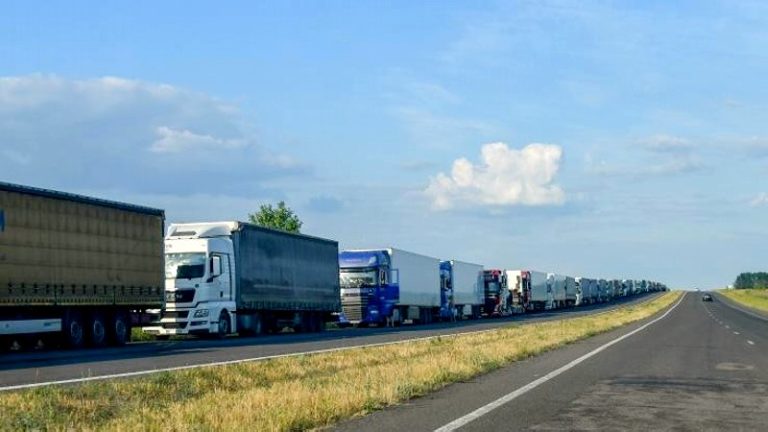
The solidarity corridors run through Poland, Romania, Hungary, Slovakia and the Baltic States, absorbing a growing share of trade that previously moved through Ukrainian ports on the Black Sea. According to the latest updates from the European Commission, the cumulative value of trade channelled through the Solidarity Lanes since 2022 stands at between €270 billion and €280 billion, including €70 billion to €74 billion in Ukrainian exports alone. The concentration of traffic at border crossings, particularly Dorohusk, Hrebenne, Reni and Isaccea, has turned these areas into the main points of competitive friction between Ukrainian hauliers and local operators, with congestion recurring on a regular seasonal basis.
The road transport agreement between Brussels and Kyiv dates back to June 2022, shortly after the launch of the Solidarity Lanes the previous month, when the main objective was to prevent the collapse of Ukrainian agricultural exports and the global food crisis triggered by the blockade of Black Sea ports. The regime was first renewed until 30 June 2025 through a tacit extension mechanism, then extended in September of the same year until 31 March 2027. Between 2023 and 2024, the first protests by Polish road hauliers at border crossings prompted the Commission to introduce, in the updated agreement, a safeguard clause allowing the regime to be suspended in specific geographical areas in the event of serious disruption to the local market.
The immediate effect concerns demand for land transport, which has grown to compensate for the reduction in maritime routes in the Black Sea. Ukrainian agricultural and industrial exports, together with imports of fuels and essential materials, have therefore shifted significantly onto road and rail. In 2024, road imports from Ukraine into the EU reached 7.7 million tonnes, up 13% compared with 2021, with a value of €10.1 billion, an increase of 12%. Road exports from the Union to Ukraine stood at 7.6 million tonnes, up 11%, worth €6.9 billion, a 48% jump compared with 2021, according to the Commission’s statement announcing the extension of the agreement until 31 March 2027.
This is compounded by the competitive advantage of Ukrainian hauliers, which the permit-free regime allows them to monetise fully: lower average wages, lower tax and social security costs than European levels, and greater operational flexibility on risky routes towards the war zone, where western operators are less willing to invest. For Polish and Romanian hauliers, the result is the transfer of cross-border and medium-distance traffic shares to Ukrainian companies, putting pressure on freight rates and margins. In a statement reported by Polish trade associations, the extension of the agreement is described as a measure that “limits the competitiveness of Polish transport companies”, while Untrr links the doubling of the Ukrainian fleet to the risk of structural overcapacity in the regional market.
From a geopolitical perspective, the European Union sees logistical support for Kyiv as serving not only the wartime emergency but also the prospect of Ukraine’s integration into the single market, regarding imbalances in road transport as an acceptable cost compared with the strategic benefit of keeping the Ukrainian economy standing. The Kyiv government is using the liberalised regime to strengthen its transport companies and consolidate a presence that would make any future return to administrative barriers more politically costly. Border countries, particularly Poland and Romania, are instead calling for rebalancing tools: separate transit lanes at crossings, stricter checks on vehicle registrations and, in some cases, a selective return to the permit system. The safeguard clause introduced in the latest revision of the agreement is Brussels’ attempt to reconcile the two requirements, authorising targeted suspensions only in cases of market disruption deemed serious.
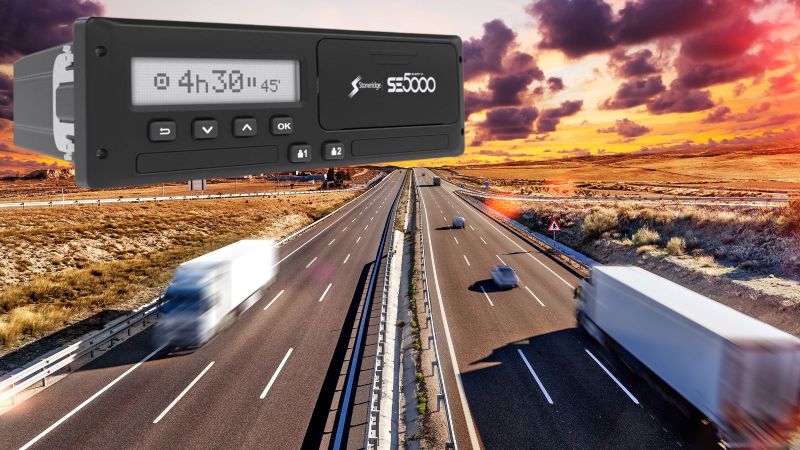
The three narratives nevertheless remain distinct. The European Commission stresses trade volumes and the role of the Solidarity Lanes as infrastructure supporting the Ukrainian economy. The Ukrainian government presents transport visa-free as a step towards European integration, accompanied by training programmes for new drivers and the adoption of smart tachographs in line with EU standards. Haulier associations in eastern Europe, including Untrr and Polish organisations, instead view the doubling of the Ukrainian fleet as a competitive imbalance that should be corrected through regulatory tools. The next review of the regime is scheduled for the 31 March 2027 deadline, when the Commission will have to decide whether to confirm the current framework, activate the safeguard clause in specific border areas or launch a new revision of the agreement.
M.L.