


Switzerland has decided to bring electric trucks within the scope of the LSVA (Performance-related Heavy Vehicle Charge) from 2029, ending a phase in which zero-emission vehicles could use the road network without paying heavy traffic tolls. The reform reshapes one of the pillars of Swiss transport policy. The underlying principle remains the same as when the tax was introduced in 2001: those who use the network and generate costs must contribute to its funding. The key change is that this principle will now also apply to electric vehicles, albeit with preferential treatment in the initial phase.
The LSVA will continue to be based on three parameters: total vehicle weight, emission class and kilometres travelled in Switzerland and Liechtenstein. The charge applies to all vehicles with a gross weight exceeding 3.5 tonnes, regardless of country of registration. It generates around CHF 1.8 billion annually, two-thirds of which goes to the Confederation and one-third to the Cantons, and remains a central source of funding for both road and rail infrastructure.
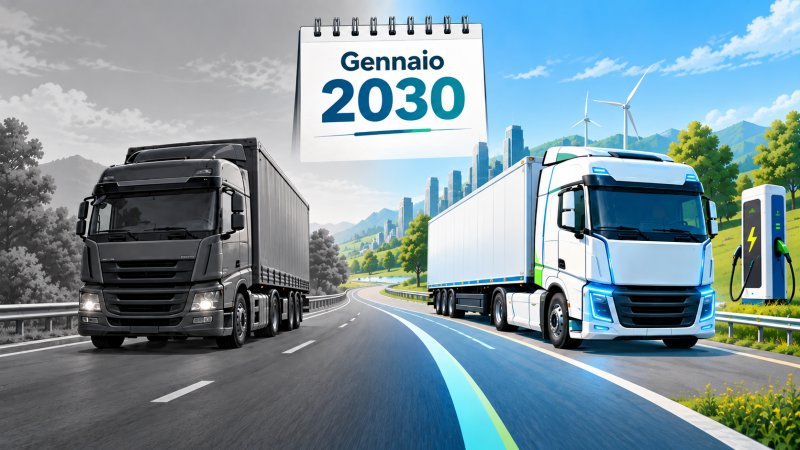
The most significant aspect of the revision concerns battery-electric and fuel cell vehicles. From 2029 they will no longer be exempt, but will enter the system with a base rate of 2.39 Swiss cents per tonne-kilometre, equivalent to the current rate for Euro VI vehicles in the most favourable category. A 70% discount will be applied in 2029, decreasing by ten percentage points each year to 10% by 2035. According to the Transport Committee of the National Council, the mechanism is designed to maintain an incentive for the uptake of zero-emission vehicles without turning the exemption into a permanent benefit.
However, the reform goes beyond electric vehicles. It also affects diesel trucks, particularly Euro VI models, which are currently in the most advantageous category. The planned reclassification will move these vehicles into a more expensive band, with toll increases starting in 2027. According some calculations, a 100-kilometre journey by an 18-tonne Euro VI truck would cost around CHF 51 under the new rate of 2.82 Swiss cents per tonne-kilometre. The measure targets the core of the fleet, as around 90% of heavy diesel vehicles currently fall into the most favourable tariff class.
The reform has been developed in several stages. The Transport Committee of the National Council had already concluded its review of the legislative amendment on 28 May 2025, proposing that electric trucks be subject to the LSVA from 2029 with reduced rates until 2035. Earlier parliamentary discussions had also considered a 2031 start date. At its meeting on 8 March 2026, the Federal Council decided to bring forward the inclusion of electric vehicles to 2029, arguing that action was needed before the current system loses effectiveness both in terms of revenue and modal shift.
Federal Councillor Albert Rösti argued that the current system has reached its limits. On one hand, the vast majority of diesel trucks are now concentrated in the lowest tariff category, weakening the economic signal intended to support a shift of freight to rail. On the other, zero-emission vehicles make no contribution despite using the same infrastructure. In this view, the reform seeks to realign the principle of “the polluter pays” with that of “the user pays”, preventing the growth of electric fleets from gradually eroding the tax base.
Electric trucks in Switzerland numbered 234 in 2022 and exceeded 1,000 in 2025. In the most expansive scenario, the progressive electrification of heavy transport could significantly reduce LSVA revenues over time, potentially leading to losses of several billion francs in the long term. For the Swiss government, the issue is therefore not only updating an incentive but preserving the financial sustainability of a system that also supports rail freight.
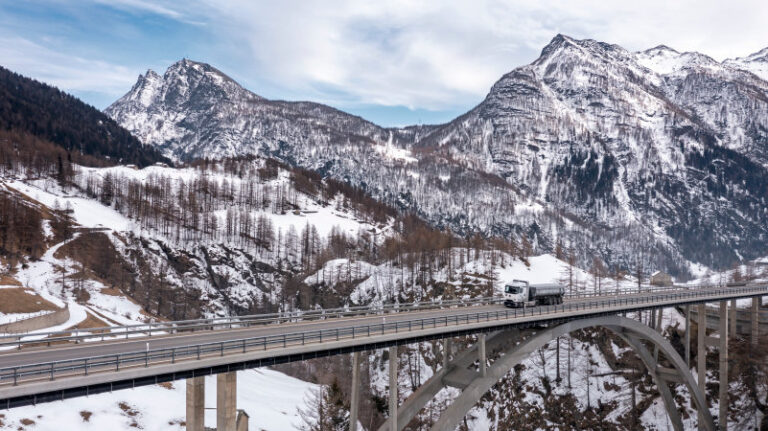
The link with rail is a cornerstone of Swiss transport policy. LSVA revenues play a major role in funding infrastructure along Alpine corridors, from Gotthard to San Bernardino, where the country has built its modal shift strategy. Increasing the cost of more polluting road transport and requiring at least partial contributions from zero-emission vehicles allows Bern to defend this long-standing approach. The goal is not only to reduce emissions but also to ensure that technological transition in road transport does not undermine rail’s competitive advantage.
The new tax structure therefore seeks to balance multiple objectives. More polluting diesel vehicles will continue to pay more, Euro VI trucks will lose part of the advantage gained in previous years, while electric and hydrogen vehicles will enter the system with a long period of preferential treatment until 2035. New Euro VII diesel vehicles will also benefit from temporary discounts to support fleet renewal without creating excessive exemptions. No specific incentives are provided for for vehicles powered by biogas, liquefied natural gas, compressed natural gas or synthetic fuels, in order to avoid additional complexity and revenue gaps.
For road haulage operators, the message is clear: zero-emission vehicles remain favoured but will no longer be free users of the network. This shift changes the economic framework for Swiss transit traffic, particularly for operators active on north–south corridors. Companies will need to absorb higher diesel costs from 2027 and the end of electric vehicle exemptions from 2029. The impact will be felt especially by carriers regularly crossing Switzerland, including many Italian operators, and may lead to higher freight rates or reduced margins.
This is precisely where Swiss haulage associations have voiced strong opposition. The group led by Astag openly criticises both the LSVA rate increases from 2027 and the extension of the tax to electric trucks from 2029, describing the package as an unnecessary and counterproductive burden. In the view of industry organisations, the sector faces additional pressure at a time when it is already dealing with high costs, more expensive technological investments and increasing pressure on profitability. According to these associations, there is a risk that road transport is treated primarily as a fiscal lever, without sufficient recognition of its operational role in distribution and international flows.
The association also notes that the LSVA was already increased by 5% on 1 January 2025 due to general inflation, and argues that a further rise would disrupt a balance that had until then been considered manageable. According to Astag, the revision risks derailing a transport policy approach that had been on “the right track”, increasing the burden on the sector without genuinely strengthening the legislator’s stated objectives.
The first concern raised by associations relates to direct economic impact. Astag argues that an increase in fixed costs per kilometre cannot be absorbed indefinitely by haulage companies and will inevitably be passed on to final goods prices. In other words, the reform would not only affect transport company balance sheets but would ripple through the entire supply chain to consumers. At a time of widespread price increases, the LSVA package risks becoming a cost multiplier.
The second critical point concerns modal shift. According to Astag and other industry representatives, there is no clear evidence that higher road tolls automatically lead to more freight being transported by rail. In their view, the main constraints on modal shift lie in rail capacity, particularly beyond Swiss borders, rather than in the cost competitiveness of road transport. Consequently, further LSVA increases would not significantly shift traffic flows but would simply raise logistics costs.
Opposition is even stronger regarding electric trucks. According to industry associations and analyses cited by SRF and AGVS-UPSA, extending the LSVA to zero-emission vehicles comes too early relative to market maturity. The decision by the Federal Council to bring the date forward from 2031 to 2029 is seen as an excessive reduction in the incentive window. There are concerns that ending the exemption just as electric fleets begin to scale up could weaken the business case for investment, particularly for small and medium-sized enterprises. The sector is therefore calling for three adjustments: no new increases from 2027, a longer preferential phase for electric trucks and greater regulatory stability.
On the other side, environmental and pro-rail organisations interpret the reform differently. In their view, discounts granted to cleaner diesel vehicles and the exemption for electric trucks have progressively weakened the coherence of Swiss transport policy. Extending the LSVA to zero-emission vehicles is seen as restoring fairness among network users and safeguarding a key source of funding for both rail and road infrastructure.
Antonio Illariuzzi